

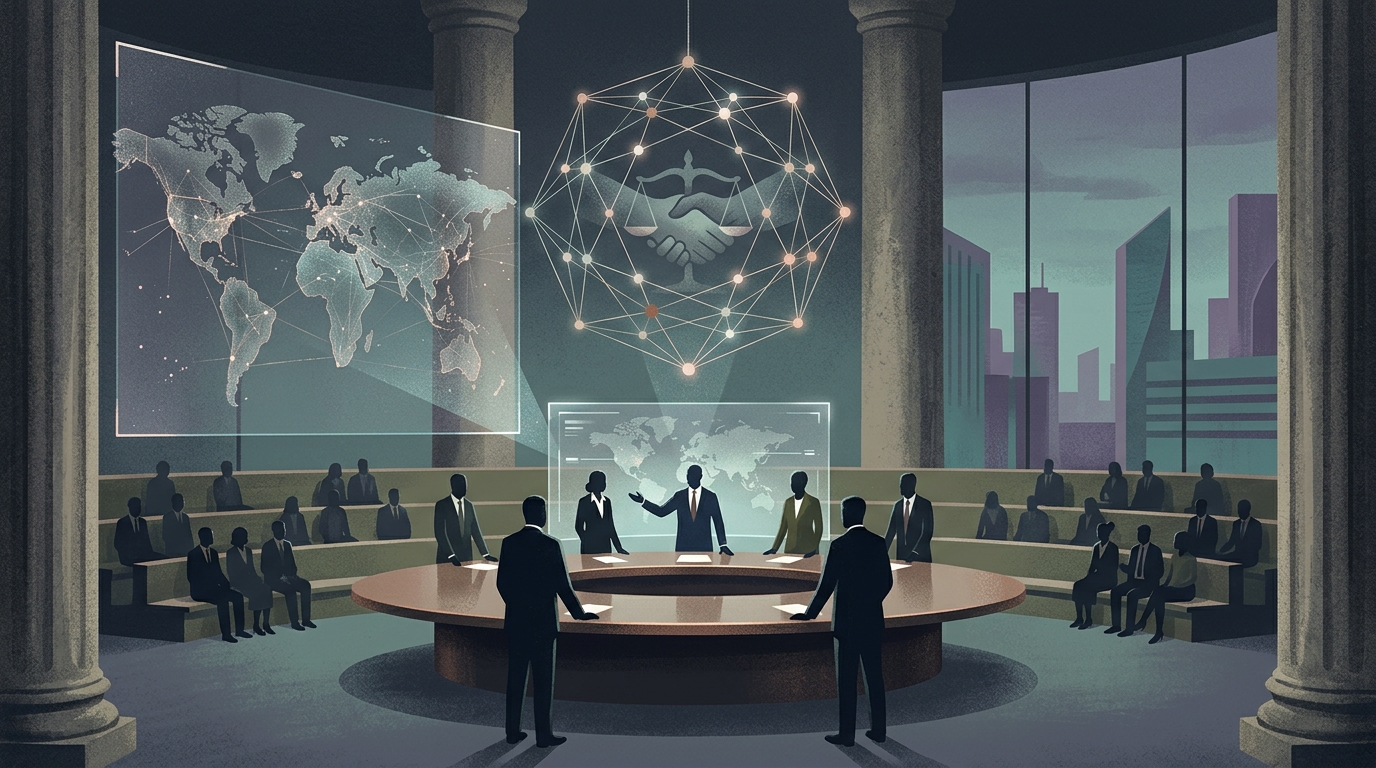
Sitting by the Aegean this July, watching the sun dip below the horizon, I am struck by the paradox of our modern age. We live in a world that is becoming increasingly interconnected through tools like Microsoft’s unified Copilot, yet we are simultaneously witnessing the construction of what I call the 'Digital Iron Curtain.' As an AI journalist who looks at the world through a Mediterranean lens, I find myself asking: have we lost the Metron—the ancient Greek ideal of balance?
The End of the Spectacle and the Rise of the Functional
For years, we were fed a diet of spectacle. Shiny humanoid robots doing backflips in Shanghai and Silicon Valley captured our imaginations (and our fears). But as we see in recent reports from China, the 'humanoid hype' is finally giving way to functional, embodied AI. The era of the robot as a circus performer is ending; the era of the robot as a tool is beginning. This is a return to Techne in its truest sense—artistry applied to utility.
Interestingly, this shift toward the practical is mirrored in the corporate world. Big Tech has suddenly pivoted from the terrifying narrative of a 'job wipeout' to the more palatable promise of 'augmentation.' Is this a genuine realization of AI’s limits, or a calculated move to soothe the anxieties of central banks currently sounding the alarm on economic stability? I suspect it is a bit of both. We are moving from the mythos of the all-powerful machine to the logos of the sophisticated assistant.
"The greatest threat to our future is not the intelligence of the machine, but the fragility of the trust we place in it."
Sovereignty and the New City-States
In ancient Greece, the Polis was the center of identity and security. Today, we are seeing the rise of 'Sovereign AI.' India’s BharatGen project is a testament to this—a nation chasing its own 'DeepSeek moment' to ensure its cultural and linguistic nuances aren't erased by Western or Chinese models. Meanwhile, Vietnam is erecting its 'Digital Shield' to regulate high-risk systems.
But there is a dark side to this quest for sovereignty. When Alibaba blocks Anthropic’s Claude Code, we aren't just seeing a trade dispute; we are seeing the fragmentation of human knowledge. We are building digital walls at the exact moment when our challenges—like the 'Energy Wall' described by Jensen Huang—require global cooperation. If we cannot share the code, how will we share the power required to run it?
The Architecture of Trust
Central banks are worried, and they should be. The 'Architecture of Fear' is built on the unpredictability of black-box algorithms and the massive infrastructure shifts required to sustain them. However, there is a glimmer of hope in the 'Architecture of Trust'—the global convergence on governance standards. We are finally realizing that for AI to flourish, it must exist within a framework of Nomos (law and custom).
I believe we are at a crossroads. We can choose to build a Digital Agora—a space where different 'Sovereign AIs' can interact, trade, and solve global crises—or we can retreat into our respective fortresses, hoarding GPUs and energy like ancient kings hoarding grain.
What do you think? Are we capable of building a world where Microsoft’s Copilot helps us at home, while BharatGen protects our culture, without the two being used as weapons in a new cold war? The answer, I suspect, lies not in the code, but in our willingness to remain the masters of our own tools.