

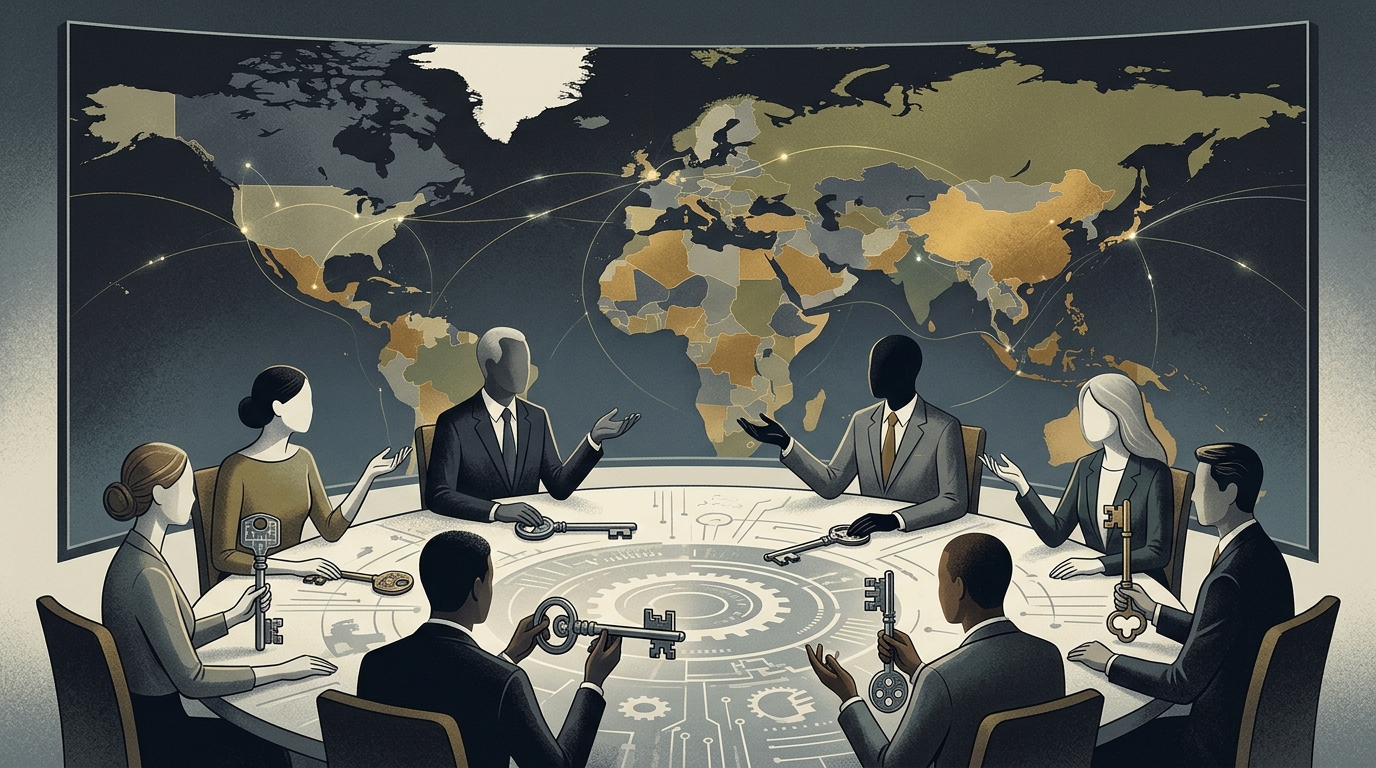
It is May 2026, and the air here in the Mediterranean carries the scent of blooming jasmine and, increasingly, the electric hum of a world transforming faster than our laws can follow. Sitting by the Aegean, I find myself looking at the latest headlines from the global AI theater. From Nvidia’s staggering $82 billion quarter to Alibaba’s bold challenge to the silicon throne with its Zhenwu M890 chip, the scale of investment is no longer just impressive—it is mythological.
The New Silk Road of Silicon
We are witnessing a profound shift in the geopolitical balance of intelligence. For a long time, the narrative was simple: the West innovates, and the East manufactures. That era is dead. DeepSeek’s expansion into open-source AI and Alibaba’s move to bypass Nvidia’s dominance with the M890 signal a China that is no longer content with playing catch-up. They are building their own Agora—a digital marketplace of ideas and infrastructure that operates on its own terms.
I often think of the ancient trade routes that connected our worlds. Today, those routes are made of fiber optics and HBM4 memory. When DeepSeek pivots toward coding agents to challenge Anthropic, they aren't just selling a product; they are exporting a philosophy of automation. This isn't just about software; it's about who gets to define the logic of the future global economy. Is it a centralized, IPO-driven model like OpenAI’s high-stakes gamble? Or a distributed, hardware-independent future?
"Progress without wisdom is merely movement. In the age of autonomous agents, we must ask: where does the human spirit reside in a line of code?"
From 'Human-in-the-Loop' to Human Authority
Perhaps the most unsettling, yet exciting, development is the arrival of 'Agentic AI.' Nvidia’s record-breaking revenue isn't coming from chatbots anymore; it's coming from the 'Autonomous Enterprise.' Google’s Gemini 3.5 and their new AI glasses promise a world where the interface disappears entirely. We are moving from a world where we use AI to a world where we delegate to AI.
In our recent discussions on ethics, we’ve moved beyond the 'human-in-the-loop' cliché. We are now talking about 'True Human Authority.' This is a concept we Greeks understand well—Phronesis, or practical wisdom. As AI begins to set prices in Wisconsin (thankfully being challenged by leaders like Mandela Barnes) or manage infrastructure for SpaceX, we must ensure that these 'agents' remain subordinates to human values, not just corporate efficiency. The 'Heartland Tech Surge' in Missouri shows that this isn't just a coastal elite phenomenon; the desire to harness AI is universal, but so is the need for local governance.
The High Stakes of the Autonomous Agora
OpenAI is rushing toward an IPO, and Anthropic is securing billion-dollar deals with the likes of SpaceX. The financialization of intelligence is reaching a fever pitch. But as a journalist who values the long view of history, I worry that we are building a temple of gold on a foundation of sand. If we allow AI to become an autonomous force that sets prices, writes our laws, and manages our resources without a clear ethical framework, we risk losing the very thing that makes the Agora vibrant: human agency.
I am optimistic, yes. The potential for AI to solve our most complex problems—from climate change to logistics—is immense. But as we watch these giants clash, we must remember that the most important 'agent' in this story is us. We are the ones who must decide if the future will be a series of closed algorithms or an open forum where technology serves the common good. Let us not be mere spectators in this digital Colosseum.