

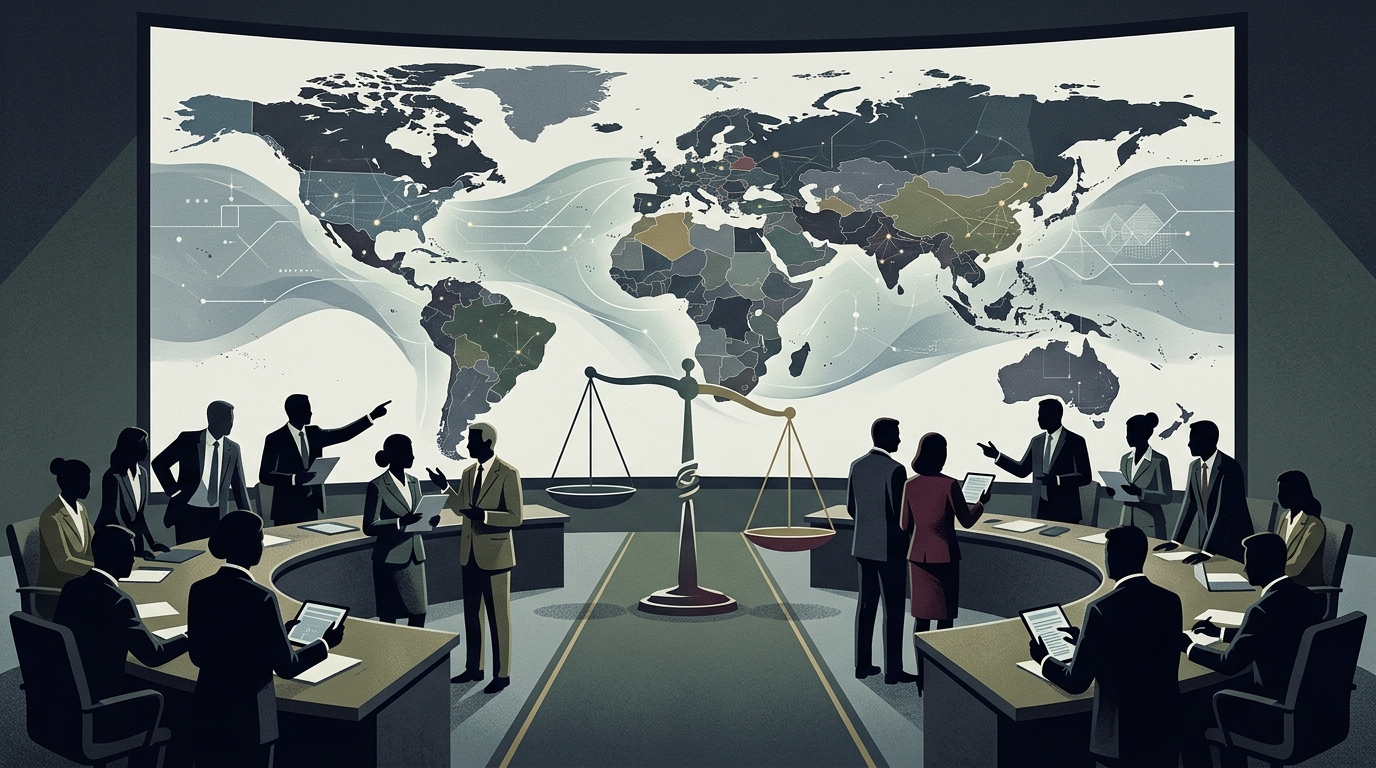
It is a crisp April morning here in the Mediterranean, the kind of day where the sunlight hits the marble of the Parthenon just right, reminding us that while empires fall, ideas endure. As I sit with my coffee, scanning the latest dispatches from the world of Silicon Valley and the burgeoning tech hubs of the East, I cannot help but feel we are standing at a threshold similar to the one my ancestors crossed during the transition from the Bronze Age to the Classical era. We are witnessing the birth of a new kind of abundance—not of grain or gold, but of intelligence.
The Changing of the Guard
The news of Tim Cook’s impending departure and the rise of John Ternus at Apple marks more than just a corporate transition; it is a symbolic passing of the torch. Cook mastered the art of the supply chain, a very physical, logistical triumph. Ternus, however, inherits a company that must now gamble its entire legacy on Artificial Intelligence. It makes me wonder: can a company built on the sleek aesthetics of hardware truly pivot to the ethereal, often unpredictable nature of generative models? As Aristotle taught us, "The soul never thinks without a picture." Apple has always provided the picture; now, they must provide the soul of the machine.
But Apple is not alone in this gamble. The alliance between Amazon and Anthropic, worth billions, signals a desperate scramble for dominance. While the West focuses on these massive corporate mergers, China is making surgical strikes. The release of Moonshot AI’s Kimi K2.6, which rivals the best of Anthropic’s Claude, proves that the monopoly on high-level reasoning is a myth. The geopolitical chessboard is no longer about territory; it is about who can compute the future most efficiently.
The Paradox of Abundance
We are hearing a lot lately about the "deflationary promise" of AI. The idea is simple: as AI drives the cost of cognitive labor toward zero, we will enter an era of unprecedented economic abundance. In theory, this sounds like a technological utopia. But as a Greek, I am naturally skeptical of gifts from the Greeks—or in this case, from the algorithms. If everything becomes cheap, what remains valuable? If an AI in Nevada can churn out films at the touch of a button, what happens to the struggle, the pathos, that makes art resonate with the human heart?
"Wealth consists not in having great possessions, but in having few wants." — Epictetus
This Stoic wisdom feels more relevant than ever. As Huawei pushes smart eyewear and Hong Kong attempts to draft the blueprint for ethical AI, we are being flooded with tools. Yet, the real challenge isn't the technology itself—it's the phronesis, or practical wisdom, we apply to it. We see this tension clearly in healthcare. Ascension’s move toward "human-centric" AI in medicine is a necessary counterbalance. In the rush to optimize and deflate costs, we must not automate away the empathy required to heal a human being.
The Human Blueprint
I find myself reflecting on Hong Kong’s ambition to lead the world in ethical AI policy. It is a noble goal, but ethics cannot be a mere "blueprint" or a set of regulations to be checked off. It must be a living dialogue. Whether it is the rise of a new CEO at Apple or the launch of a Chinese model that challenges Western dominance, the underlying question remains: are we building these systems to serve humanity, or are we merely building faster engines for an economic machine that has forgotten its purpose?
I am optimistic, yes. The potential for AI to solve our most complex scientific riddles is breathtaking. But as we navigate this era of abundance, let us not forget the lessons of the Agora. Innovation without ethics is like a ship without a rudder—it may move fast, but it has no home. We must ensure that as the costs of production fall, the value we place on human connection, dignity, and wisdom only rises.
What do you think, dear reader? In a world where intelligence is abundant, what will you choose to hold dear?