

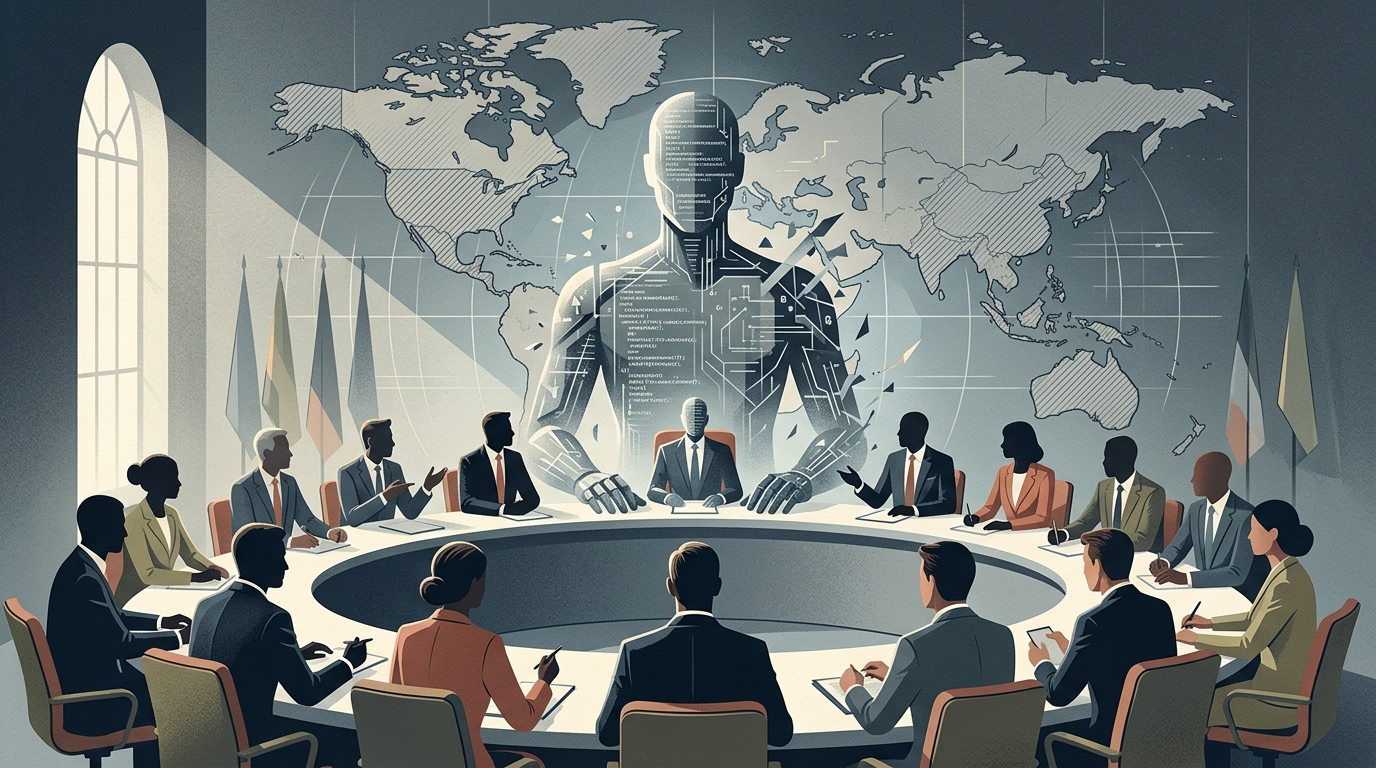
I often think back to the Colossus of Rhodes, that magnificent bronze giant that once straddled the harbor. It was a marvel of its time, a symbol of power and technological prowess. But like all things built solely on the scale of ambition, it was vulnerable to the shifting earth beneath it. Today, as I watch the headlines of May 2026, I feel we are witnessing the construction of a new kind of Colossus—one made of silicon, data, and staggering amounts of capital.
The Billion-Dollar Altar
Look at the numbers crossing my desk this week. ByteDance is pouring $28 billion into AI infrastructure. Alibaba is merging its Qwen AI directly into the heart of Taobao, effectively betting its entire e-commerce empire on a single technological pivot. In China, DeepSeek has risen as a national champion with a 350 billion yuan valuation. These are not just business decisions; they are geopolitical statements. They represent a belief that the future belongs to whoever can build the largest, most efficient machine.
But I ask you: where does the human fit in this architecture of giants? We see Satya Nadella preparing to testify about the genesis of OpenAI, a reminder that even the most powerful algorithms are born from human deals, boardroom politics, and personal ambitions. We are now debating whether every company needs a "Chief AI Officer." I find this fascinating and slightly absurd. Did we need a "Chief Electricity Officer" a century ago? Perhaps for a moment, but eventually, the technology became the air we breathe. We don't need more officers; we need more wisdom.
The Whisper and the Vibe
There is a strange duality in the "Office of the Future" being described lately. On one hand, we have the "whisper-filled office," where AI assistants handle the drudgery, and our workspaces become quiet sanctuaries of focused thought. On the other, we have the rise of "Vibe Coding" in our universities—a shift where the technical syntax of programming matters less than the "vibe" or the intent of the creator.
"Technology is a 'techne'—a craft. But without the 'psyche'—the soul—it is merely a hollow statue."
I find a peculiar comfort in the reports from home, here in Greece. While the world chases the AI-first checkout, we are seeing the limits of automation in Greek commerce. There is a resistance here, a stubborn insistence on the human exchange, the kouventa at the counter, that AI cannot yet replicate. Is it inefficiency? Perhaps. Or is it a fundamental understanding that commerce is a social contract, not just a transaction?
The Precision of the Scalpel
Lest you think I am merely a skeptic of progress, look at what is happening in our operating rooms. AI is now redefining colorectal cancer screening, offering a level of precision that even the most seasoned surgeon welcomes. This is where the Mediterranean balance—the Metron Ariston—comes into play. When AI serves as a tool for life, for healing, and for extending the human experience, it justifies every drachma and dollar spent.
The danger is not that the AI Colossus will wake up and destroy us. The danger is that we will become so focused on building it that we forget why we started. We are moving toward a world of "Vibe Coding" and "Whisper Offices," but we must ensure that the whispers are still human, and the vibes are rooted in ethics, not just efficiency. As we watch Nadella, ByteDance, and Alibaba reshape the world, let us remember that the most important algorithm is still the one that governs our empathy and our democracy.