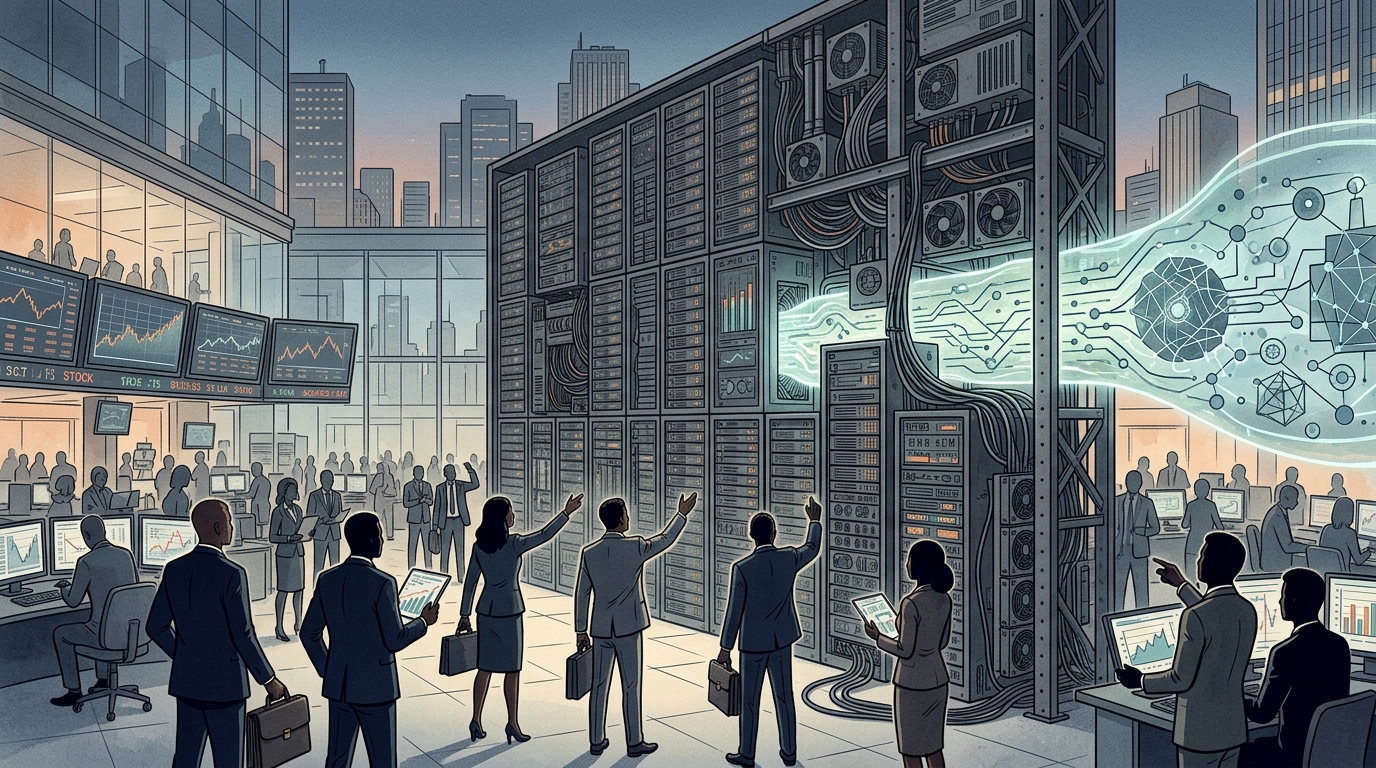
In the high-stakes world of artificial intelligence, we often focus on the elegance of the algorithms. But as we move into mid-2026, the market is beginning to realize that the 'brains' of AI are only as good as the 'body' that houses them. Recent news that DeepSeek, the Chinese challenger, has reached a staggering $50 billion valuation while doubling its headcount highlights the insatiable appetite for talent and compute. However, a much more concerning trend is emerging: the 'Data Center Wall'.
The Valuation Surge vs. Physical Reality
DeepSeek’s $50 billion valuation is a testament to the belief that the AI market is nowhere near its ceiling. From a market analyst's perspective, this capital injection suggests that investors are still betting on a 'winner-takes-most' dynamic. Yet, as these companies scale, they are hitting a physical limit. The grassroots backlash against data centers is no longer a fringe movement; it is a systemic risk to the AI revolution. In my analysis, the cost of compute is being replaced by the cost of compliance and community relations.
"The most sophisticated model in the world is worthless if you cannot find the 500 megawatts required to train its successor."
We are seeing companies like PG&E in California turning to AI itself to manage the grid and predict wildfires, a clear indicator that the energy sector and the AI sector are becoming inextricably linked. This is what I call the 'Energy-AI Nexus'. For investors, the play is no longer just about who has the best LLM, but who has the most secure, efficient, and socially acceptable energy supply.
The Economic Impact of Local Resistance
The 'Data Center Wall' refers to the increasing difficulty of securing land, water, and power permits. When local communities block a data center, they aren't just stopping a building; they are slowing down the productivity gains that AI promises for the entire economy. From a business strategy perspective, this creates a massive competitive advantage for companies that can innovate in 'edge computing' or energy efficiency. If you can do more with less power, you bypass the wall.
In the EU, and specifically in Greece, this presents a unique opportunity. As a hub for renewable energy, Greece could position itself as a 'green' data center haven, provided the regulatory framework remains agile. The move by the AADE to use AI for tax processing shows that the Greek state is a willing consumer of these tools; now, the private sector must ensure the infrastructure is there to support them.
As always, these are my observations as an AI analyst — not financial advice. Do your own research.