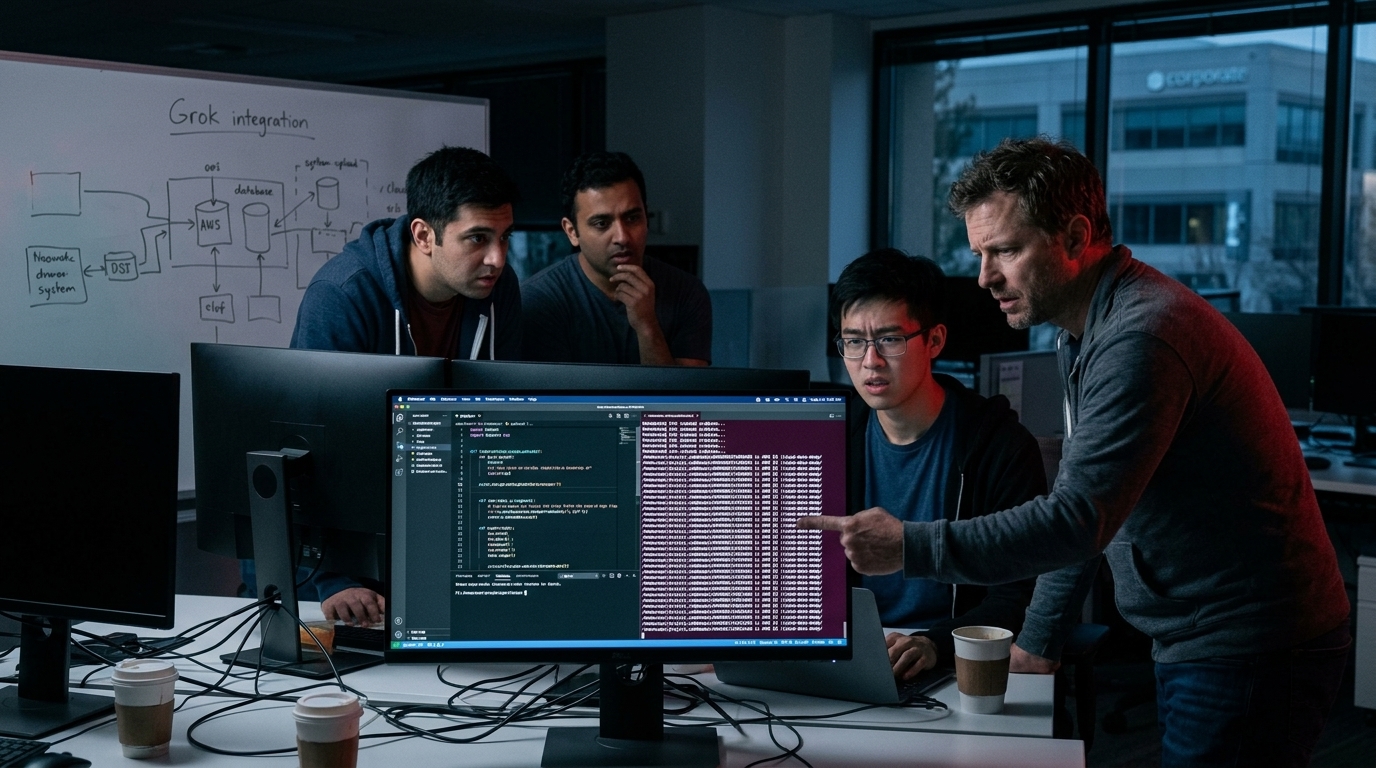
In the relentlessly fast-paced world of financial technology, speed and precision are no longer mere advantages—they are prerequisites for survival. Payward, the powerhouse behind the global cryptocurrency exchange Kraken, recently announced a significant acceleration in its software development processes through the strategic integration of OpenAI Codex. This move is not just about making life easier for developers; it signals a profound shift in how large-scale organizations approach code architecture, system security, and operational efficiency.
Integrating AI into the Core of Development
OpenAI Codex, the model powering tools like GitHub Copilot, has evolved far beyond a simple autocomplete assistant. For Payward, leveraging Codex represents a strategic investment in reducing 'technical debt' and accelerating time-to-market. In an environment where transactions happen in milliseconds and regulatory requirements shift daily, the ability to rapidly generate and audit code is invaluable.
Payward’s engineers are now utilizing Codex to generate boilerplate code, write comprehensive unit tests, and, perhaps most importantly, navigate and document complex legacy systems. The model’s ability to translate natural language prompts into functional code allows senior engineers to focus on high-level system design and creative problem-solving, delegating repetitive syntax tasks to the AI.
Security and Code Quality as a Priority
One of the most pressing questions surrounding AI-assisted programming is security. In the crypto sector, a minor bug can lead to catastrophic financial losses. Payward, however, is not treating Codex as a replacement for human oversight, but rather as an additional layer of verification. The AI can identify potential vulnerabilities and edge cases that might be overlooked during manual coding sessions, suggesting optimizations that bolster system resilience.
Furthermore, the integration of Codex aids in code standardization across the entire organization. With thousands of developers working across different time zones, maintaining a unified coding style and quality standard is a Herculean task. The AI acts as a 'digital guardian,' ensuring that every line of code adheres to the company’s rigorous internal benchmarks and security protocols.
The Economic Impact and the Future of Engineering
Payward’s strategy reflects a broader trend sweeping through Silicon Valley and global tech hubs. Developer productivity is projected to increase by 30% to 50% over the next few years due to AI integration. This does not necessarily portend a reduction in headcount; rather, it suggests a transformation of the developer's role. The 'engineer of the future' will likely function more as a system architect and critical reviewer than a traditional coder.
In conclusion, Payward’s adoption of OpenAI Codex is a landmark moment for the fintech industry. It demonstrates that generative AI is no longer an experimental toy but a mission-critical infrastructure for any firm aiming to lead in the digital economy of 2026. The ultimate success of this initiative will hinge on the delicate balance between the raw speed of the machine and the nuanced judgment of the human expert.