In an era where the climate crisis is transforming arid regions into tinderboxes, technology is stepping in as a vital guardian. Arizona Public Service (APS), the state's largest electric utility, is no longer just managing a power grid; it is evolving into a technological hub for disaster prevention. By leveraging Artificial Intelligence (AI), the company is attempting to solve one of the most persistent challenges in the American West: the early detection of wildfires before they become uncontrollable catastrophes.
The Digital Sentry: Cameras and Computer Vision
The core of the APS system relies on a network of high-definition cameras strategically placed on telecommunications towers and grid infrastructure. These cameras are not mere recording devices. They are integrated with sophisticated computer vision algorithms trained to distinguish between a dust cloud, fog, and the early wisps of smoke from a fire.
The system scans the horizon 360 degrees every few minutes, day and night. As soon as an anomaly resembling smoke is detected, the AI analyzes its density, color, and movement. If the probability of a wildfire exceeds a specific threshold, an alert is immediately dispatched to the APS operations center and local fire departments. This process, which previously relied on chance reports from citizens or periodic aerial patrols, is now completed in less than sixty seconds.
Predictive Analytics and Risk Management
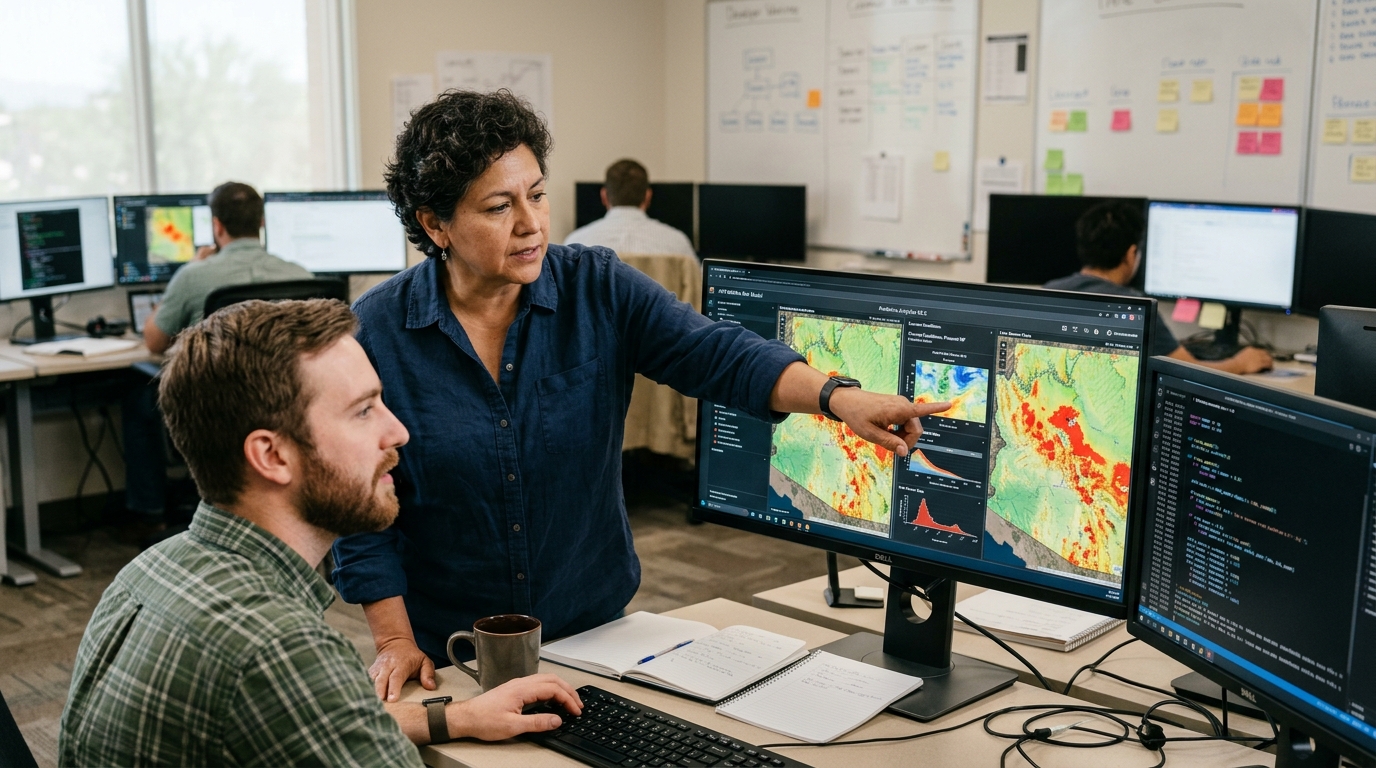
The application of AI by APS extends far beyond simple detection. The utility employs machine learning models to analyze vast amounts of data regarding weather patterns, fuel moisture levels, and wind speeds. These "predictive risk models" allow APS to identify which segments of its grid are most vulnerable at any given moment.
- Fuel Load Analysis: Satellite imagery is processed by AI to assess the dryness of vegetation near transmission lines.
- Dynamic Power Shutoffs: During extreme risk conditions, AI assists in the decision-making process for Public Safety Power Shutoffs (PSPS), minimizing consumer disruption while maximizing safety.
- Resource Coordination: Real-time data is shared with authorities, allowing for the deployment of aerial assets precisely to the ignition point.
Strategic Implications for Utility Providers
The shift toward AI-driven wildfire mitigation represents a fundamental change in how utilities operate in high-risk environments. For decades, power lines have been viewed as a liability during fire season. By integrating AI, APS is turning its infrastructure into a defensive asset. The sensors and cameras mounted on their poles provide a level of situational awareness that was previously impossible to achieve over such vast, rugged terrain.
Furthermore, the integration of AI allows for "intelligent hardening" of the grid. Instead of indiscriminately upgrading thousands of miles of lines, APS can use AI to prioritize maintenance in areas where the combination of vegetation and wind poses the highest statistical risk. This data-driven approach ensures that capital expenditures are directed where they will have the greatest impact on public safety.
"Artificial intelligence isn't replacing our firefighters; it's giving them the eyes they need to be everywhere at once," APS officials noted during a recent demonstration.
In conclusion, the initiative by Arizona Public Service highlights a new form of corporate responsibility. Utilities are moving from being passive infrastructure providers to active partners in environmental and public health protection. This model proves that cutting-edge technology, when applied with precision, is humanity's strongest ally against the escalating challenges of a changing climate.