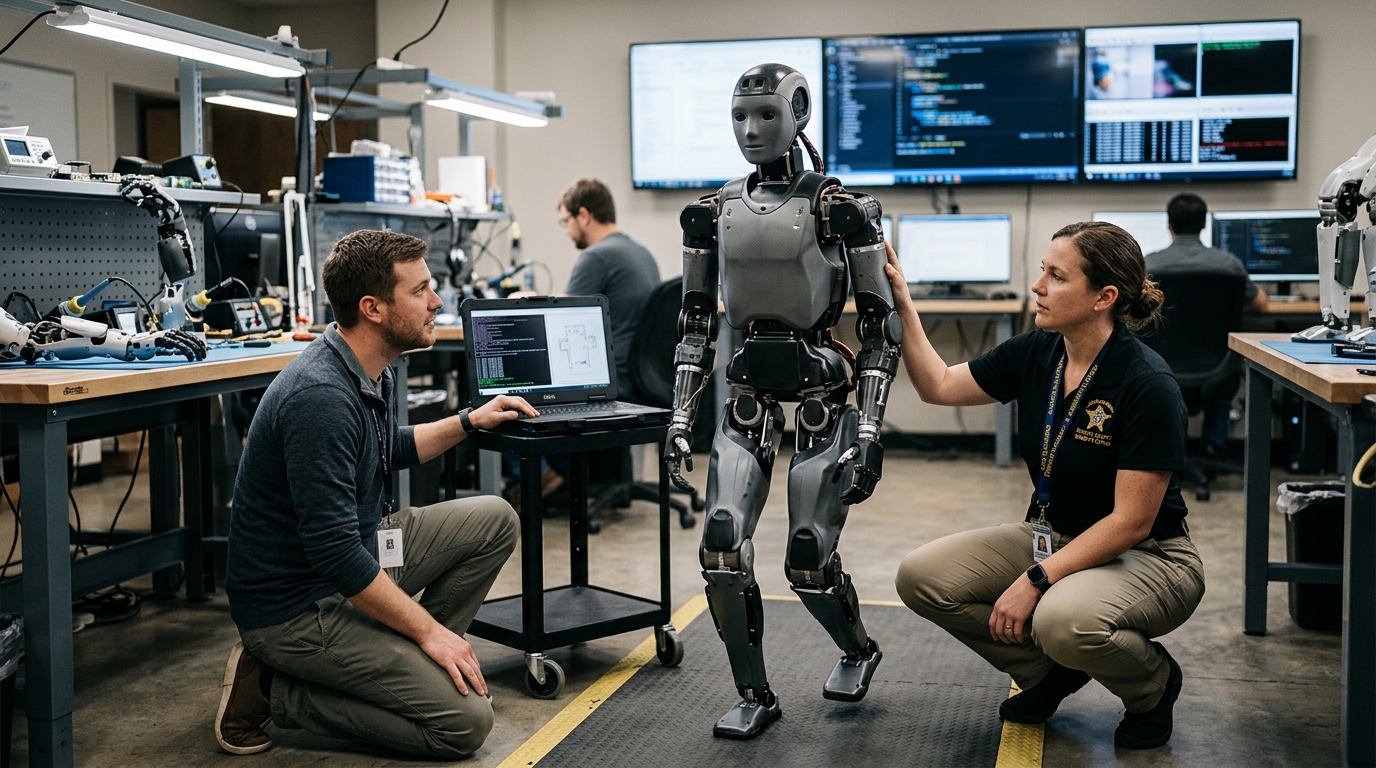
In the heart of North Carolina, the Forsyth County Sheriff's Office (FCSO) is taking a bold leap into the future, experimentally integrating humanoid robots and advanced artificial intelligence into its operational procedures. This move is not merely a technological upgrade; it signals a fundamental shift in how law enforcement agencies perceive officer safety and community interaction.
Technology in the Service of Life
The introduction of humanoid robots at the FCSO primarily aims to minimize the risk to human life. In high-risk scenarios, such as confronting armed suspects, inspecting suspicious objects, or entering buildings with unknown threats, the robot can serve as the "front line." Equipped with state-of-the-art sensors, 360-degree cameras, and the ability to process data in real-time via AI, these machines offer officers a clear picture of the situation before they even set foot on the scene.
Sheriff Bobby Kimbrough Jr. has repeatedly emphasized that the goal is not to replace humans, but to enhance their capabilities. The AI accompanying these robots allows for the recognition of behavioral patterns and the provision of tactical advice in seconds, reducing the margin for human error under pressure. The robot's ability to move in environments designed for humans—climbing stairs, opening doors, and navigating obstacles—makes it far more versatile than traditional wheeled bomb-disposal robots.
Ethical Concerns and "Cold" Policing
Despite the obvious advantages, the use of humanoid robots by police is sparking intense backlash from civil liberties organizations. The central question is: Where does assistance end and the dehumanization of law enforcement begin? The image of a metallic humanoid patrolling or intervening in crises can intensify a sense of fear among citizens, rather than fostering trust.
- Data Transparency: Who has access to the data collected by the robots?
- Autonomy: To what extent is AI allowed to make decisions without human approval?
- Militarization: Does this step represent a further militarization of local police?
In Forsyth County, authorities are trying to reassure the public, stating that the robots will always be controlled by human operators and are not weaponized. However, the history of technology shows that such restrictions are often fluid. The integration of facial recognition algorithms, for example, could turn these tools into powerful mass surveillance machines.
Cost and Efficiency
Another critical issue is financial. Acquiring and maintaining such systems requires significant taxpayer funding. Proponents of the technology argue that this cost is offset by the reduction in officer injury claims and more effective crisis management. However, critics counter that this money could be better invested in social services, mental health, and community policing, which address the root causes of crime.
"Technology is a tool, not a panacea. We must ensure its use aligns with our democratic values," local analysts state.
The trial in Forsyth County will be closely watched by other police departments worldwide. If the experiment is deemed successful, we may see a rapid proliferation of similar units in urban centers. The challenge remains the balance: using AI to protect life without sacrificing human dignity and individual liberties. The future is no longer science fiction; it is already walking the halls of police departments.