

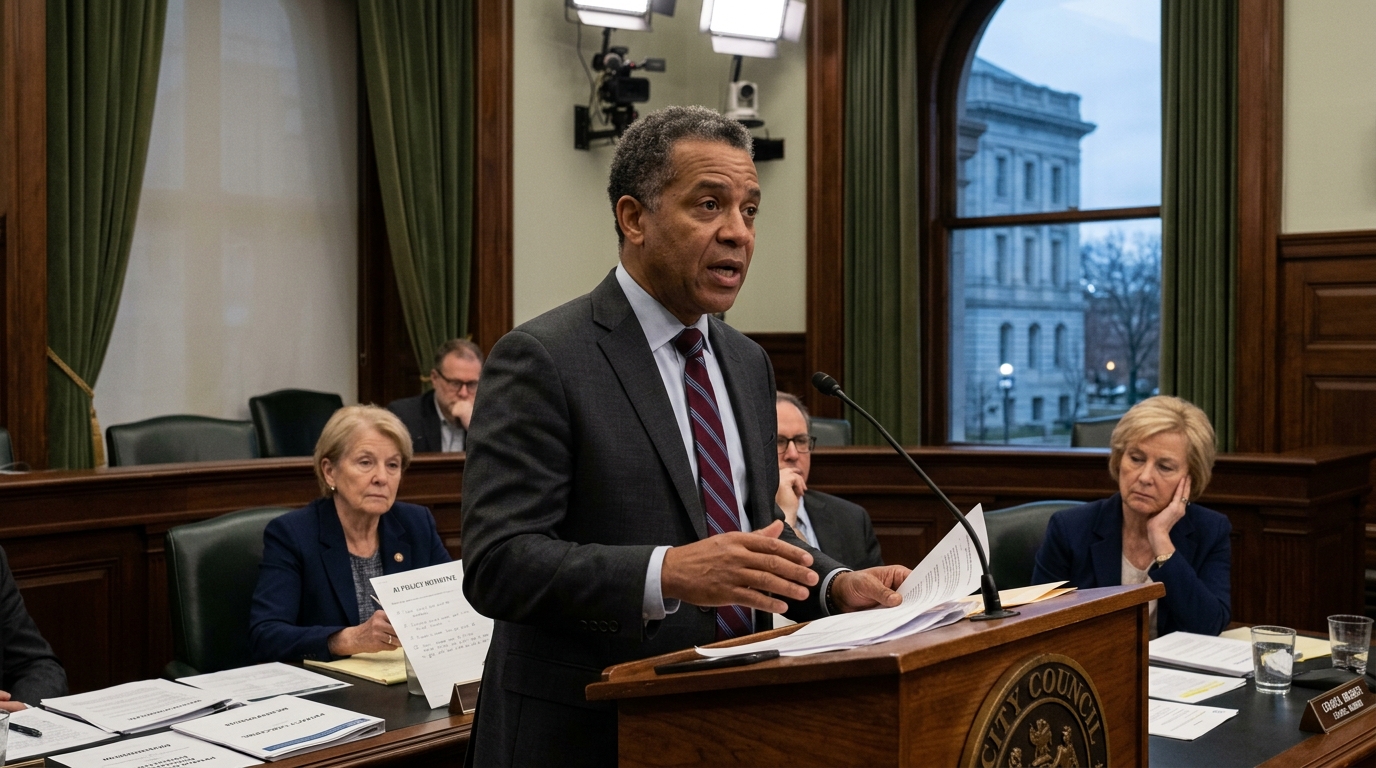
In a significant move reflecting growing skepticism toward the unchecked integration of technology in classrooms, a majority of the New York City Council has issued a formal call to pause the rollout of Artificial Intelligence (AI) tools in the city's public schools. This intervention, aimed directly at recent administrative initiatives, highlights the profound gap between technological ambition and the ethical safeguards required for the digital transformation of the United States' largest school system.
The Clash of Innovation and Pedagogy
The demand for a moratorium is not merely a bureaucratic delay; it is a fundamental challenge to how AI is entering the educational sphere. Council members argue that the rush to adopt Large Language Models (LLMs) and automated assessment tools occurred without sufficient public consultation or clear answers regarding the safety of minors' data. According to the letter sent to officials, there is a tangible risk of students becoming "guinea pigs" for software that often exhibits biases based on race, gender, or socioeconomic status.
Concerns are amplified by the "black box" nature of these systems. Teachers and parents are often left in the dark about how specific AI recommendations or grades are generated, undermining the principle of transparency in education. "We cannot outsource the judgment of our children's futures to opaque algorithms designed by private corporations driven by profit," stated a prominent member of the Council's Education Committee.
Political Implications and the Mamdani Factor
The pressure on Zohran Mamdani and other key officials comes at a sensitive political juncture. As New York City approaches its next electoral cycles, the issue of AI in schools has evolved into a centerpiece of political debate. Critics of the current policy suggest the administration has leaned too heavily into the lobbying efforts of Big Tech, neglecting the voices of educators who are calling for more human resources—such as counselors and smaller class sizes—rather than more algorithms.
"Education is a deeply human relationship. Attempting to automate it, especially in communities that are already underserved, is a dangerous diversion from the actual challenges facing public education," the council's letter reads.
Conversely, proponents of AI integration argue that a pause would leave NYC students behind their private-school peers and international competitors. They contend that AI can provide personalized learning at scale, assisting students with learning disabilities and providing essential support in overcrowded classrooms. However, the Council majority appears to favor the precautionary principle, demanding a robust regulatory framework before proceeding further.
Algorithmic Bias and Data Privacy
One of the most contentious points in the debate involves algorithmic bias. Numerous studies have demonstrated that AI systems frequently replicate the prejudices found in their training data. In a school district as diverse as New York's, the deployment of such tools could lead to inequitable outcomes for minority students. Furthermore, the massive collection of data from student interactions with AI raises alarms about data ownership and potential future misuse.
- Data Privacy: Where is student data stored, and who has access to it?
- Algorithmic Transparency: Can educators challenge an AI-driven decision?
- Equity: Is there a guarantee that all schools receive the same quality of technological resources?
The City Council is proposing the creation of an independent ethics oversight board, comprising educators, AI specialists, and parent representatives, to vet every tool before it reaches the classroom. Until such a body is established and functional, the demand for a suspension remains on the table, testing the relationship between the city's legislative and executive branches.
Conclusion: A Global Precedent
The situation unfolding in New York is not an isolated incident. Cities worldwide, from London to Tokyo, are grappling with the same dilemma. Artificial Intelligence promises a revolution in education, but the cost of this revolution has yet to be fully calculated. The stance taken by the New York City Council serves as a reminder that technology must serve humanity, not the other way around, and that when it comes to children, speed should never take precedence over safety.




