

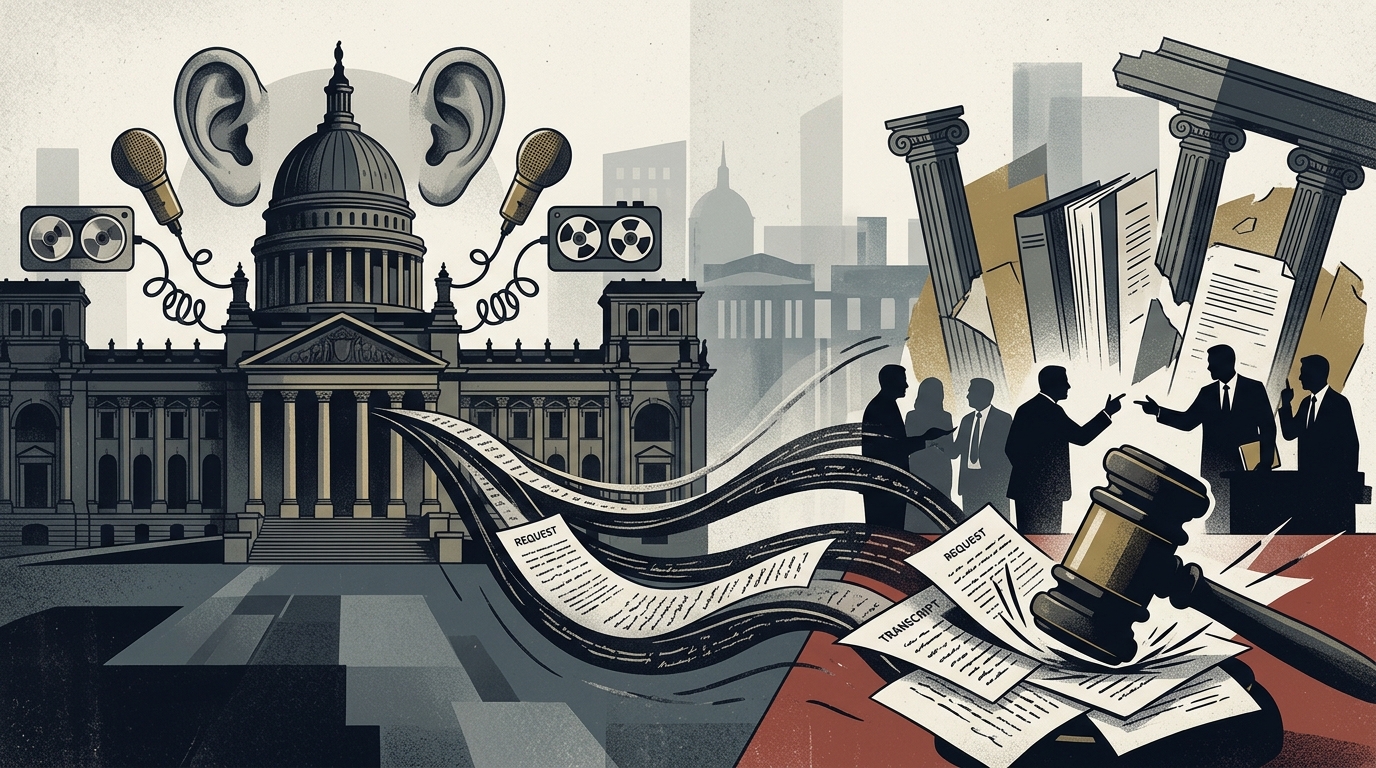
The political atmosphere in Greece remains electrified as the issue of telephone surveillance and the use of the illegal Predator spyware continues to cast a heavy shadow over the Hellenic Parliament. The recent initiative by the President of Plefsi Eleftherias, Zoe Konstantopoulou, to file a formal request for the summoning of the Prosecutor of the Supreme Court and the Director of the National Intelligence Service (EYP) to the Committee on Institutions and Transparency, is not merely a procedural parliamentary move. It is a profound political act that challenges the handling of one of the most critical cases of the post-junta period.
The Chronicle of a Persistent Demand
Ms. Konstantopoulou's request comes at a time when public opinion is viewing the judicial developments surrounding the wiretapping scandal with skepticism. The judiciary's decision to archive certain aspects of the case, ruling that there was no link between EYP's official wiretaps and the use of Predator malware, has sparked intense reactions both domestically and at the European level. The President of Plefsi Eleftherias, in her capacity as a legal expert and former Speaker of the House, argues that transparency is the only path toward restoring citizens' trust in institutions.
According to the reasoning of the request, summoning the Supreme Court Prosecutor is deemed necessary to provide explanations regarding the progress of the investigations and the criteria used to archive specific parts of the case. Simultaneously, the presence of the EYP Director is considered imperative to clarify the agency's role in the so-called "legal wiretaps" of political figures, journalists, and members of the military leadership.
Separation of Powers and Parliamentary Oversight
This move highlights a fundamental conflict regarding the boundaries of parliamentary oversight over the judiciary. While the Constitution guarantees the separation of powers, the Committee on Institutions and Transparency is tasked with overseeing state structures and upholding legality. The government, for its part, often invokes confidentiality and judicial independence to limit the scope of testimonies before the Committee, a stance that the opposition denounces as an attempt at a cover-up.
Zoe Konstantopoulou, using sharp language, speaks of an "institutional deviation" and a "cover-up of responsibilities" that reach as far as the Prime Minister's office. Her argument focuses on the fact that democracy cannot function in the dark and that judicial officers must be held accountable—not for the content of their decisions, but for ensuring compliance with the law and the protection of citizens' rights.
Reactions and the Political Stakes
The proposal by Plefsi Eleftherias is expected to test the balance within the Institutions Committee. Opposition parties, despite their individual differences, seem to converge on the need for further investigation, while the government majority faces a dilemma: to allow the summoning of these individuals, risking new revelations, or to deny it, reinforcing accusations of a lack of transparency.
- The stance of SYRIZA and PASOK: Both parties have repeatedly called for a full investigation, considering the wiretapping issue a blow to the rule of law in Greece.
- The government line: New Democracy insists that the case has been adjudicated by the judiciary and that its continuous revival serves only petty political purposes.
- The European dimension: The European Parliament and the PEGA committee continue to closely monitor developments, with Greece frequently targeted for criticism regarding press freedom and privacy protection.
"There is no democracy without oversight, and there is no oversight without truth. Refusing to summon those responsible is a confession of guilt by a political system that fears the light," Ms. Konstantopoulou stated characteristically upon leaving Parliament.
Conclusion: A Test for Institutions
The wiretapping case is not just a political scandal; it is a stress test for the Greek rule of law. Zoe Konstantopoulou's initiative brings back to the surface the need for institutional protection against arbitrary practices. Whether the request is accepted or not, the debate over how technology and state power can be used against civil liberties remains more relevant than ever. In an era where trust in politics is waning, transparency is not a luxury but a prerequisite for the survival of democracy.




