

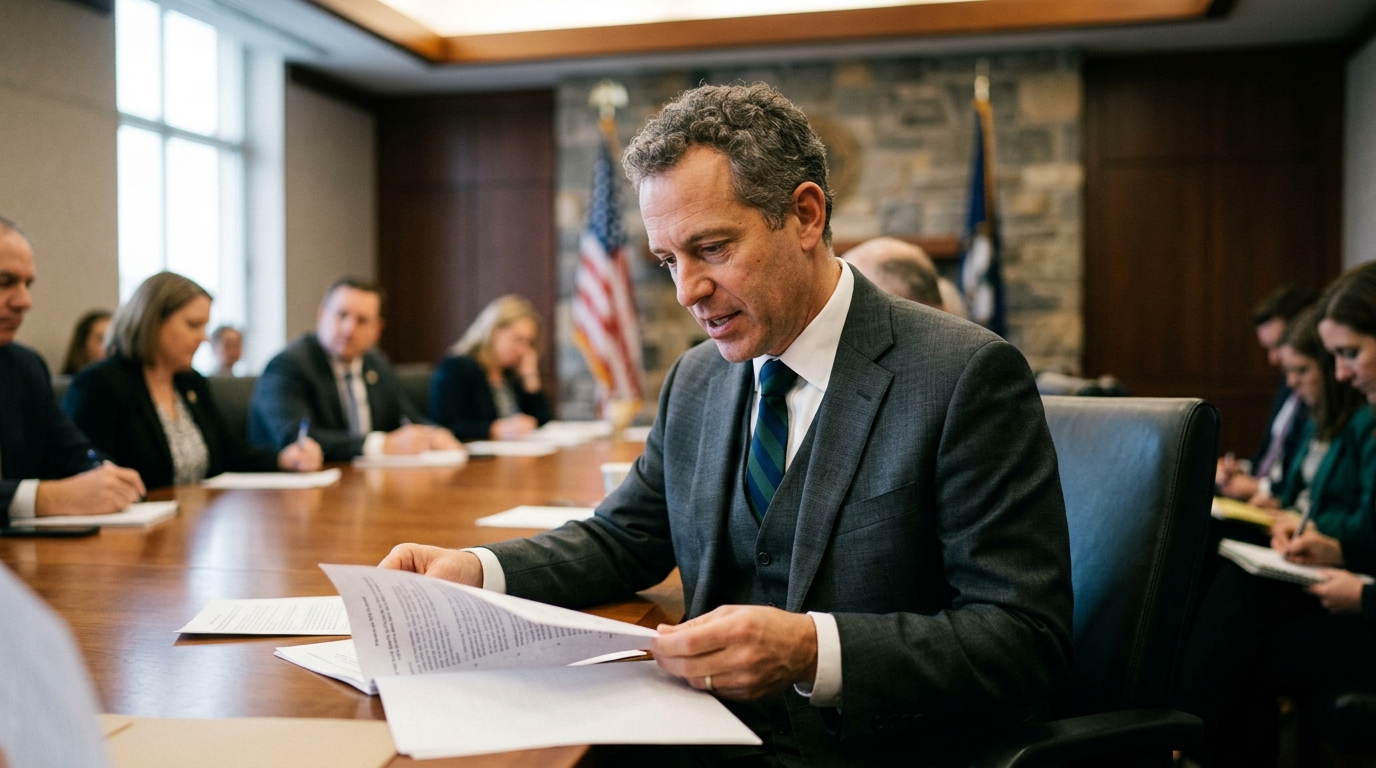
In an era defined by deep political fissures, the rapid ascent of Artificial Intelligence (AI) has managed to forge an unexpected bridge across the aisle in Washington. The launch of a $500 million bipartisan initiative focused on AI jobs and workforce development marks a significant pivot in U.S. industrial policy. This is not merely a funding package for research; it is a strategic attempt to recalibrate the American labor market for a future where human-machine collaboration is the baseline, not the exception.
The Framework of the Investment
Reported first by Politico, the $500 million push is backed by a coalition of lawmakers who recognize that the AI revolution is as much a labor crisis as it is a technological opportunity. The initiative focuses on localized impact, funneling resources into community colleges, vocational training centers, and regional innovation hubs. The goal is to democratize access to AI literacy, ensuring that the benefits of the technology aren't confined to Silicon Valley or the corridors of elite universities.
Key components of the plan include grants for small businesses to implement AI training programs and the establishment of a National AI Service Corps. This corps would theoretically deploy tech-savvy graduates to underserved areas to help modernize local infrastructures. By framing AI as a tool for economic revitalization in the Heartland, proponents hope to bypass the traditional anxieties associated with automation and job loss.
Geopolitical Imperatives and the Global Race
The bipartisan nature of this push is heavily fueled by the specter of global competition, particularly with China. U.S. policymakers are increasingly viewing the AI workforce as a matter of national security. To maintain technological hegemony, the United States requires a pipeline of talent that can not only build these systems but also operate them across various sectors—from healthcare to advanced manufacturing.
- National Security: Ensuring a domestic workforce capable of defending against AI-driven cyber threats.
- Economic Sovereignty: Reducing reliance on global supply chains for high-tech talent.
- Standard Setting: By leading in AI labor practices, the U.S. aims to set global norms for ethical and productive AI integration.
The sentiment in the Capitol is clear: the country that masters the integration of AI into its workforce will dictate the economic terms of the 21st century. This $500 million is seen as a 'down payment' on that future, though many economists argue that the actual cost of a full-scale workforce transition will run into the trillions.
Addressing the 'AI Divide'
One of the most pressing concerns addressed by the initiative is the potential for a widening 'AI divide.' There is a significant risk that AI will exacerbate existing income inequalities, rewarding those with high-level technical skills while displacing those in routine cognitive roles. The bipartisan bill attempts to mitigate this by prioritizing 'upskilling' for mid-career workers who are most vulnerable to displacement.
However, critics point out that $500 million is a modest sum when compared to the massive R&D budgets of private tech giants like Microsoft, Google, or OpenAI. The challenge for the government will be to ensure that these federal funds aren't simply absorbed by large corporations but actually reach the workers who need them most. The initiative also calls for new metrics to measure 'AI readiness' in the workforce, moving beyond traditional employment statistics.
A New Social Contract?
As AI continues to evolve at an exponential rate, this federal push raises fundamental questions about the future of work. Are we looking at a permanent reduction in the demand for human labor, or a transformation into more creative and interpersonal roles? The bipartisan support for this bill suggests a growing consensus that the government must play an active role in managing this transition.
"We are not just funding software; we are investing in the resilience of the American worker," noted a senior senator involved in the negotiations. "If we get this wrong, the social fabric of this country could unravel. If we get it right, we usher in a new era of prosperity."
The $500 million AI jobs push is a test case for whether democratic institutions can keep pace with technological disruption. It represents a shift from a 'laissez-faire' approach to a more directed, strategic form of governance. As the program rolls out, the world will be watching to see if this bipartisan gamble pays off or if it is too little, too late in the face of an algorithmic tidal wave.




