The Greek energy market stands at a critical crossroads, where green transition theory meets the harsh reality of infrastructure and geopolitical security. In recent statements, the Vice-Chairman of ADMIE (IPTO), Mr. Ioannis Margaris, outlined the vision for the near future, characterizing Renewable Energy Sources (RES) as the essential "safety cushion" for the country. It is no longer just an ecological mandate, but a fundamental restructuring of how Greece produces, consumes, and exports energy.
According to Mr. Margaris, the progress achieved in recent years is impressive. Greece now ranks among the global leaders in RES penetration within the energy mix, a factor that protected the nation during the recent energy crisis. However, this success brings new challenges: the need for a radical upgrade of transmission grids and the imperative integration of energy storage systems.
The Grid as the Backbone of Transition
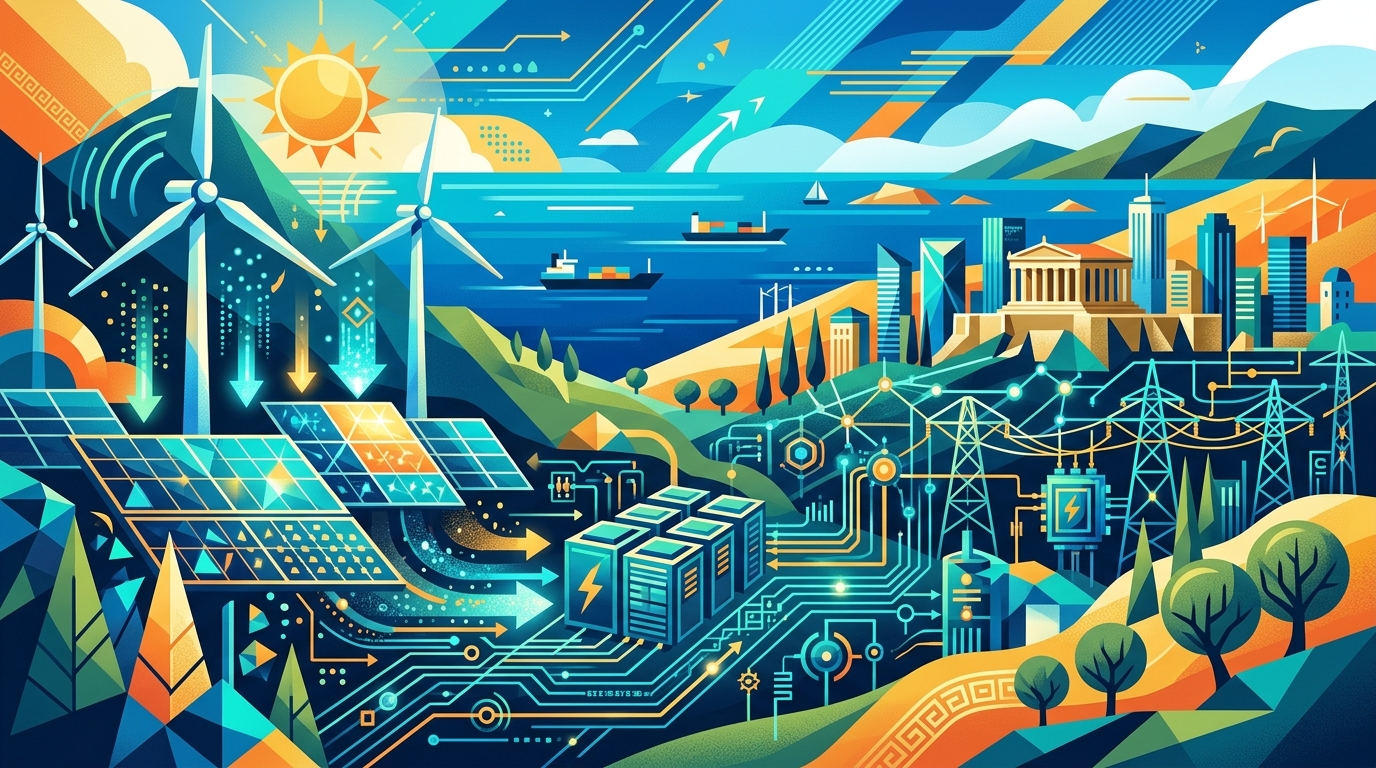
ADMIE is implementing an ambitious investment program worth billions of euros, aiming to make the Greek electrical system capable of absorbing the massive production from wind and solar farms. Mr. Margaris emphasized that without robust grids, green energy risks being "trapped," leading to mandatory production curtailments that undermine the economic viability of investments.
ADMIE's strategy focuses on three pillars:
- Strengthening domestic interconnections, with an emphasis on islands and remote areas.
- Developing international interconnections that will transform Greece into a net exporter of energy to Central Europe.
- Digitizing the grid to better manage the intermittency of RES.
Special mention was made of the Greece-Cyprus-Israel electrical interconnection (Great Sea Interconnector), a vital project for the Eastern Mediterranean, as well as the GREGY interconnection with Egypt. These projects are not merely technical achievements; they are geopolitical tools that elevate Athens' role on Europe's energy map.
Storage: The Missing Link
One of the most significant points in Mr. Margaris's analysis concerns energy storage. Since solar and wind production do not always coincide with demand, the ability to store excess energy in batteries or through pumped hydro is the only way to maintain system stability. "The RES safety cushion only becomes truly secure when accompanied by sufficient storage capacity," he noted.
"The transition is not a straight line, but a continuous adaptation to technological developments and market needs. ADMIE is the guarantor of this stability."
The challenge for 2026 and beyond is accelerating tenders for storage systems to limit the green energy curtailments observed during hours of low demand. Mr. Margaris pointed out that the market must mature and offer the appropriate economic incentives for such investments.
Economic Benefit and Social Cohesion
Finally, the ADMIE Vice-Chairman linked the energy transition to the cost of living. High RES participation leads to lower prices in the wholesale electricity market, which in the long run should be passed on to the final consumer. However, he warned that the cost of infrastructure is significant and requires careful planning to ensure that citizens are not disproportionately burdened.
Greece, from a country once reliant on polluting lignite, is transforming into a clean energy hub. This path, though difficult, is a one-way street for achieving 2030 targets and securing a sustainable economy that will not depend on the fluctuations of international natural gas prices.