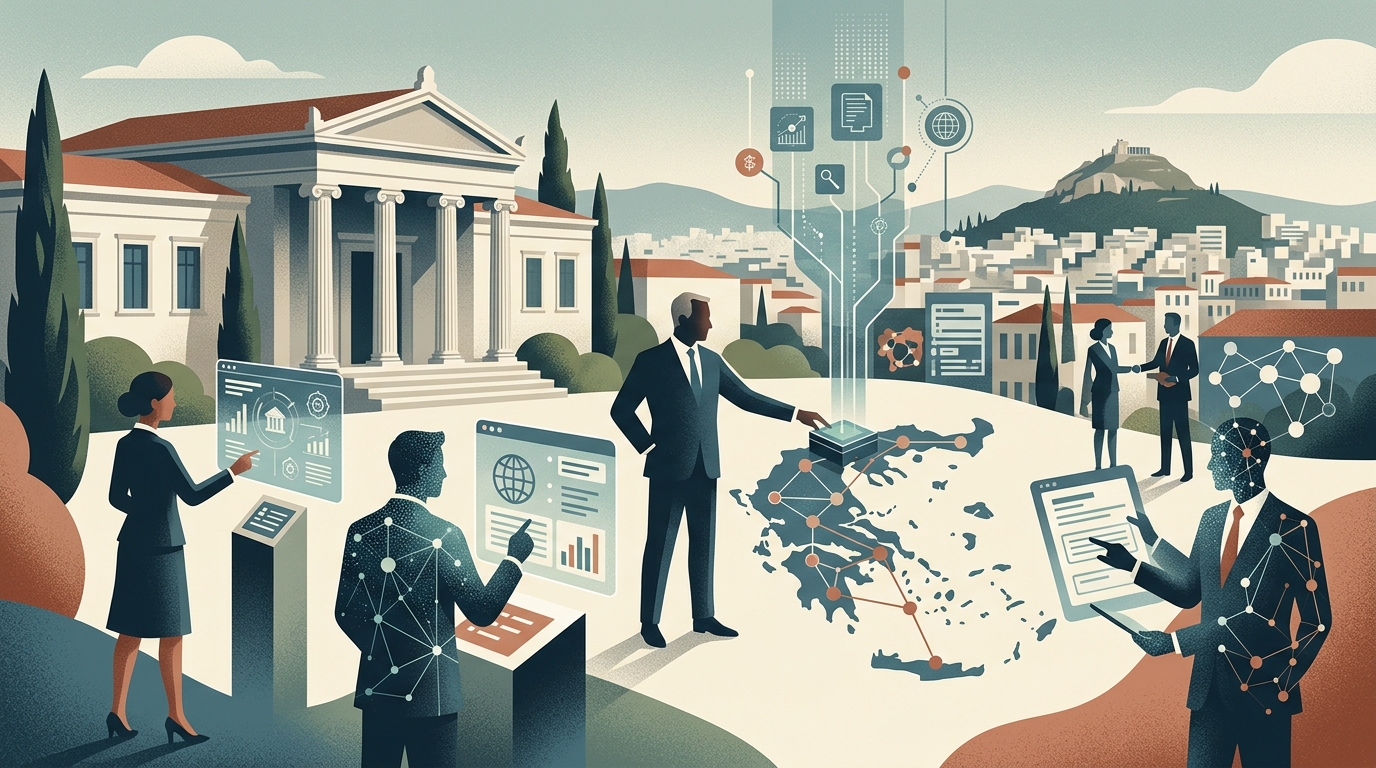
At a time when Western Macedonia is seeking its new productive model following the de-lignitization process, Kozani has become the center of a critical dialogue about the future of technology in Greece. The recent event organized by the Technical Chamber of Greece (TEE) – Western Macedonia Department, was not just a technical seminar, but a strategic summit on integrating Artificial Intelligence (AI) into the engineering sector.
The engineering profession, traditionally linked to physical presence, precision calculations, and strict safety standards, is currently facing a revolution equivalent to the introduction of CAD (Computer-Aided Design) four decades ago. However, AI is not merely a design tool; it is a partner capable of processing vast amounts of data in real-time, suggesting optimal solutions, and predicting material failures before they occur.
The Transformation of the Engineering Process
During the event, the significance of Generative AI in architectural and structural design was highlighted. Engineers no longer start from a blank page but from a set of parameters—such as cost, materials, environmental conditions, and energy efficiency. AI can generate hundreds of alternative design scenarios, allowing the human engineer to select the most sustainable and cost-effective solution.
Particular emphasis was placed on the use of Digital Twins. These are virtual replicas of physical infrastructures fed with data from sensors. In Kozani, a region with an extensive district heating network and energy installations, the application of such technologies can optimize energy distribution and drastically reduce operational costs. Speakers emphasized that AI is not here to replace the engineer but to liberate them from repetitive tasks, allowing them to focus on creativity and solving complex problems.
Kozani as a Laboratory for the Just Transition
The choice of Kozani for such an event is not accidental. Western Macedonia is at the heart of the Just Development Transition Plan (SDAM). The transition from lignite to renewable energy sources and the circular economy requires advanced engineering solutions. AI can play a decisive role in managing smart grids and energy storage, sectors that are vital for the country's energy security.
Furthermore, the integration of AI into engineering can make the region attractive for new high-tech investments. If local Greek engineers are equipped with the necessary digital skills, Kozani could transform from a mining region into a hub for innovation and digital services. This, of course, requires close cooperation between the TEE and the University of Western Macedonia, a point repeatedly stressed by the participants.
Ethics, Liability, and the Regulatory Framework
Despite the opportunities, the discussion in Kozani did not shy away from difficult questions. Who bears the responsibility if an AI algorithm suggests a flawed structural design? How is data privacy ensured in a "smart" city? Participants discussed the need for a new code of ethics for engineers in the AI era.
The European AI Act is the first step, but its application in the daily practice of an engineer requires continuous education. The TEE is taking a leading role here, promoting lifelong learning programs so that its members do not fall behind. The "black box" nature of certain algorithms remains a challenge, as the engineer must always be able to explain and justify their final decision, ensuring public health and safety.
Conclusions: A New Identity for the Greek Engineer
The event in Kozani made it clear that Artificial Intelligence is here and it is not optional. For the Greek engineer, adopting these tools is a matter of competitiveness in a globalized environment. The country possesses excellent human capital, and the coupling of traditional engineering expertise with digital intelligence can lead to infrastructure projects that are more resilient, greener, and more economical.
In conclusion, the message from Western Macedonia is one of optimism. Technology, when used wisely and under the supervision of qualified professionals, can become the catalyst for the rebirth of entire regions. The engineer of the future will be an "orchestrator" of intelligent systems, always maintaining the critical thinking that no machine can replace.