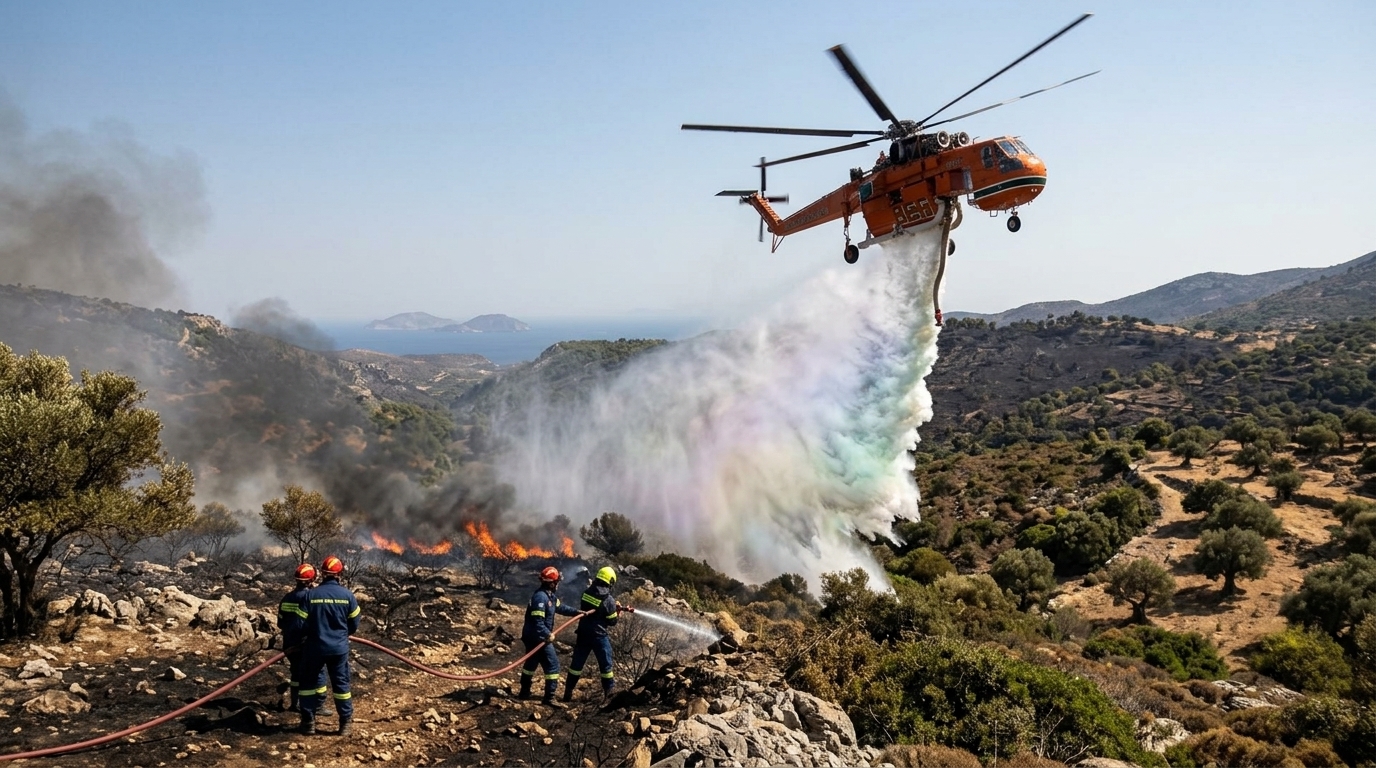
The news that the fire in the Almyropotamos area of Karystos has been contained (delineated) comes as a temporary sigh of relief for a region that has been repeatedly scarred by wildfires. Since Sunday afternoon, the mobilization of the Fire Service has been immediate and massive, reflecting the new "rapid response" doctrine that has been prioritized in recent years. With 120 firefighters, 5 ground teams, and the support of aerial assets, the battle was fought across the rugged terrain typical of southern Evia, where high winds remain the most persistent and dangerous adversary.
The Geography of Risk and the Trauma of Evia
Evia is not just another spot on the Civil Protection map. Following the catastrophic fires of 2021 in Northern Evia, every spark on the island is treated as a national emergency. Karystos, in particular, due to its location in the path of the "Meltemia" (strong, dry north winds), presents unique challenges that make firefighting exceptionally difficult. The vegetation, while less dense in some areas compared to the North, consists of highly flammable material that, under conditions of prolonged drought, turns into a powder keg.
Delineating a fire means that forces have managed to establish a control perimeter, preventing further spread. However, as experts point out, this does not mean the fire is extinguished. Flare-ups remain the greatest fear, especially when the thermal load in the ground remains high and wind gusts can carry embers over long distances. The decision to keep 120 firefighters on the field throughout the night is essential for securing the area and preventing a secondary outbreak.
Technology and Prevention: The New Line of Defense
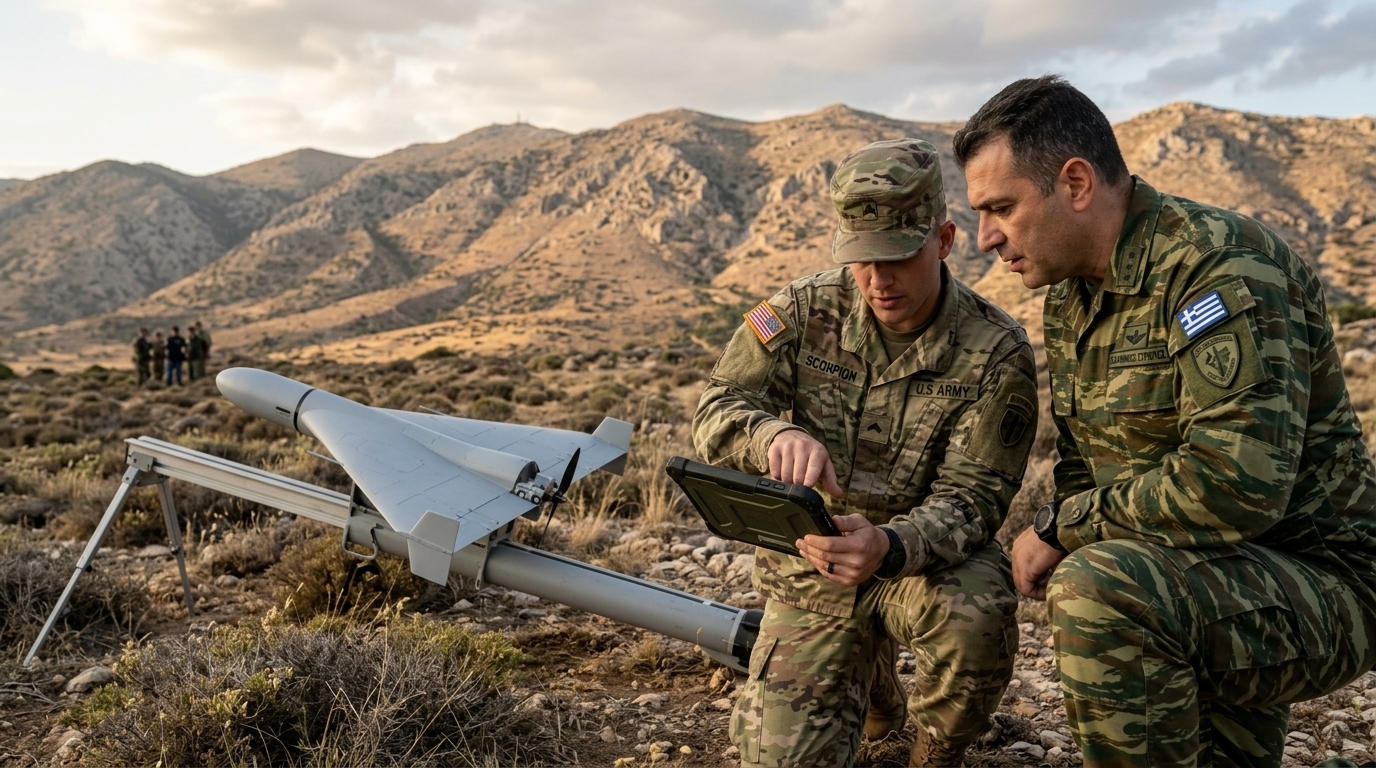
Within the framework of modern firefighting, the use of drones and early warning systems played a crucial role in locating the fire source in Almyropotamos. The ability of operational centers to have real-time visual data allows for a more rational distribution of forces. Nevertheless, the debate in Greece remains trapped in the "suppression vs. prevention" dichotomy. While spending on aerial assets and suppression equipment is increasing, forest management and the clearing of flammable biomass during the winter months often take a backseat.
- The importance of firebreaks that acted as a buffer against the flames.
- The role of local authorities and volunteers in supporting professional forces.
- The need to revise risk maps based on new climatic data.
The Climate Crisis is no longer a theoretical threat but a reality experienced every summer. Rising average temperatures and decreasing rainfall have extended the fire season, making even June a high-risk month. The case of Karystos reminds us that nature does not forgive negligence and that the protection of our forest ecosystems requires a holistic approach that begins long before the first puff of smoke appears.
"Containment is the first step, but the battle against climate change requires endurance and strategic depth that transcends the seasonality of wildfires."
Conclusions and the Path Forward
As forces remain on alert in Evia, the political and social stake remains resilience. Karystos managed to avoid the worst this time, thanks to the self-sacrifice of firefighters and the coordination of assets. However, the question lingering over every forest area in the country is whether the system can withstand the pressure of multiple fronts during a heatwave. Investing in scientific knowledge and active forest management is the only way to ensure that containment is not just a postponement of disaster, but a genuine victory for life against the grey of the ash.