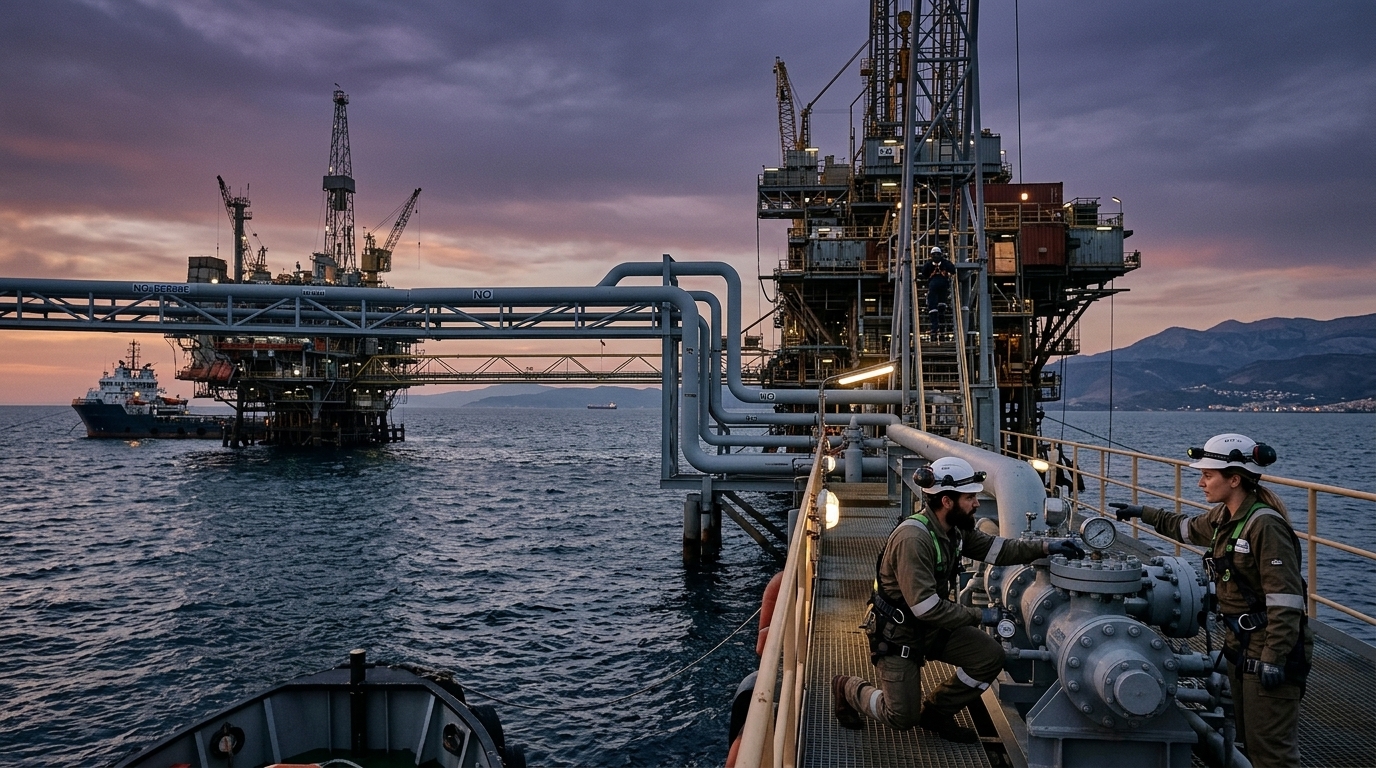
In a move that fundamentally redraws the energy map of Southeast Europe, Greece’s Minister of Development, Takis Theodorikakos, has officially approved the construction and installation of the jacket foundation for the new "Omega" offshore platform. This structure serves as the backbone of the Prinos Apollo project, spearheaded by ENEARTH, a subsidiary of Energean. This development is far more than a regulatory milestone; it is the starting signal for the first large-scale Carbon Capture and Storage (CCS) infrastructure in the Mediterranean.
The Technical Prowess of the Omega Platform
The Omega platform is no ordinary offshore structure. Specifically designed to operate within the depleted reservoirs of the Gulf of Kavala, its "jacket" foundation will provide the stability required for sophisticated carbon dioxide (CO2) injection operations. The choice of Prinos is strategic: the region's geological formations have proven their integrity over decades of oil and gas extraction, demonstrating an exceptional ability to contain fluids and gases under high pressure.
According to the technical specifications, the platform will be linked via subsea pipelines to onshore storage and processing facilities. The technology ensures that CO2 is sequestered at depths exceeding 2,000 meters, within porous rock layers that once held crude oil. This process is vital for meeting the European Green Deal's objectives, as it provides a lifeline for "hard-to-abate" sectors—such as cement manufacturing and heavy refining—to continue operations while drastically slashing their carbon footprint.
Strategic Importance and Economic Impact
The Prinos Apollo project is recognized as a Project of Common Interest (PCI) by the European Union and is partially funded by the Recovery and Resilience Facility (RRF). The total investment is projected to exceed €500 million, promising to create hundreds of high-skilled jobs during the construction phase and dozens of permanent positions once operational. However, the project's true economic value lies in the competitive edge it offers to Greek and regional industry.
- Reduction in Carbon Emission Allowance (ETS) costs for heavy industry.
- Creation of a new export sector: carbon storage services for neighboring states.
- Enhancement of energy security and technical expertise in the Eastern Macedonia region.
The Minister of Development emphasized that this approval is a cornerstone of a broader strategy for Greece's "green re-industrialization." By hosting such critical infrastructure, Greece aims to transition from a technology importer to a regional provider of environmental solutions for the Balkans and the wider Mediterranean basin.
Challenges and the Future of Carbon Storage
Despite the prevailing optimism, the project faces significant hurdles. Managing CO2 in an offshore environment necessitates the most stringent safety protocols and continuous monitoring to prevent leakage. ENEARTH has committed to adhering to the highest international safety standards. Meanwhile, the local community in Kavala remains vigilant, demanding ironclad guarantees regarding the protection of the marine ecosystem and the region's vital tourism industry.
"Prinos is turning a page. From the era of oil extraction, we are moving into the era of environmental restoration and sustainable development," stated an ENEARTH executive during the project's unveiling.
Upon the completion of the Omega platform, Greece will possess an infrastructure capable of sequestering millions of tons of CO2 annually. This "underground carbon parking" represents a technological answer to the climate crisis, facilitating a smooth transition toward climate neutrality by 2050 without dismantling Europe's industrial foundation.