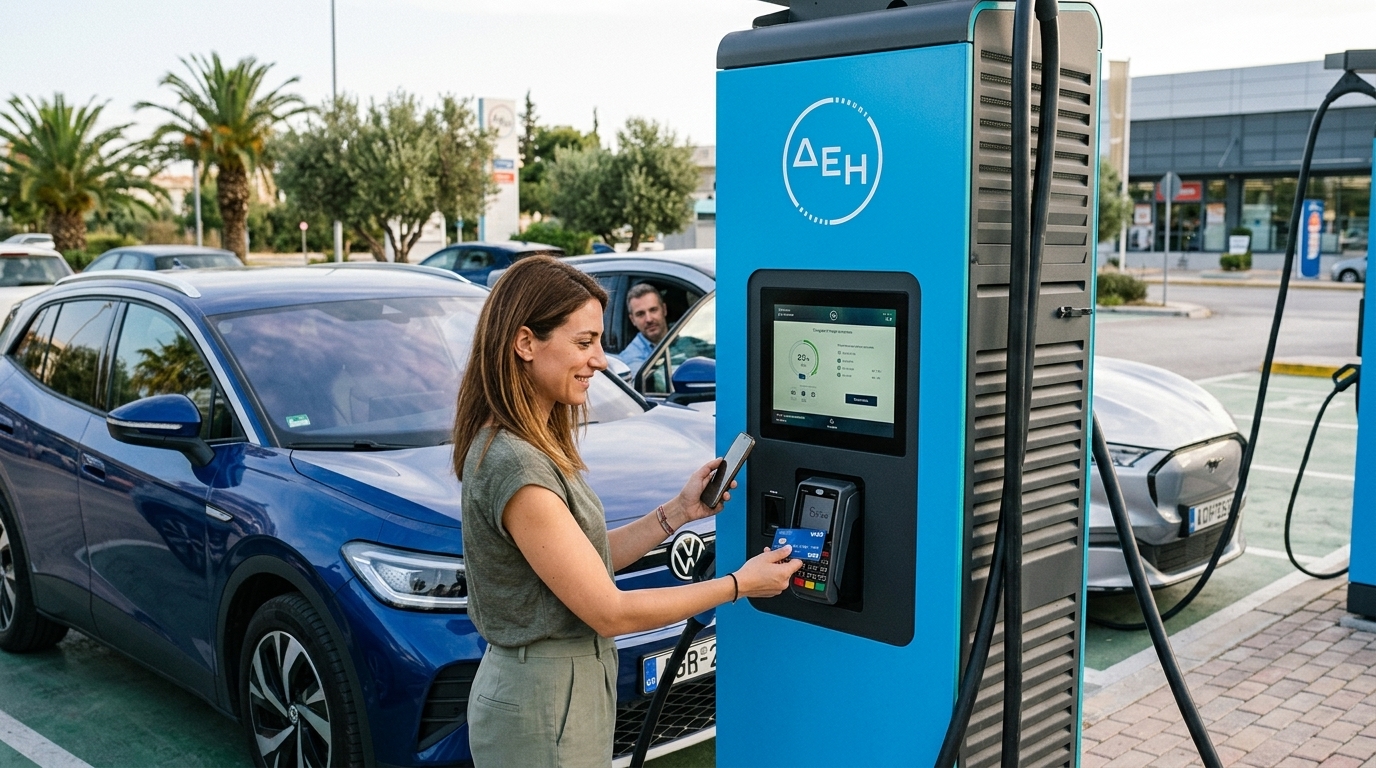
Electromobility in Greece is no longer a distant vision but a rapidly evolving daily reality. At the heart of this transition lies ΔΕΗ blue, the country's largest public charging network, which, in collaboration with global payments giant Visa, has announced a new initiative to reward electric vehicle (EV) drivers. This move is not merely a commercial promotion but a strategic step toward removing the economic barriers that often accompany the adoption of new technologies.
The Architecture of the Offer and User Experience
According to recent announcements, drivers who use the ΔΕΗ blue network and choose a Visa card for their transactions via the ΔΕΗ blue app benefit from a significant cashback reward. Specifically, the offer provides a €3 refund for every charge worth at least €15. With the possibility of redeeming this up to six times per month, a user can earn a total of up to €18 monthly. This amount is credited directly to the user's "digital wallet" within the app, drastically reducing the vehicle's operating costs.
The process has been designed with simplicity in mind. The user links their Visa card to their ΔΕΗ blue profile, and the reward is applied automatically. This "frictionless payment" approach is critical for EV adoption, as the complexity of charging systems has historically been one of the biggest complaints among consumers in Europe. ΔΕΗ blue, having already installed over 2,500 charging points nationwide, aims to make charging as simple as a contactless payment for a cup of coffee.
The Broader Context of the Green Transition in Greece
This partnership takes place at a time when Greece is striving to close the gap in electromobility compared to Northern Europe. Through the "Moving Electrically 3" programs, the government has provided strong incentives for vehicle purchases, but infrastructure and operating costs remain the critical factors for the project's sustainability. PPC (ΔΕΗ), transforming from a traditional energy provider into a modern technology and services group, understands that the future lies in partnership ecosystems.
- Network Expansion: ΔΕΗ blue aims to cover national highways and urban centers, eliminating "range anxiety."
- Digital Transformation: The ΔΕΗ blue app is evolving into a central hub for the driver, offering everything from availability maps to personalized offers.
- Banking Partnerships: Visa's involvement highlights the confidence of international financial players in the prospects of the Greek energy market.
Analysis and Outlook
But why is Visa choosing to invest in such a partnership? The answer lies in the data. EV drivers belong to a demographic group with high purchasing power and technological literacy. Through these offers, Visa ensures it remains the preferred payment method in a sector expected to see explosive growth in the coming years. On the other hand, ΔΕΗ blue is building loyalty in a market that will soon become highly competitive with the entry of new players from the oil industry and independent providers.
"Electromobility is not just a matter of cables and batteries, but a matter of incentives and convenience. Our partnership with Visa is proof that technology can make green living more affordable," industry executives state.
In conclusion, the ΔΕΗ blue – Visa initiative serves as a model for how the private sector can support public environmental policies. While €18 may seem like a small amount individually, on an annual basis, it reaches €216, an amount that covers a significant portion of the annual charging costs for an average city driver. As infrastructure matures and synergies multiply, the question is no longer "if" someone will buy an electric car, but "how soon" they will do so.