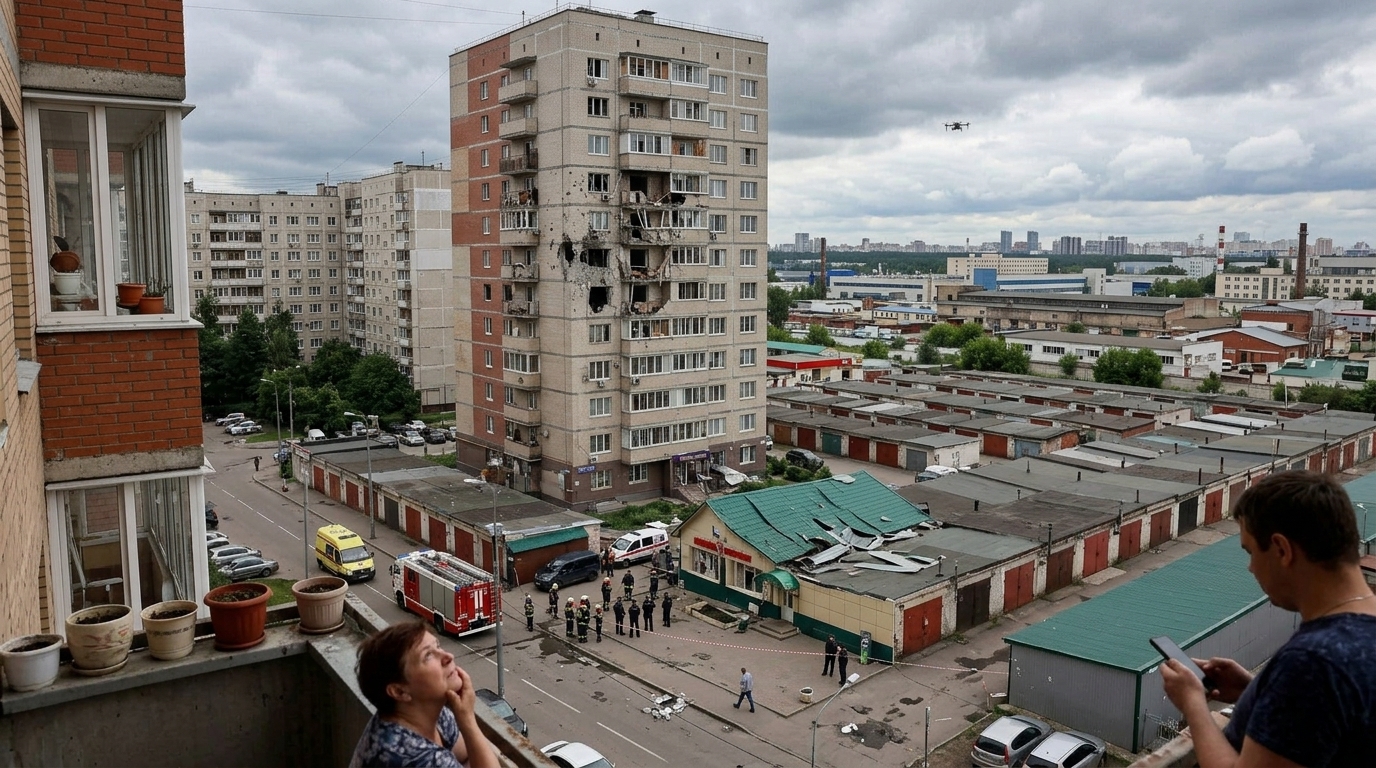
The sight of the night sky over Moscow illuminated by the bursts of anti-aircraft systems is no longer a rare exception, but a recurring reality. The recent interception of 50 Ukrainian unmanned aerial vehicles (UAVs) heading towards the Russian capital, as announced by Mayor Sergey Sobyanin, represents one of the largest waves of attacks since the conflict began. This event is not merely a military operation; it is a statement of intent and a demonstration of the technological progress Kyiv has achieved under the pressure of survival.
The Strategy of Asymmetric Response
For a long time, the war in Ukraine was geographically confined to the front lines in the east and south. However, Kyiv's strategy has shifted dramatically. The inability to use Western long-range missiles for strikes deep inside Russian territory—due to political restrictions imposed by NATO allies—forced Ukraine to invest in a domestic drone industry. These "cheap" weapons, compared to expensive cruise missiles, allow Ukraine to bring the cost of war to the heart of Russia.
This attack aimed not only at military installations but also at the psychological destabilization of the Russian population. When drones reach Domodedovo or Ramenskoye, the daily lives of Muscovites are disrupted, flights are canceled, and the sense of "invulnerability" cultivated by the Kremlin collapses. The strategic value of these attacks lies in forcing the relocation of Russian air defense systems from the front lines to protect the cities.
Artificial Intelligence and Autonomous Navigation
One of the most interesting elements of this escalation is the evolution of the drones themselves. According to analysts, Ukraine is now using systems that incorporate AI elements for terminal guidance. This allows drones to recognize their targets through visual comparison (image matching) without relying exclusively on GPS, which the Russians systematically jam through Electronic Warfare (EW).
- Autonomy: Drones can change course if they detect jamming signals.
- Swarming: Sending 50 units simultaneously aims to saturate air defenses, forcing them to deplete ammunition on cheap targets.
- Range: The ability to travel over 800 kilometers demonstrates significant improvements in engines and fuel management.
"The drone war is no longer the future; it is the present reshaping the geopolitical balance in Europe," say defense industry sources.
Political Implications for the Kremlin
Moscow attempts to downplay the event, focusing on the effectiveness of its air defense. However, the frequency of the attacks creates internal friction. Putin faces a dilemma: to intensify attacks on Ukrainian infrastructure, risking further international isolation, or to seek shielding methods that cost billions of rubles. The use of 50 drones at once shows that Ukrainian production has reached industrial-scale levels, something Russia did not expect at the start of the "special military operation."
In conclusion, the attack on Moscow is a milestone. It shows that technology can compensate for a lack of conventional power and that borders in modern warfare are now porous to innovation. As 2026 progresses, the ability of both sides to integrate AI into their weapons systems will determine not only the outcome of battles but also the viability of their political leaderships.