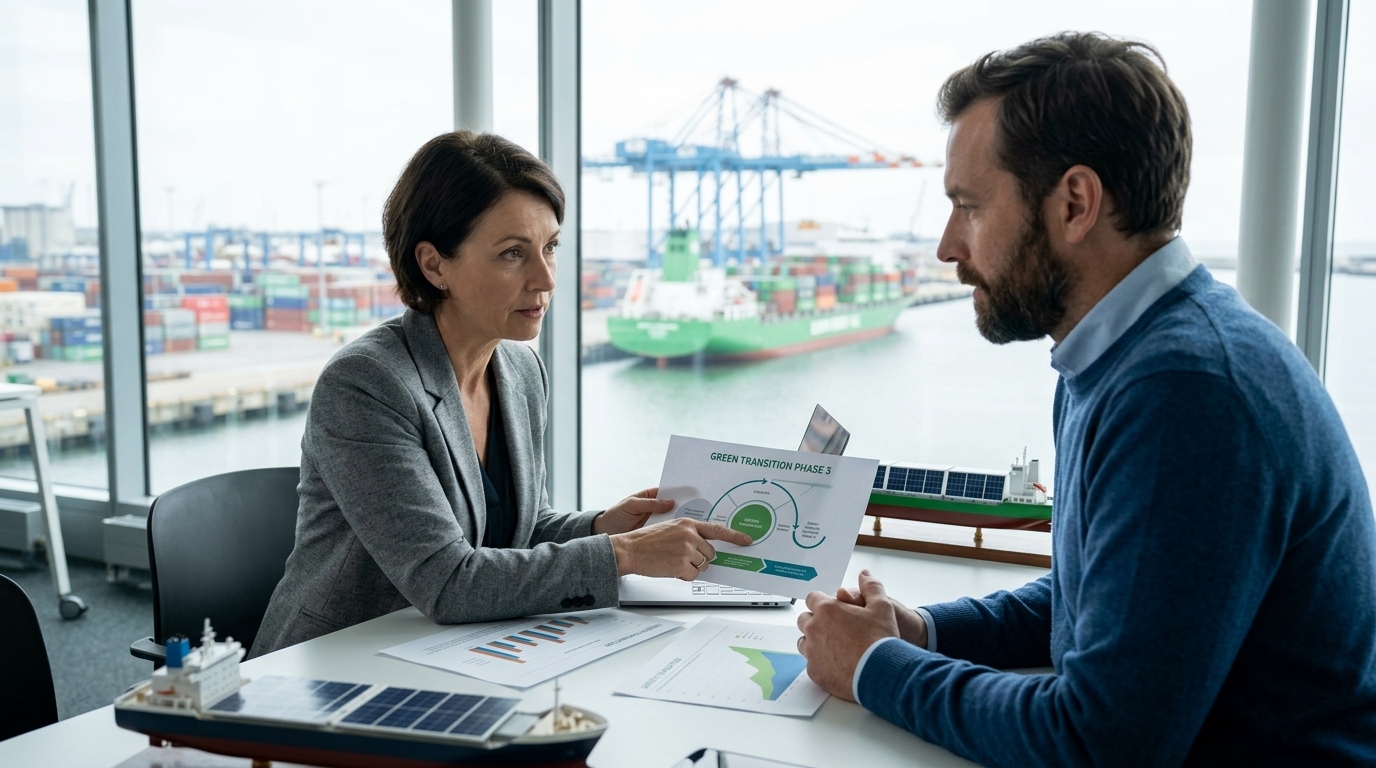
Global shipping is at a historic crossroads. As pressure to address the climate crisis intensifies, the industry is being called upon to redefine its foundations, transitioning from traditional fossil fuels to sustainable, green solutions. At the heart of this effort for the Eastern Mediterranean region lies the METAVASEA programme, which has announced its entry into the third and most decisive phase of implementation. Coordinated by the Hellenic Marine Environment Protection Association (HELMEPA) and supported by the Lloyd’s Register Foundation, the programme aims to make our region a model for the green transition.
The Strategic Importance of the Third Phase
The third phase of METAVASEA is not merely a continuation of previous actions but a qualitative upgrade in approach. While the initial phases focused on mapping needs and creating a network of cooperation, the current phase emphasizes practical application and training. The central theme is "preparing the workforce," as technological progress is meaningless if seafarers and shore-based personnel lack the necessary skills to manage new challenges.
Specifically, the programme focuses on developing specialized training modules concerning the use of alternative fuels such as ammonia, hydrogen, and methanol. While these fuels promise zero emissions, they present significant challenges regarding safety, transport, and storage. METAVASEA seeks to create a unified safety framework to be adopted by ports and shipping companies in Greece, Cyprus, and Egypt.
Training and Human Capital
One of the most important components of the third phase is the "Train the Trainer" programme. HELMEPA recognizes that for mass adoption of new practices to occur, a core group of instructors must be created to disseminate knowledge throughout the ecosystem. This involves not only technical expertise but also a new culture of environmental consciousness. According to programme officials, the transition is not only technological but primarily cultural.
- Development of digital training tools (e-learning platforms).
- Conducting seminars on the safety of alternative fuels.
- Collaboration with maritime academies to update curricula.
- Creation of a network for exchanging best practices among Mediterranean countries.
"Eastern Mediterranean shipping has the opportunity to lead the global effort for decarbonization, provided we invest today in our most important resource: our people," states the programme's guidelines.
Regional Cooperation and Geopolitical Dimension
The choice of the Eastern Mediterranean as the application field for METAVASEA is no coincidence. The region is one of the busiest shipping lanes in the world, connecting Europe to Asia via the Suez Canal. The cooperation between Greece, Cyprus, and Egypt within the framework of the programme highlights the importance of regional stability and a shared vision for the blue economy.
Egypt, with the port of Port Said and the Canal, plays a key role in bunkering. Its inclusion in the programme ensures that infrastructure on the other side of the Mediterranean will be compatible with the European standards promoted by Greece and Cyprus. This cross-border approach is essential to avoid market fragmentation and ensure the region's competitiveness.
Challenges and the Future
Despite the optimism, challenges remain immense. The cost of the green transition is estimated at trillions of dollars globally. For the Eastern Mediterranean, where the fleet consists largely of medium-aged vessels, the need for retrofitting or vessel replacement is urgent. METAVASEA attempts to bridge the gap between strict International Maritime Organization (IMO) regulations and market reality.
In conclusion, the third phase of the METAVASEA programme represents a bold step toward the future. By emphasizing training, safety, and cooperation, HELMEPA and its partners are laying the groundwork for a shipping industry that respects the environment without sacrificing its economic viability. The stakes are high, but the programme's success could serve as a roadmap for the entire global shipping industry.