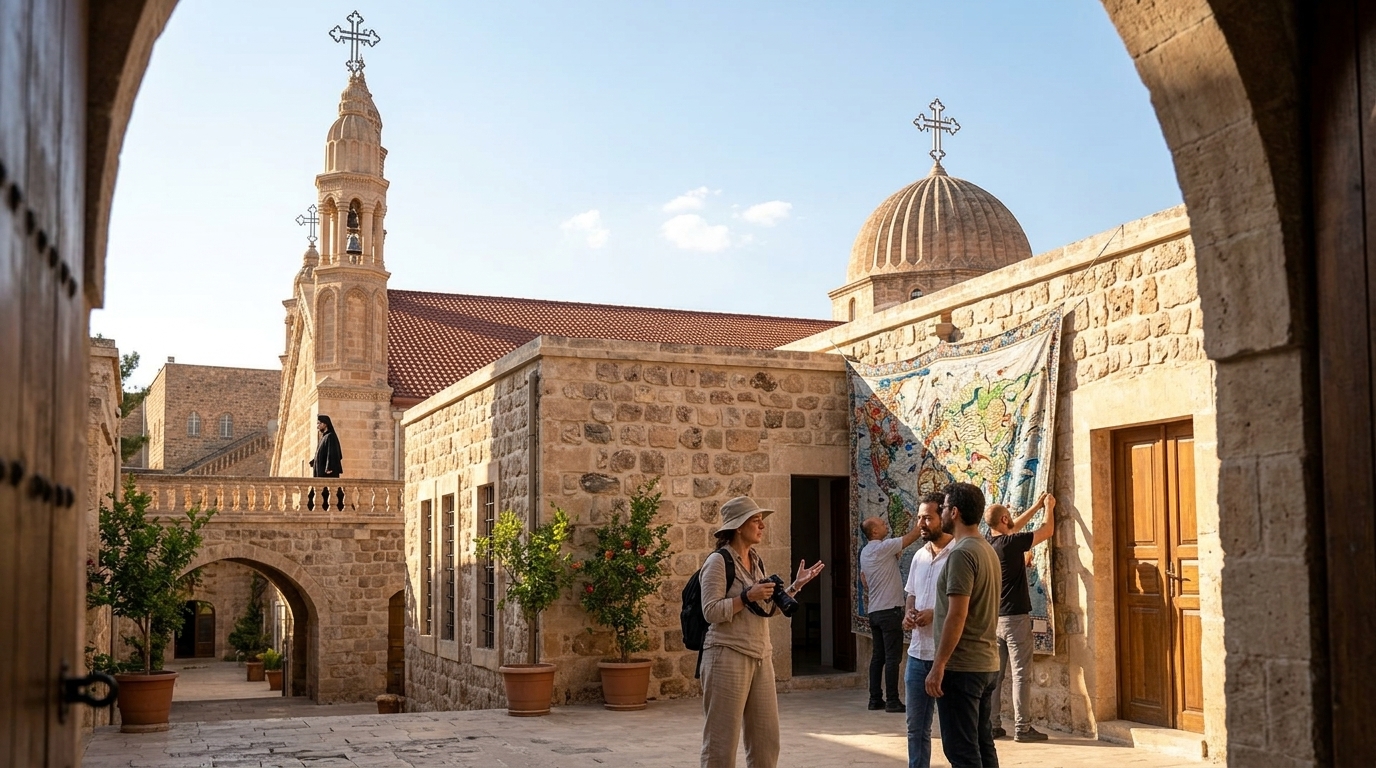
Perched atop a hill overlooking the vast Mesopotamian plains, where ancient stones whisper stories of millennia, the Mardin Biennale 2026 emerges as a beacon of cultural diplomacy and artistic inquiry. This 7th edition is not merely a visual arts exhibition; it is a profound immersion into collective memory and an attempt to redefine our relationship with the past through the lens of technological advancement. Mardin, with its unparalleled Artuqid architecture and multicultural essence, provides the ideal stage for a dialogue that transcends borders and eras.
The Convergence of Tradition and Digital Innovation
For 2026, the Biennale’s theme focuses on the concept of "Timeless Echoes." Unlike previous editions, this year features a robust integration of new media and artificial intelligence within historic venues such as the Mor Hananyo Monastery and the ancient bazaar. Artists from the Middle East, Europe, and Asia are utilizing algorithmic art to reconstruct lost manuscripts or create soundscapes that blend ancient dialects with synthetic tones. This "digital archaeology" allows visitors to experience history not as a static relic, but as a living organism that continues to evolve.
The use of Augmented Reality (AR) allows abandoned caravanserais to "come alive" again, projecting holograms of Silk Road merchants and travelers, while simultaneously raising questions about the nature of reality in the age of deepfakes. The curatorial team has ensured that technology does not overshadow Mardin’s stone-carved charm but acts as a magnifying glass highlighting the details of historical continuity.
Cultural Diplomacy and Regional Stability
The Biennale is part of the broader "Culture Route" initiative promoted by the Turkish Ministry of Culture and Tourism. In a period of geopolitical shifts, choosing Mardin—a city near the Syrian border—sends a powerful message of peaceful coexistence. The city, where Turks, Kurds, Arabs, and Assyrians live side-by-side, serves as a natural laboratory for social cohesion. Art here is not a luxury; it is a tool for understanding the "Other."
- Over 50 international artists participating with site-specific works.
- Utilization of historic buildings opening to the public for the first time.
- Workshops for local youth focusing on the fusion of traditional crafts and coding.
- Roundtable discussions on the role of art in conflict zones.
The economic impact on the region is already visible, with tourism infrastructure being upgraded without compromising the traditional character of the settlements. Local artisans are collaborating with contemporary designers, creating a new market that combines high aesthetics with traditional craftsmanship.
The Challenge of Sustainability
One of the core issues addressed in this year's event is environmental sustainability. In a region affected by climate change and water scarcity, many works focus on ecological consciousness. Solar-powered installations and pieces using recycled materials from local excavations underscore the need for a new ethic towards nature. The Mardin Biennale 2026 does not only look back at history or forward at technology, but also around at the fragile ecosystem that hosts it.
"Art in Mardin is not just an aesthetic experience; it is an act of resistance against oblivion and a bridge to the future we are building together," states one of the exhibition curators.
In conclusion, the 2026 Biennale establishes Mardin as one of the most significant cultural destinations globally. It is a reminder that, even in the most challenging times, beauty and dialogue remain the only constant values capable of uniting humanity.