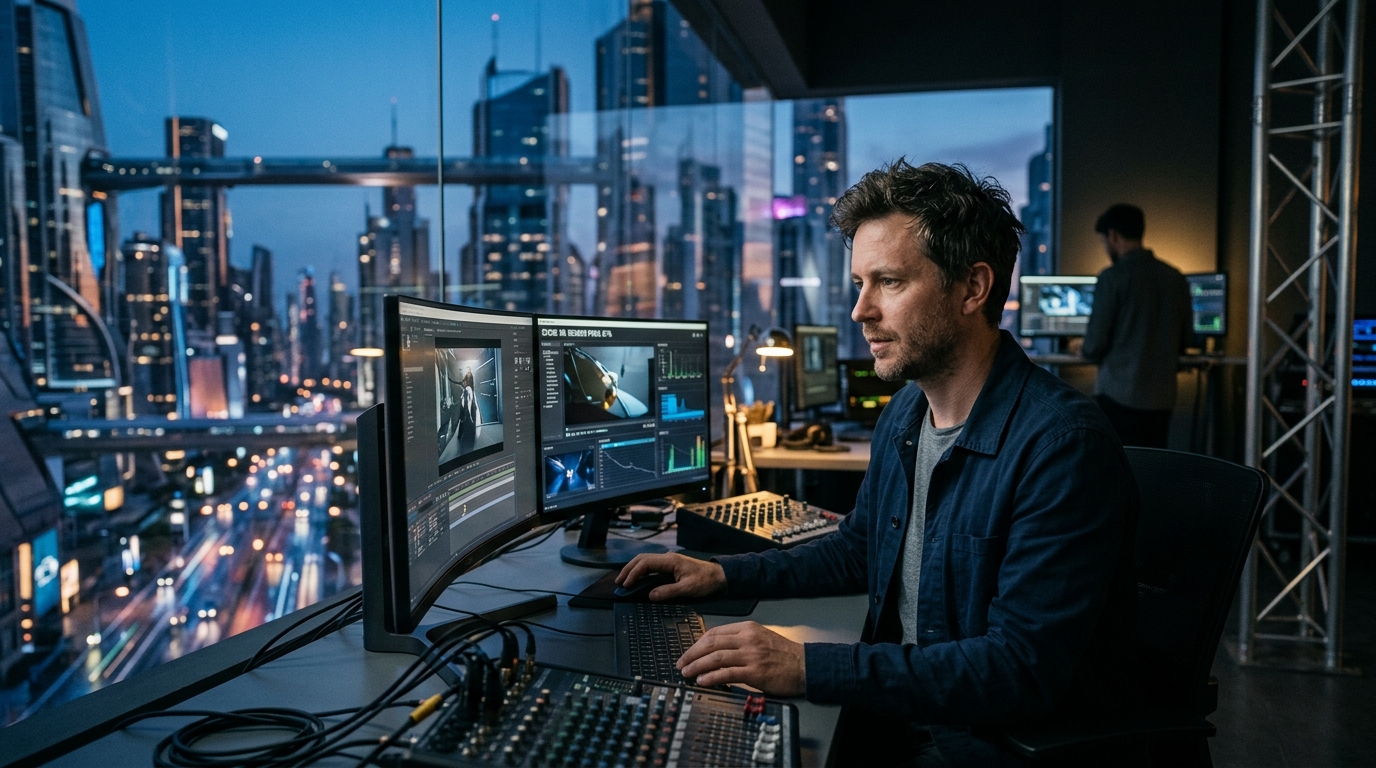
June 2026. The animation industry, historically one of the most labor-intensive and expensive sectors of entertainment, is in the throes of a sweeping transformation. According to recent reports from Bloomberg Tech, leading filmmakers and studio executives now claim that Artificial Intelligence (AI) can slash feature film production costs by as much as 90%. What once required hundreds of artists, five years of labor, and a $200 million budget is approaching a new reality where speed and economy reign supreme.
The Math of Disruption: How 90% is Achieved
The promise of a 90% cost reduction is not merely marketing hype; it is the result of automating the most time-consuming processes in the animation pipeline. In traditional animation, tasks such as in-betweening, rotoscoping, and rendering consume thousands of man-hours. With the advent of advanced generative video models, these processes are becoming nearly instantaneous.
Producers note that AI is not just replacing the final visual output but reshaping the entire workflow. From automated storyboarding that converts directly into 3D environments to neural networks handling lighting and texture mapping, the need for massive render farms and armies of junior animators is dwindling. "We are no longer talking about saving time; we are talking about the collapse of the traditional Hollywood business model," says a director experimenting with tools like Sora 3 and Runway Gen-5.
The Labor Crisis and the End of Apprenticeship
However, this economic efficiency comes with a heavy social price. The animation industry has always relied on an apprenticeship system: young artists started with "menial" tasks like line cleaning or coloring, learning their craft before moving into lead animator roles. With AI taking over these entry-level positions, the career ladder appears to be broken.
- Disappearance of junior animator and rendering technician roles.
- A shift toward "AI Puppeteers"—artists skilled in directing algorithms rather than drawing by hand.
- Increasing pressure from labor unions to protect human creativity in collective bargaining agreements.
The backlash from artists is significant. Many argue that the cost reduction will lead to a flood of soulless "content," where algorithmic uniformity replaces the unique style of human creators. Conversely, tech proponents argue that AI will enable independent creators to compete with giants like Disney and Pixar, democratizing access to high-end visual effects.
The Indie Renaissance
Perhaps the most compelling aspect of this reckoning is the empowerment of small teams. Today, a team of five can produce a film with visual fidelity that a decade ago would have required 500 people. This opens the door for bolder, more experimental stories that major studios would typically avoid due to financial risk. AI lowers the cost of failure, allowing creators to take unprecedented creative risks.
"Technology isn't killing animation. It's killing the monopoly that big budgets had over quality," an independent producer told Bloomberg.
In conclusion, animation stands at a crossroads. While a 90% cost reduction is a financial miracle for investors, the industry must find a way to preserve the human spark and protect its workforce. The future of the films we love will not be judged by how cheaply they can be made, but by whether they continue to move us in a world filled with perfect, yet artificial, imagery.