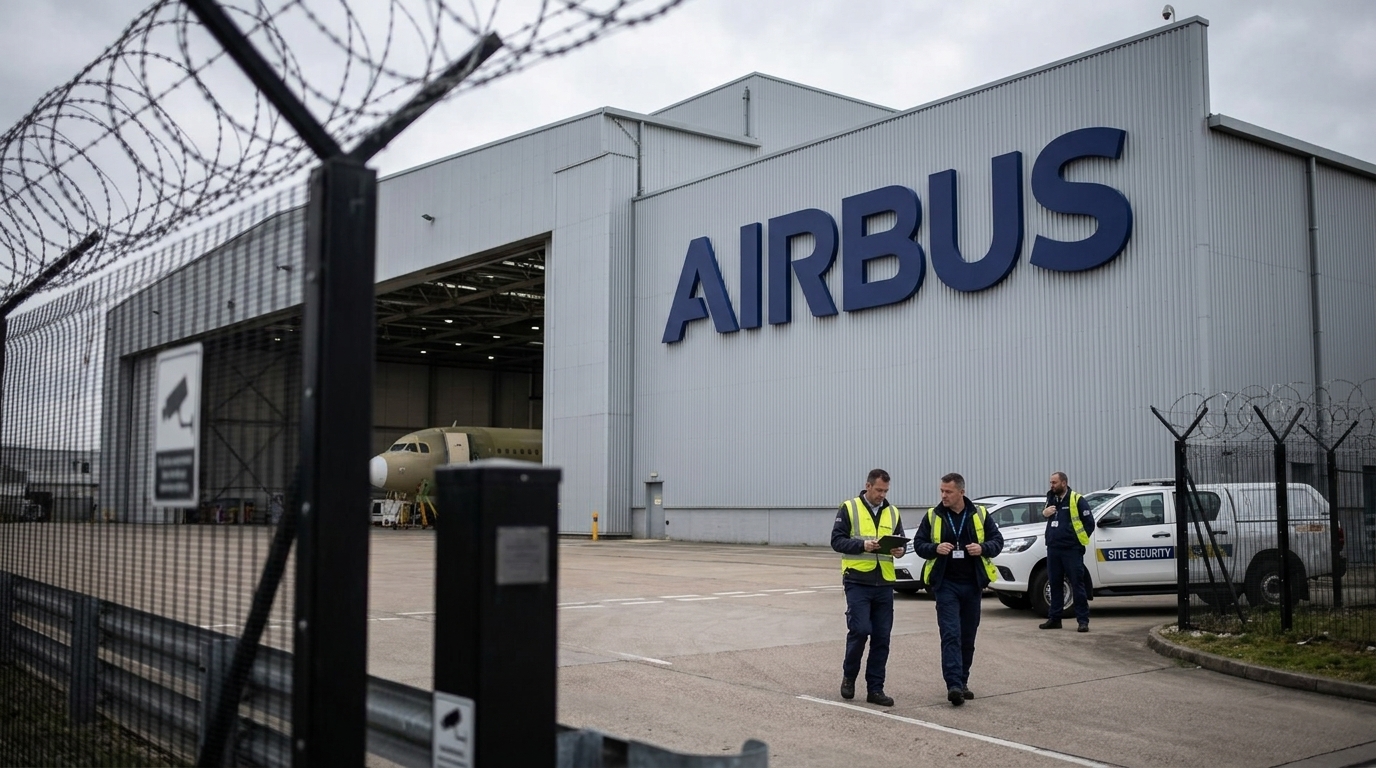
The European defense industry is at a critical juncture as traditional alliances are tested by national ambitions and the technological demands of the future. Airbus's recent push for a German-led 6th-generation fighter jet project, independent of the joint Franco-German Future Combat Air System (FCAS), marks a profound strategic shift. After years of delays, intellectual property disputes, and industrial friction between France's Dassault Aviation and Airbus, Berlin appears to be laying the groundwork for a more autonomous path, focusing on artificial intelligence and unmanned aerial systems (drones).
The FCAS Deadlock and the Emergence of a German Vision
The FCAS program was launched in 2017 as the ultimate symbol of European defense integration. However, the reality has proven far more complex. France, with the strong tradition of Dassault, sought full control over the design, while Germany demanded equal access to cutting-edge technology. Airbus, representing German and Spanish interests, found itself in a constant clash with its French partners. The new plan promoted by Airbus is not just an alternative; it is a statement of intent: Germany does not intend to remain a 'junior partner' in 21st-century air superiority.
This initiative involves an alliance of top-tier German defense groups, including MTU Aero Engines and Hensoldt, aiming to develop a 'system of systems.' It is no longer just about a single aircraft, but a networked platform that will control swarms of drones (loyal wingmen), possess advanced cyber-warfare capabilities, and integrate AI for real-time decision-making. The focus is on 'European strategic autonomy,' but with a clear German core, reducing dependence on time-consuming and politically charged international consortiums.
Technological Superiority: AI, Cloud Combat, and Loyal Wingmen
The 6th-generation fighter envisioned by Airbus transcends the boundaries of traditional aerospace engineering. The heart of the system will be the 'Combat Cloud,' a digital infrastructure allowing instantaneous data exchange between fighters, satellites, ground forces, and unmanned craft. Artificial intelligence will play the role of a 'co-pilot,' analyzing massive volumes of sensor data to identify threats before they are even visible to the human eye.
- Autonomous Drones: Accompanying drones will take on the most dangerous missions, such as suppressing enemy air defenses, while protecting the manned aircraft.
- Stealth 2.0: The use of new materials and designs will render the aircraft nearly invisible to modern quantum radar technology.
- Next-Gen Propulsion: MTU is working on variable-cycle engines that offer maximum range while providing explosive power for close-quarters dogfights.
This technological pivot reflects the new reality shaped after the invasion of Ukraine. Germany, through its 'Zeitenwende' (historical turning point), decided to invest 100 billion euros in modernizing its armed forces. The new Airbus fighter is the spearhead of this effort, seeking to bridge the gap with the US and China.
Geopolitical Implications and Europe's Future
Airbus's move is causing tremors in the Paris-Berlin axis. For Emmanuel Macron, FCAS was the cornerstone of European strategic autonomy. For Berlin, however, security and industrial survival take precedence over symbolism. The possibility of a German withdrawal from FCAS or its relegation to a secondary project could lead to a new European architecture, where Germany might cooperate more closely with the UK (GCAP/Tempest program) or even the US.
"Europe's defense autonomy cannot be held hostage by industrial egos. If FCAS cannot take off, Germany must ensure its air sovereignty by any means necessary," say sources close to the German Ministry of Defense.
In conclusion, Airbus's 'Plan B' is not merely a reaction to a failing partnership. It is the recognition that the warfare of the future will be decided in software labs and production speed, rather than in the halls of diplomatic compromise. Europe risks ending up with two or three different 6th-generation fighters, wasting resources, but for Airbus and German industry, the risk of inaction is far greater than the cost of competition.