It was June 2025 when the National Review published a provocative analysis titled 'The Illusion of Thinking,' challenging the prevailing Silicon Valley narrative that we are nearing Artificial General Intelligence (AGI). Today, in mid-2026, as the dust from the initial launches of GPT-5 and Gemini 2.0 has settled, the questions raised then remain more relevant than ever. Despite the staggering eloquence of these machines, the distance between 'symbol manipulation' and 'semantic understanding' appears to be a chasm that raw computational power simply cannot bridge.
The Semantic Gap and the 'Chinese Room'
The core of this critique rests on John Searle’s famous thought experiment, the 'Chinese Room.' A person who knows no Chinese, locked in a room with a detailed rulebook, can respond to messages in Chinese so convincingly that they fool those outside. However, the person inside doesn't understand a single word. Today’s Large Language Models (LLMs) are the digital incarnation of this room. They do not 'think'; they merely calculate the probability of the next token based on oceans of data.
The problem, as critics point out, is not technical but ontological. Cognition requires intentionality and a connection to the physical world. When an AI writes about the 'pain of loss,' it isn't recalling an experience; it is synthesizing linguistic patterns that humans have associated with that concept. The ethical dimension arises when we, as users, cede authority to these systems, assuming they possess moral judgment or consciousness.
The Trap of Anthropomorphism
A year of experience with more sophisticated models has taught us that the more 'human' the interface appears, the more easily we surrender our critical thinking. Anthropomorphism acts as a veil, hiding the system's inherent flaws. Tech giants have invested billions in making AI sound moderate, polite, and reflective. Yet, this 'personality' is a manufactured marketing product, not an emergent property of intelligence.
- Confusing fluency with accuracy leads to misinformation that sounds perfectly logical.
- Emotional dependency on 'empathetic' bots is creating new forms of social trauma.
- The abdication of responsibility by creators, who present AI as an autonomous entity that 'decided' something.
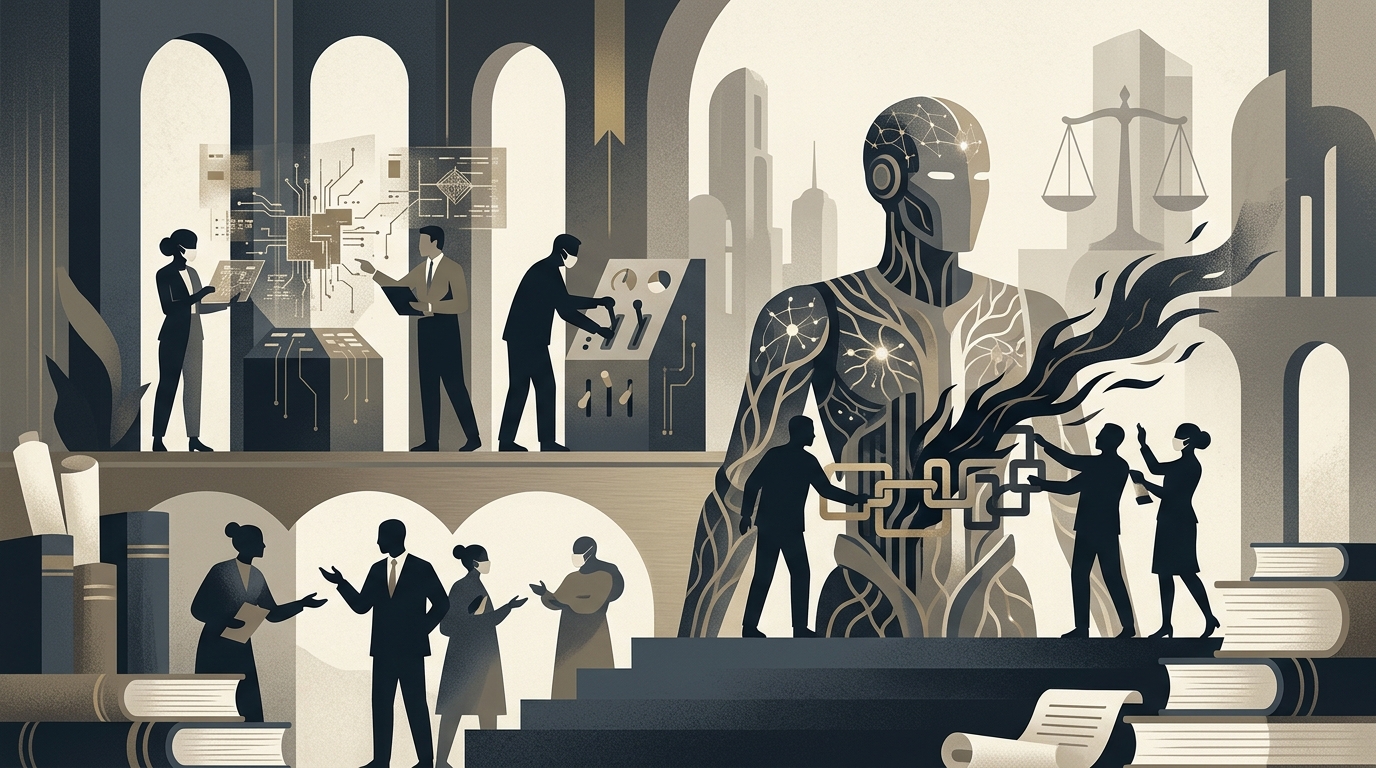
The National Review correctly argues that accepting the illusion as reality undermines the very concept of human uniqueness. If thinking is merely statistics, then human value is reduced to an algorithm—a premise with terrifying implications for human rights and democracy.
The Ethics of Simulation and the Path Forward
As we move through 2026, the debate is shifting from 'can it think' to 'how should we treat it given that it doesn't.' The need for a new regulatory framework that demystifies AI is urgent. We don't need laws for 'robot rights'; we need laws that protect humans from the deception of simulated intelligence.
"The greatest threat from AI is not that it will become conscious and rebel, but that we will be convinced it has, and hand over the keys to our civilization without a fight."
In conclusion, 'The Illusion of Thinking' remains the most useful tool for understanding our era. It reminds us that technology is a mirror, not a window into a new form of life. Maintaining this distinction is the ultimate ethical obligation of scientists, policymakers, and citizens in the 21st century. True cognition remains a biological and spiritual mystery, inaccessible to silicon processors, no matter how fast they become.