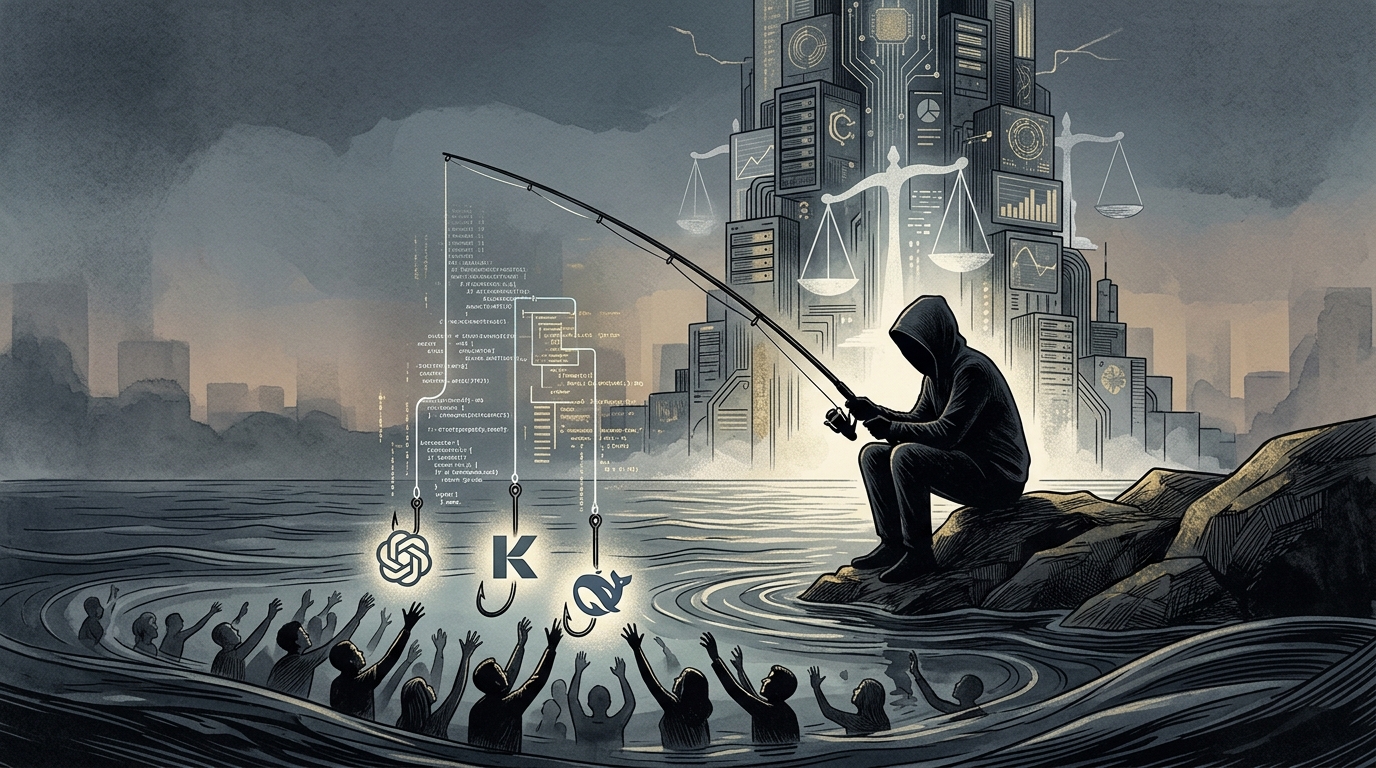
As we navigate the middle of 2026, Artificial Intelligence has transitioned from a futuristic novelty to the very infrastructure of our digital lives. Yet, the same prestige that turned OpenAI, Anthropic, and DeepSeek into household names has also made them high-value targets for cybercriminals. Recent intelligence reports highlight a sophisticated surge in phishing campaigns that leverage these brands' reputations to deceive users and compromise global networks.
The Psychology of the Lure: Why AI is the Perfect Bait
Phishing, perhaps the oldest trick in the social engineering playbook, thrives on relevance and urgency. With the meteoric rise of DeepSeek in recent months and the continued dominance of ChatGPT and Claude, users are constantly seeking "priority access," "free Pro versions," or desktop clients that might not yet be universally available through official channels. Threat actors are more than happy to fill this perceived void.
These attacks typically manifest as polished emails or social media advertisements promising exclusive beta access. The links lead to meticulously crafted clones of official login portals. Once there, users are prompted to "Sign in with Google" or "Sign in with Microsoft," effectively handing over their primary digital credentials. Ethically, this presents a grim irony: the very tools designed to expand human potential are being used as a façade for systemic privacy violations.
Technical Deep Dive: From Phishing to Infostealers
The threat landscape has evolved beyond simple credential harvesting. Modern campaigns are often multi-stage operations. In many instances, the "ChatGPT Desktop App" a user downloads is actually a delivery mechanism for potent infostealers such as RedLine or Lumma. These malicious programs are designed to exfiltrate browser-stored passwords, session cookies—which can bypass multi-factor authentication—and even cryptocurrency wallets.
The targeting of the DeepSeek brand is particularly noteworthy. Given its rapid ascent and occasional accessibility hurdles in certain jurisdictions, dozens of unofficial mirrors and "access accelerators" have emerged. Security researchers have identified that many of these sites are traps specifically designed to ensnare developers and corporate executives—demographics that are high-value targets for industrial espionage.
"Trust is the currency of the digital age, and criminals have found a way to mint counterfeit coins using the logos of AI titans," a lead security analyst noted.
Corporate Responsibility and User Resilience
While companies like OpenAI and Anthropic spend billions on AI Safety—ensuring their models don't go rogue—protecting their brand equity in the wild remains an uphill battle. Brand impersonation through typosquatting (e.g., chat-gpt-pro.com) is notoriously difficult to police globally. However, there is growing pressure on these entities to provide clearer distribution channels and more aggressive public awareness campaigns.
- Always utilize Multi-Factor Authentication (MFA), preferably via hardware keys or authenticator apps.
- Verify the URL: Ensure you are on the legitimate domain (.openai.com, .anthropic.com, .deepseek.com).
- Be skeptical of "free" offers for services that typically require a paid subscription.
In conclusion, the weaponization of AI brands serves as a stark reminder: the more indispensable a technology becomes, the more lucrative it is for those seeking to exploit it. In an era of automated threats, human skepticism remains our most vital defense.