

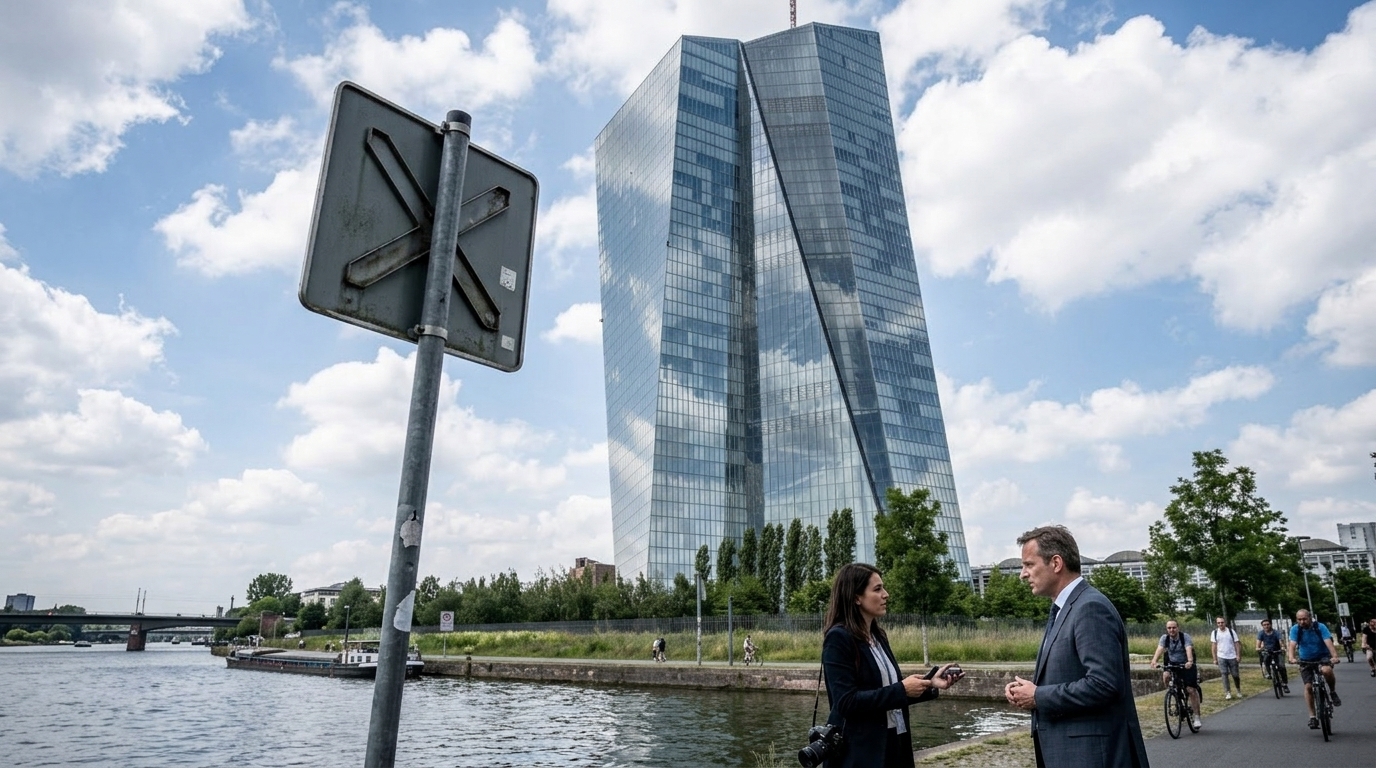
At a time when the global economy was attempting to find its footing after a series of successive crises, the European Central Bank (ECB) finds itself facing a harsh new reality. Hopes for a swift return to an era of cheap money are evaporating as the combination of geopolitical conflicts and structural inflationary pressures forces Frankfurt to maintain — or even strengthen — its restrictive policy. Christine Lagarde and the ECB Governing Council are now tasked with walking a tightrope: balancing the necessity for price stability against the risk of deep economic stagnation.
Geopolitical Instability as a Permanent Risk Factor
The armed conflicts raging in Europe's broader neighborhood are no longer transitory phenomena but structural elements of the new economic landscape. The ongoing instability in Ukraine and the Middle East has created an environment of permanent uncertainty in energy and commodity markets. As analysts point out, every escalation translates directly into higher shipping costs and natural gas prices, refueling supply-side inflation.
According to recent reports, the ECB is closely monitoring the secondary effects of these conflicts. It is not just about direct energy costs, but the restructuring of supply chains that makes production in Europe more expensive. "Geopolitics is now the new monetary tool, but in the inverse sense," market circles comment, highlighting that central bankers have few tools to combat exogenous shocks affecting prices.
Stubborn Inflation and the Ghost of Stagflation
Despite successive interest rate hikes in previous years, inflation in the Eurozone is proving more "sticky" than initially forecast. While the headline index shows signs of cooling, core inflation — which excludes energy and food — remains at levels that cause concern. Wage growth, a result of workers' demands to recoup lost purchasing power, creates a vicious cycle that the ECB is determined to break at all costs.
"Our mission is not yet complete. Price stability is the essential prerequisite for sustainable growth," Christine Lagarde recently stated, signaling the "hawkish" line.
The labor market remains resilient, which gives the ECB the flexibility to keep interest rates at high levels. However, this resilience is a double-edged sword. If the ECB waits too long to cut rates, it risks "suffocating" investment and consumption, leading the Eurozone into stagflation — a combination of low growth and high inflation that is an economist's worst nightmare.
What Markets See: The Great Reassessment
Bond markets and investors have already begun to adjust to the new data. Expectations for aggressive rate cuts within 2026 have shifted chronologically toward the end of the year or even later. Government bond yields, particularly German Bunds and Italian BTPs, reflect this shift in stance, with investors demanding higher risk premiums.
- Volatility: Markets expect increased volatility as geopolitical news continues to dominate headlines.
- Banking Sector: High interest rates boost bank profit margins but increase the risk of non-performing loans as debt servicing becomes harder for households and businesses.
- The Euro: The strength of the euro against the dollar is being tested, as the monetary policies of the Fed and the ECB appear to diverge at critical points.
In this environment, investors are turning toward more defensive positions, expecting that the ECB would rather err on the side of excessive tightness than premature loosening. The experience of the 1970s still haunts the corridors of Frankfurt, reminding everyone that inflation can return even stronger if not fully defeated.
Conclusion: The Leadership Challenge
The ECB is no longer called upon to manage just numbers, but expectations in a "polycrisis" environment. The tough stance it adopts is an attempt to safeguard its credibility. However, the cost of this policy will be visible in the real economy. The challenge for Europe is whether it can bear the weight of expensive money while simultaneously being called to fund the green transition and its defense shield. The next six months will be decisive for whether the Eurozone manages a "soft landing" or sinks into a prolonged period of economic malaise.





