

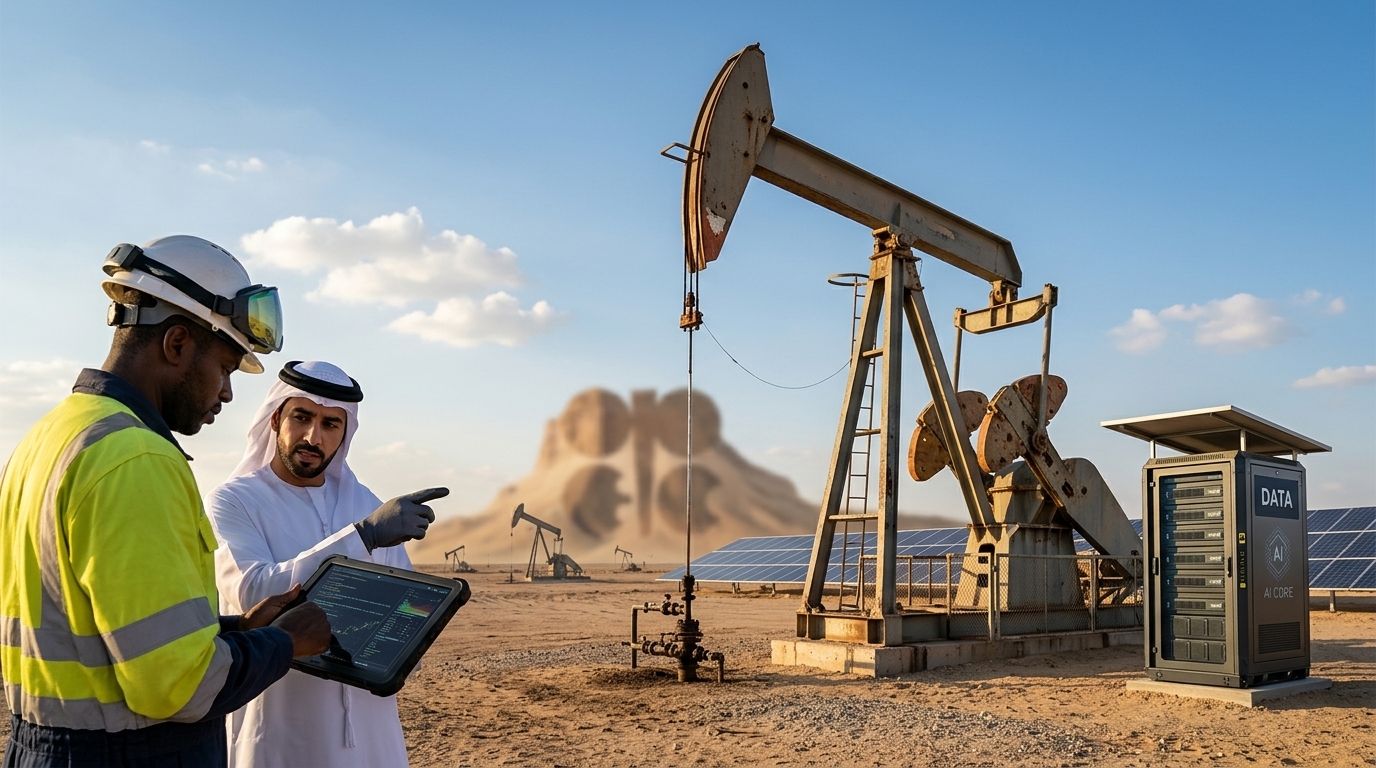
It is May 2026, and the global economic chessboard looks nothing like it did at the start of the decade. The traditional power of OPEC, which for half a century dictated the pace of global growth through crude oil prices, is giving way to a new, more complex reality. Saudi Arabia and the United Arab Emirates (UAE) have realized that their future no longer depends on the elasticity of oil demand, but on the elasticity of computing power.
The Sunset of the Oil Cartel and the Dawn of Silicon
For decades, the term 'elasticity' in the Gulf economy referred to how energy consumption reacted to price changes. Today, this concept is shifting. As the world moves away from fossil fuels, Riyadh and Abu Dhabi are not merely observers of the green transition. Instead, they are deploying their vast capital reserves to secure a front-row seat in the digital revolution.
Saudi Arabia’s Public Investment Fund (PIF) and the UAE’s MGX have emerged as the world’s largest financiers of AI infrastructure. The strategy is clear: if oil was the fuel of the 20th century, data and computing power are the fuel of the 21st. Investing billions in data centers, semiconductors, and AI models is not just an attempt to diversify revenue; it is a survival move in a world where geopolitical power is measured in Petaflops.
The MBS vs. MBZ Rivalry: A New Regional Dynamic
Despite shared strategic interests, the relationship between Mohammed bin Salman (MBS) and Mohammed bin Zayed (MBZ) is becoming increasingly competitive. It is no longer about who produces the most barrels, but about who will become the 'digital hub' of the Middle East. The UAE has a head start with its Falcon model and its ability to attract Western talent, while Saudi Arabia responds with the Neom project and the creation of entire cities operating exclusively on AI.
- Saudi Arabia aims to become the largest producer of green hydrogen to power energy-hungry data centers.
- The UAE focuses on creating a favorable regulatory environment to attract Big Tech giants.
- Both nations are investing in their own Large Language Models (LLMs) tailored to Arabic language and culture.
This competition is driving an acceleration of investment that impacts Silicon Valley. American AI companies, facing capital shortages in traditional markets due to the high interest rates of previous years, are turning en masse to the Gulf. However, this raises serious questions in Washington regarding national security and technology transfer.
Post-Elasticity: AI as a Public Good
The concept of the 'post-elasticity' era suggests that demand for AI will be so fundamental to the functioning of states and businesses that it will become inelastic. Just as economies once could not function without oil, in the near future, they will not be able to function without access to advanced AI models. Gulf nations know this and are seeking to control the supply chain.
"We are not just building data centers; we are building the new monetary system of global intelligence," a PIF official recently stated.
In conclusion, the transition from OPEC to a model of technological sovereignty is reshaping alliances. Europe, remaining trapped in strict regulatory frameworks, risks being caught between two fires: US technological superiority and Gulf capital power. Greece, as a bridge between these worlds, must closely monitor these developments, as investments in undersea data and energy cables will be the new 'pipeline diplomacy.'





