

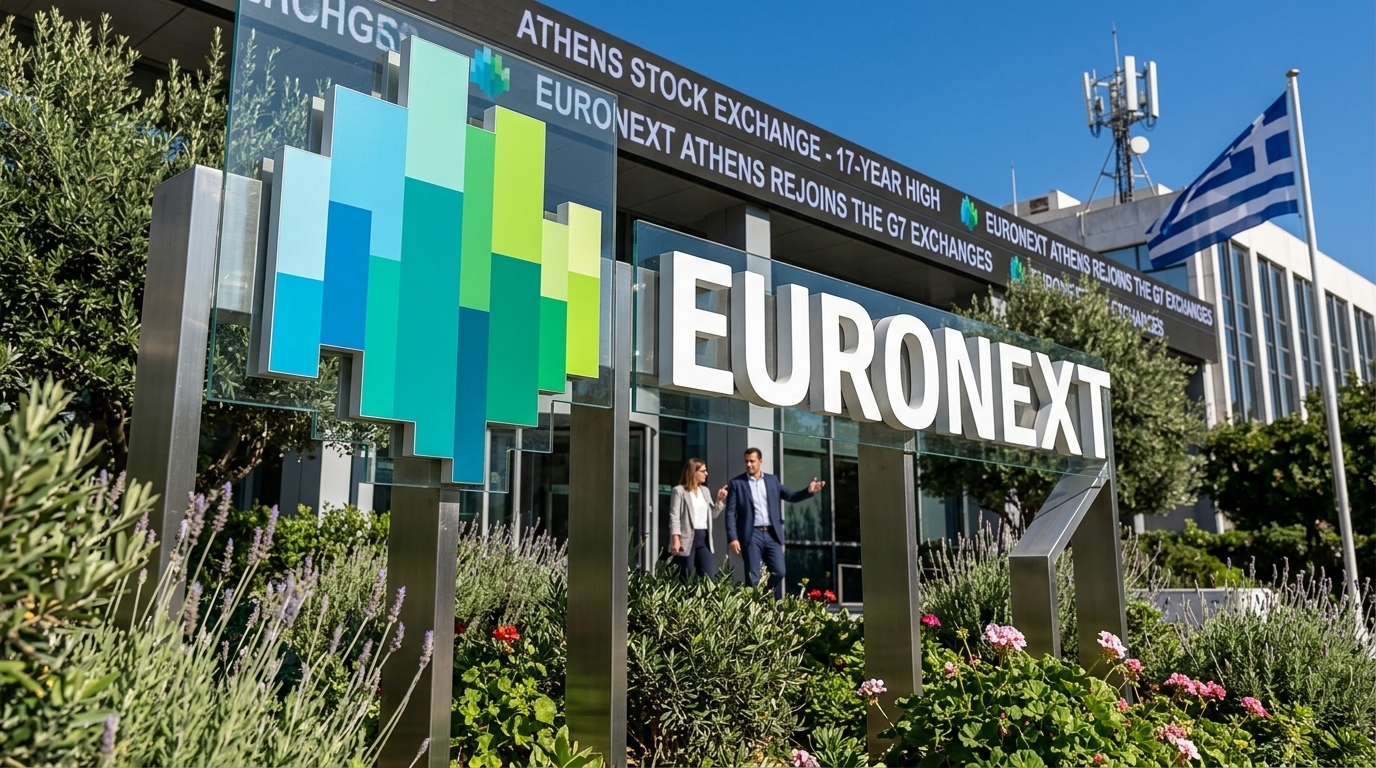
The first half of 2026 will go down in the history of the Greek capital market as the period of its definitive "maturation" and its return to the normalcy of developed markets. After fifteen years of crises, restructuring, and uncertainty, the Athens Stock Exchange — now under the Euronext umbrella — recorded performances comparable only to the "golden" eras before the 2008 global financial crisis. The General Index, with gains exceeding 16% since the beginning of the year, is not just a number on a screen; it is the mirror of an economy regaining its lost credibility.
The Banking Counterattack and Dividends
The sector leading this rally could be none other than banking. The four systemic banks (National Bank of Greece, Piraeus, Eurobank, Alpha Bank) presented record results for the 2025 fiscal year, which were capitalized upon in the first half of 2026. The full divestment of the Hellenic Financial Stability Fund (HFSF) and the return to a generous dividend policy — with yields reaching 6% in some cases — attracted massive capital from abroad. Foreign institutional investors, who now control over 65% of the free float of large-cap companies, see Greek banks as a combination of low price-to-earnings (P/E) ratios and high profitability driven by interest rates and credit expansion.
- National Bank approached capitalization levels not seen since 2009.
- Piraeus Bank emerged as the performance "champion," benefiting from the complete cleaning of its balance sheet.
- Eurobank and Alpha Bank strengthened their presence in the broader SE Europe region, offering geographical diversification.
Energy and Infrastructure: Pillars of the Real Economy
Beyond financials, the real economy made its own dynamic presence felt. The energy and infrastructure sectors were the second major pillars of the rise. Companies like Metlen (formerly Mytilineos), PPC (Public Power Corporation), and Terna Energy were at the center of investor interest as Greece transforms into an energy hub for Southeast Europe. PPC, in particular, with its green transition strategy and expansion into Romania, saw its stock hit new all-time highs, proving that the transformation of a formerly sluggish state-owned enterprise into a modern European energy player is achievable.
"The Greek market is no longer a high-risk bet, but a destination for capital seeking growth in an environment of stability within the Eurozone," notes a leading analyst from Morgan Stanley.
In infrastructure, the GEK TERNA group and Intrakat (now Aktor Group) capitalized on the massive backlogs of projects funded by the Recovery and Resilience Facility. The completion of major road axes and the commencement of works for Metro Line 4 and the Ellinikon project created a climate of optimism that spread across the mid-cap spectrum.
Integration with Euronext and the New Digital Era
A crucial factor that is often underestimated is the technological and institutional upgrade of the Exchange itself. The full integration into Euronext's platforms in 2025 began to bear fruit in 2026. Increased visibility, ease of access for European retail investors, and the reduction of transaction costs led to an increase in the average daily transaction value, which now consistently exceeds 150 million euros. Furthermore, the listing of new tech companies and the use of AI tools for market data analysis have made Euronext Athens a modern market, capable of competing with Milan or Madrid.
Challenges and Outlook for the Second Half
Despite the enthusiasm, challenges remain. Inflation, although decelerating, keeps interest rates at levels that could affect consumption and corporate borrowing costs. At the same time, geopolitical tensions in the Eastern Mediterranean and Ukraine remain an unpredictable factor. However, the Greek market seems to have built strong resistance. With public debt on a path of drastic reduction and investment-grade status now a given, the Athens Stock Exchange is no longer looking at the past with nostalgia, but at the future with confidence. Analysts estimate that if the GDP growth rate remains above 2.5%, the General Index could approach 1,750 points by the end of the year, finally closing the chapter of the "lost decade."





