

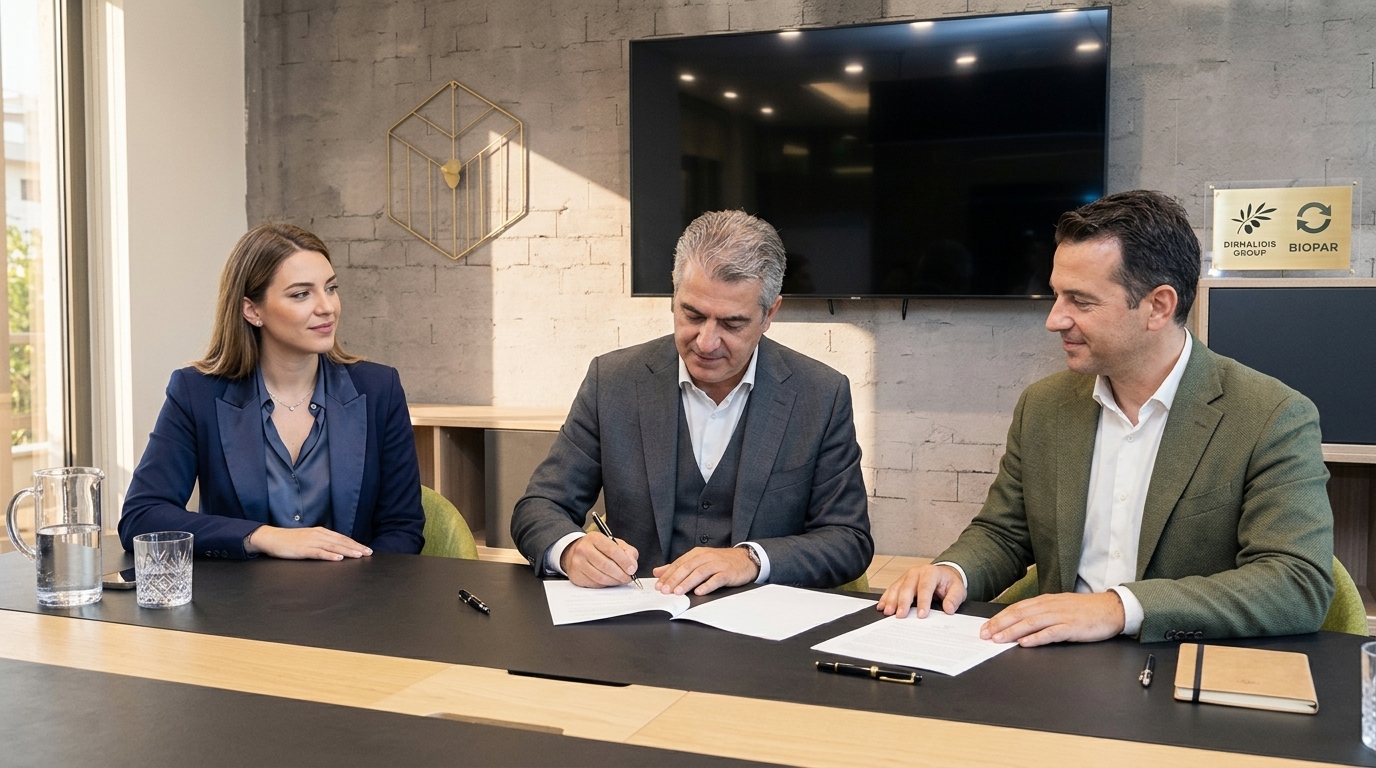
The recent announcement of the acquisition of BIOPAR by the Dirhalidis Group is not merely another corporate move in the landscape of mergers and acquisitions. It represents a deeper structural shift within the Greek entrepreneurial ecosystem, where sustainability and the circular economy are ceasing to be theoretical concepts in ESG reports and are becoming central pillars of growth and profitability. The transaction, completed with the financial backing of Optima bank and the strategic advisory of Metis Group, marks the consolidation of a powerful player in the market for the management and utilization of biological resources.
The Strategic Significance of the Acquisition
The Dirhalidis Group, with a long-standing tradition in industrial activity, recognized early on that the future of production is inextricably linked to a company's ability to minimize its environmental footprint. BIOPAR, a company specializing in the processing and utilization of organic residues, provides the Group with the necessary expertise and infrastructure to verticalize its operations in the field of green transition. The integration of BIOPAR allows the Group to control the entire life cycle of its products, from production to recycling and the reuse of raw materials.
This move comes at a time when the European Union is tightening the framework for waste management and the promotion of the circular economy. Businesses investing today in these technologies do not only ensure compliance with future directives but also gain a significant competitive advantage by reducing raw material costs and improving their energy efficiency.
The Role of the Financial Sector and Advisors
The architecture of the deal is particularly interesting. Optima bank, acting as the financier, once again demonstrated its focus on supporting healthy Greek enterprises seeking transformation. The bank appears to be adopting a strategy of "green financing," selecting projects with a clear environmental orientation. On the other hand, Metis Group, in the role of advisor, bridged the gap between industrial needs and financial reality, ensuring that the acquisition would create immediate synergies.
- Strengthening the production base of the Dirhalidis Group.
- Access to innovative technologies for processing biological resources.
- Improvement of ESG (Environmental, Social, and Governance) indicators.
- Creation of new jobs in the green economy sector.
Circular Economy: From Theory to Practice
The circular economy in Greece is at a critical turning point. Despite the progress made in recent years, the country still lags behind the European average in recycling and resource recovery rates. Investments like that of the Dirhalidis Group act as catalysts, proving that environmental protection can be economically viable. BIOPAR possesses units capable of converting organic waste into high-value secondary materials, reducing dependence on imported raw materials.
"The investment in BIOPAR is not just a financial decision, but a commitment to a sustainable future. The circular economy is the only path for the long-term survival of Greek industry," sources close to the Group state.
In conclusion, this acquisition serves as a model for how Greek medium and large enterprises can evolve. With the right financing and advisory support, the path to the green transition becomes less arduous, opening new perspectives for the domestic economy in an international environment that demands responsibility and innovation.





