

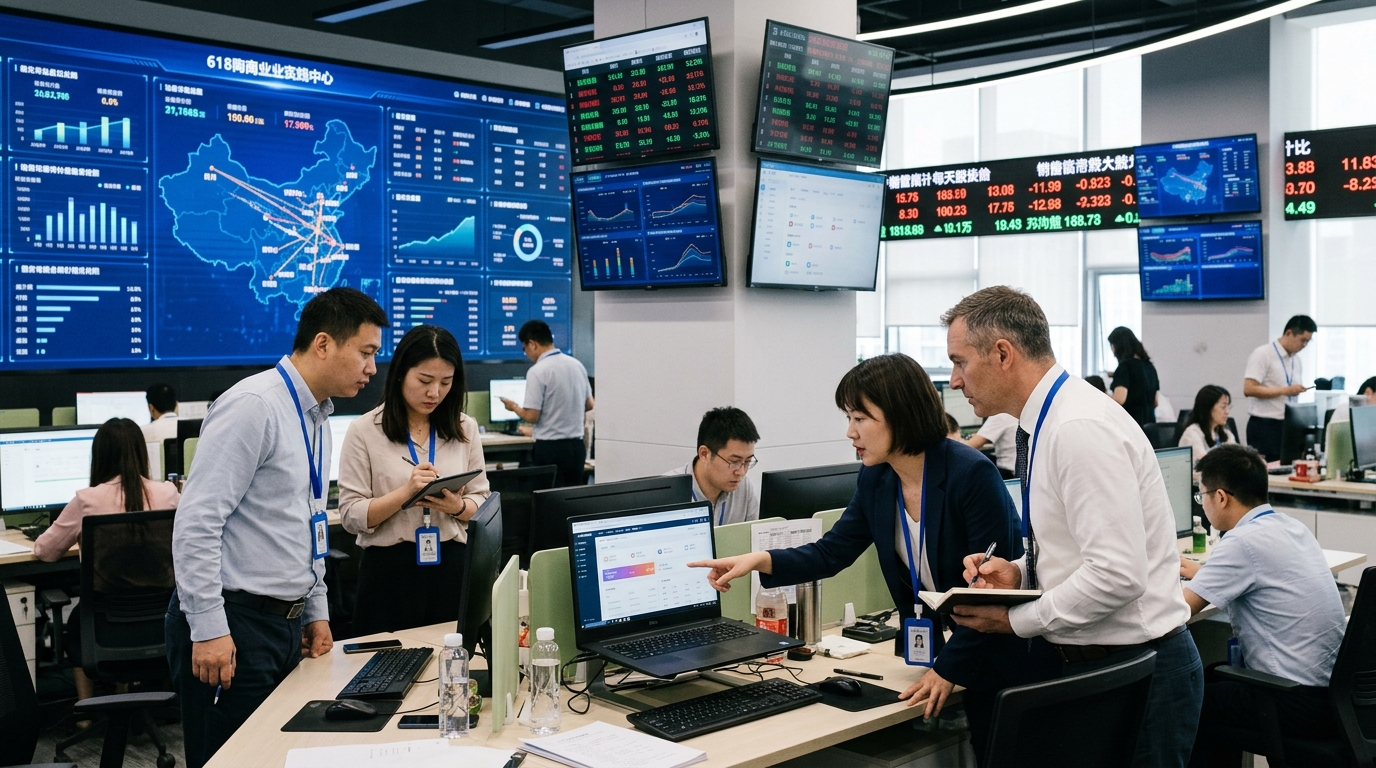
It is June 2026, and China is once again at the center of global economic attention. The '618' shopping festival, which began as a simple anniversary for the founding of JD.com, has evolved into a technological arms race where Artificial Intelligence (AI) is no longer an experimental tool but the very backbone of the ecosystem. From Alibaba and JD.com to Pinduoduo and Douyin, China's e-commerce giants are competing to showcase the most sophisticated AI applications in a bid to revitalize domestic consumption and slash operational costs.
The Dominance of Digital Hosts and Livestreaming 2.0
The most visible shift in this year's '618' is the mass adoption of "digital humans" in livestreaming. While human hosts dominated mobile screens just two years ago, today, generative AI avatars have taken over 24/7 sales schedules. These digital hosts do not tire, do not make mistakes, and can answer customer queries in real-time with absolute precision. JD.com, for instance, introduced a "digital clone" of its founder, Richard Liu, who participated in live broadcasts, attracting millions of viewers.
This technology has democratized sales for small and medium-sized enterprises (SMEs). Where a small merchant previously had to hire expensive influencers and technical staff, they can now "rent" a digital host at a fraction of the cost. This has led to a content explosion, with thousands of live streams running simultaneously, offering everything from apparel to industrial equipment, all supported by algorithms that recognize user emotions from comments and adjust offers accordingly.
Logistics and Supply Chain: The Invisible Intelligence
Behind the glowing mobile screens, AI is reshaping logistics. This year's '618' is characterized by "predictive consumption." Using big data models, platforms can now predict with 95% accuracy what a consumer in a specific neighborhood will buy before they even place it in their cart. This allows companies to move goods to local "pre-positioning" warehouses, reducing delivery times to just a few hours.
- Autonomous Vehicles: In major cities like Beijing and Shanghai, the fleet of autonomous delivery robots has tripled.
- Smart Warehouses: AI-powered robots sort thousands of packages per minute, minimizing human error.
- Dynamic Pricing: Prices change in milliseconds based on demand, inventory, and competitor moves.
JD.com announced that using AI in supply chain management reduced its operating costs by 15% compared to the previous year, allowing it to offer even more competitive prices to consumers who remain cautious with their spending due to economic uncertainty.
AI Tools for Merchants: A New Era of Creativity
Alibaba, through its Tmall platform, provided all merchants with free access to generative AI tools this year. These tools allow for the creation of professional product photos, advertising copy, and short-form videos within seconds. "What once required a week of work from an ad agency is now done at the click of a button," says an electronics merchant from Shenzhen.
Furthermore, shopping assistants based on LLMs (Large Language Models) have replaced traditional search bars. Users no longer search for a "red dress"; instead, they converse with the app: "I need an outfit for a wedding on an island in July that fits my style and is breathable." The AI analyzes purchase history, current trends, and weather forecasts to suggest the perfect choice.
Economic Significance and Challenges
The 2026 '618' festival is not just a show of power for China's Big Tech, but also a critical test for the Chinese economy. With domestic demand showing signs of fatigue, AI serves as a lifeline for retail. However, excessive automation also raises questions. The replacement of thousands of workers in customer service and marketing with algorithms creates pressure on the labor market, an issue the Chinese government is monitoring closely.
"AI in 618 is no longer about the future; it is the present reality that determines who survives in the most competitive industry in the world," states a market analyst in Beijing.
As the festival draws to a close, the conclusion is clear: China is using e-commerce as the ultimate testing ground for AI at scale. The innovations we see today in '618' are the ones we will see on Amazon and eBay in the coming years. The battle for the consumer's wallet has turned into a battle of computing power and algorithmic intelligence.





