

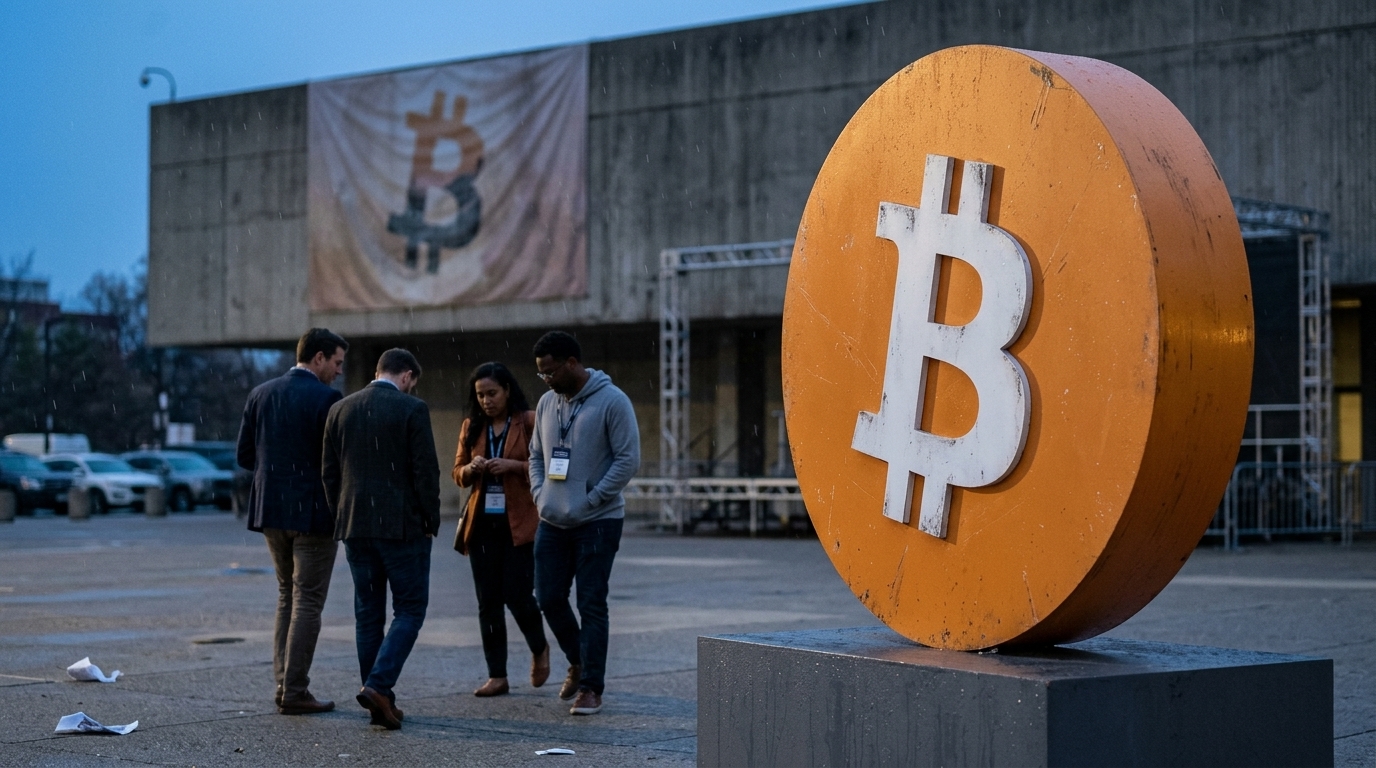
The cryptocurrency market, once envisioned as the "El Dorado" of the digital age, is currently navigating one of the most challenging periods in its history. Following a decade of explosive growth and the introduction of spot ETFs that promised institutional legitimacy, the reality of June 2026 finds Bitcoin struggling with the loss of its "luster." The evaporation of $1.3 trillion from total market capitalization is not merely a number on a screen; it is the result of a profound shift in investor psychology and macroeconomic conditions.
The Great Exodus: Why Are Investors Jumping Ship?
Bitcoin's recent inability to maintain its historical highs has triggered a wave of profit-taking unlike anything seen before. Investors, observing central banks maintaining interest rates at higher-than-expected levels to combat persistent inflation, are gravitating back toward safer havens. "Digital gold," as many once called Bitcoin, appears to be behaving more like a high-risk (risk-on) asset rather than a reliable hedge against inflation.
Furthermore, institutional fatigue is becoming palpable. While the entry of major investment firms via ETFs provided an initial boost, the lack of new catalysts has created a vacuum. Fund managers, who once viewed Bitcoin as a necessary "spice" for a diversified portfolio, are now reassessing their exposure, prioritizing Artificial Intelligence and sectors with immediate productive outcomes.
The Regulatory Vise and the Loss of Anonymity
One of the core pillars of Bitcoin's allure was the promise of decentralization and freedom from state control. However, by 2026, the landscape has fundamentally changed. The full implementation of the MiCA (Markets in Crypto-Assets) regulation in the European Union and stricter oversight by the SEC in the United States have narrowed the room for maneuver. The market is no longer the "Wild West" it was five years ago.
This regulatory compliance, while offering security, has stripped away the speculative premium that fueled previous rallies. Capital gains taxes on cryptocurrencies have become more stringent, and transaction tracking mechanisms have made Bitcoin less attractive to those seeking alternative paths away from the traditional banking system. The "glow" of revolution seems to be sacrificed on the altar of mainstream acceptance.
Artificial Intelligence: The New Competitor for Liquidity
We cannot analyze Bitcoin's decline without addressing the meteoric rise of Artificial Intelligence (AI). In 2026, capital that would have once flowed into altcoins and Bitcoin mining is now flooding into AI infrastructure, semiconductors, and power grids supporting Large Language Models. AI offers something Bitcoin struggles to demonstrate: immediate utility and productivity in the real economy.
Retail investors, who traditionally fueled Bitcoin rallies, have shifted their focus to tech stocks and startups promising to revolutionize the way we work. Bitcoin, remaining largely a store of value without significant daily transaction utility, is losing the battle for the "attention economy" to technologies that transform daily life in real-time.
What Lies Ahead for the Market?
Despite the somber outlook, many analysts believe the current downturn is a "cleansing" process. The removal of $1.3 trillion in market value eliminates excessive leverage and investors who were seeking quick gains without understanding the underlying technology. Bitcoin is now being called upon to prove its resilience in a stabilizing environment.
Future developments will depend on two factors: the further integration of the Lightning Network for faster transactions and the stance of central banks regarding their own Digital Currencies (CBDCs). If Bitcoin can survive as the "digital reserve" in a world of controlled digital currencies, its luster may return—but in a different, more mature form. For now, the market holds its breath, waiting to see if the bottom has been reached or if the downward journey still has miles to go.





