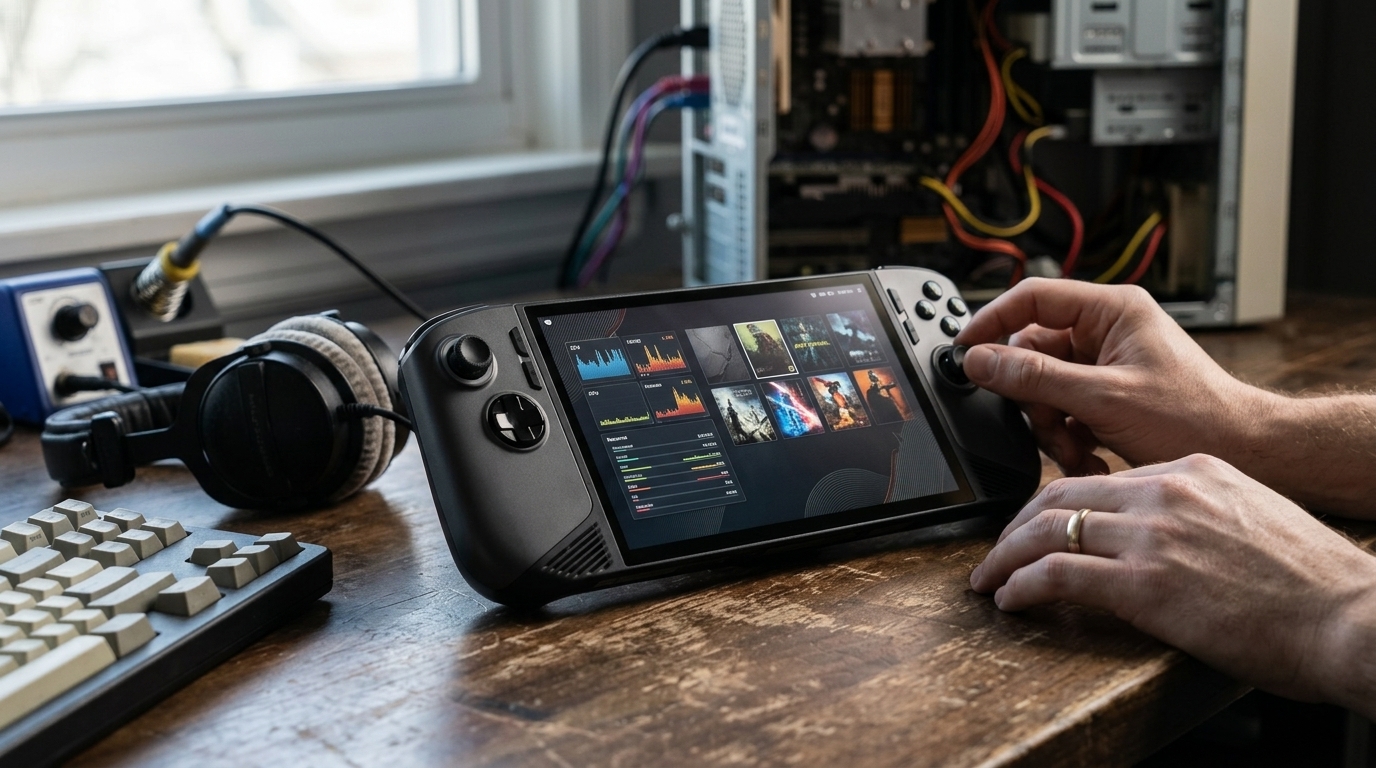
The gaming industry is at a pivotal crossroads as Valve, the powerhouse behind the Steam ecosystem, has officially confirmed its close collaboration with Intel and Nvidia. The objective is transparent: expanding SteamOS beyond the confines of the Steam Deck, delivering a streamlined, Linux-based experience to a broader spectrum of hardware. This move isn't merely a technical update; it is a calculated strategic assault on Microsoft's long-standing monopoly over PC gaming.
Breaking Free from the 'Windows Tax'
For years, gamers seeking a portable PC experience were forced to endure the compromises of Windows. While Microsoft’s OS remains the standard for desktops, its transition to handheld devices like the MSI Claw or ASUS ROG Ally has been fraught with friction. The Windows 11 interface was never designed for 7-inch touchscreens and joysticks, leading to a clunky user experience that often necessitates a mouse and keyboard just to navigate system settings.
Valve, through the runaway success of the Steam Deck, proved there is a viable alternative. SteamOS, built on Arch Linux, offers a console-like experience that is fast, efficient, and deeply integrated with the hardware. The confirmation that Valve is now working with Intel to bring SteamOS to the MSI Claw — which utilizes Intel Core Ultra processors — marks a significant milestone for the mainstream adoption of Linux gaming.
The Nvidia Hurdle: A Technical and Political Challenge
While the partnership with Intel appears to be moving at a steady pace, the major variable remains Nvidia. Historically, Nvidia's relationship with the Linux community has been contentious, primarily due to the company's reluctance to release open-source drivers. However, the tide is turning. Valve has explicitly stated they are working on support for Nvidia GPUs, a move that could allow millions of gaming laptop and desktop owners to install SteamOS as their primary operating system.
- Refining drivers for the Proton compatibility layer.
- Ensuring seamless support for technologies like DLSS on Linux.
- Optimizing power management for mobile devices equipped with Nvidia silicon.
The challenge here is as much political as it is technical. Nvidia must decide whether to open its ecosystem further to facilitate Valve's vision or maintain the closed-model dominance it currently enjoys in the AI and high-end graphics markets.
Valve’s Strategy: Software as a Trojan Horse
Why is Valve investing so much effort into helping its hardware competitors? The answer lies in the Steam Store. Valve is not primarily a hardware company; the Steam Deck was a proof-of-concept to demonstrate that SteamOS is a superior platform. If every handheld console on the market runs SteamOS, Valve controls the gateway through which gamers access their libraries, ensuring that game purchases remain within their ecosystem rather than drifting toward Epic or Microsoft.
"Hardware freedom requires software independence. If you don't control the OS, you don't control the user experience," industry analysts observe.
This approach mirrors Google's Android strategy: provide the OS to manufacturers to dominate the services market. The key difference is that Valve's efforts directly benefit the open-source community, strengthening the entire Linux ecosystem in the process.
The Final Frontier: SteamOS for the Desktop
The logical conclusion of this expansion is the official release of a general-purpose SteamOS for PCs. Until now, Valve has kept SteamOS 3.0 relatively exclusive to the Deck. By integrating robust Intel and Nvidia driver support, SteamOS could become the first genuine competitor to Windows for gaming PCs in decades. The promise of an OS that "just plays games" without the intrusive updates, telemetry, and bloatware of Windows 11 is an incredibly compelling proposition for the global gaming community.