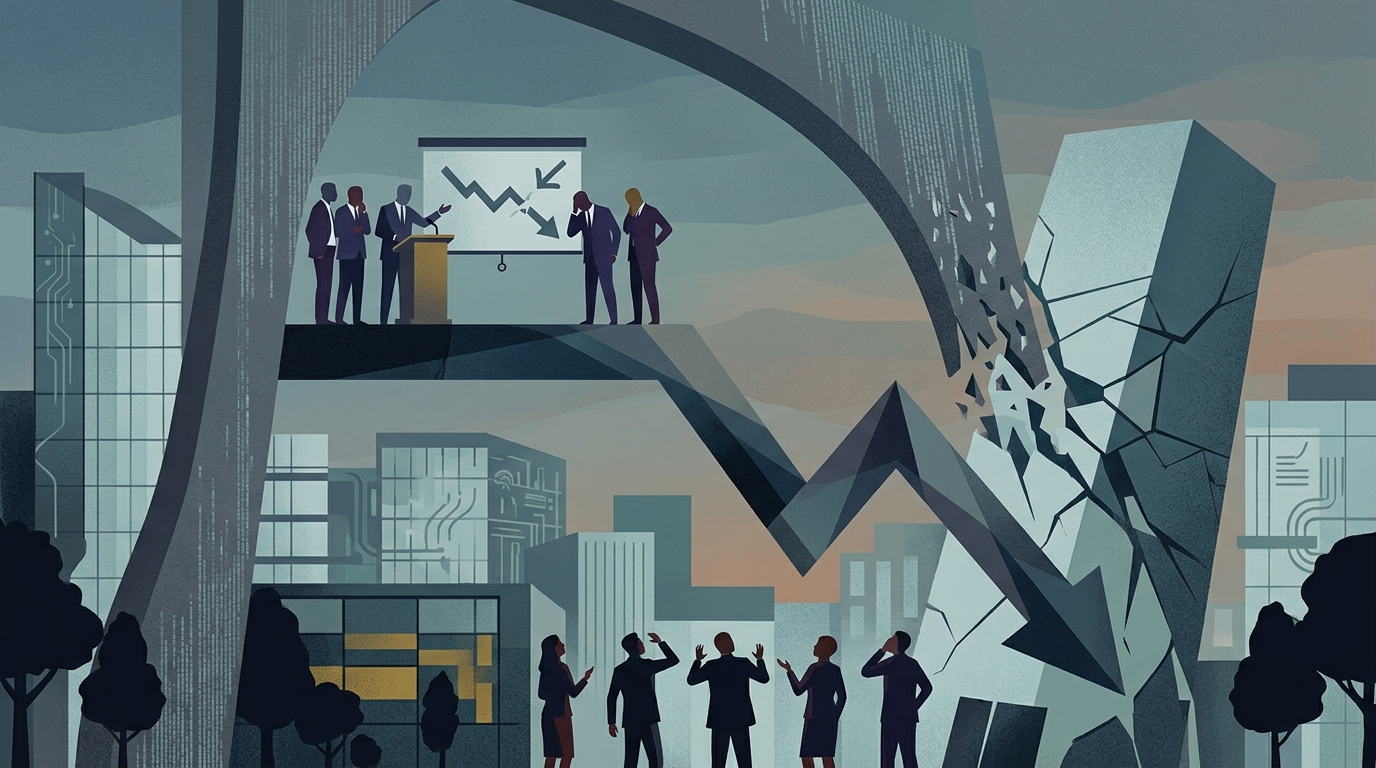
As we navigate mid-2026, the initial gold rush of Enterprise Artificial Intelligence (AI) has hit a sobering plateau. While organizations have funneled billions into acquiring the latest Large Language Models (LLMs) and infrastructure, a fundamental structural flaw has emerged: the problem isn't the technology, it's the control. The so-called "Control Gap" highlights a disturbing trend where enterprises are attempting to govern high-speed, autonomous systems using manual, legacy processes.
The Illusion of Centralized Platforms
The primary hurdle facing modern enterprises is extreme platform fragmentation. Every major software vendor, from cloud giants like AWS and Azure to specialized SaaS providers, claims their ecosystem is the definitive "AI hub." Consequently, a single enterprise often finds itself juggling half a dozen "central" platforms, none of which provide a holistic view of the organization's AI footprint.
This fragmentation creates dangerous blind spots. CIOs frequently find themselves unable to answer basic questions: How many models are currently in production? What is the aggregate token spend? Which models are accessing sensitive customer data? Without a single pane of glass for visibility, model monitoring becomes a fragmented, departmental effort rather than a cohesive corporate strategy. The result is a lack of accountability that leaves the organization vulnerable to operational failure.
The Trap of Manual Governance
Perhaps the most startling revelation in recent industry reports is that most AI governance is still performed "by hand." In an era where inference happens in milliseconds, humans are attempting to oversee these processes using spreadsheets, manual audits, and monthly steering committee meetings. This pace mismatch is unsustainable and inherently risky.
When a model begins to suffer from "drift"—a decline in accuracy due to changing real-world data—most companies lack automated triggers to intervene. Instead, they rely on employees to notice a drop in quality or, worse, wait for customer complaints to surface. Manual governance isn't just slow; it’s a liability. With the increasing enforcement of the EU AI Act and similar global regulations, the inability to provide automated, real-time audit trails for AI decisions could lead to catastrophic fines and reputational damage.
The Ownership Crisis: Who is at the Helm?
Beyond the technical challenges, the Control Gap is a crisis of ownership. AI has historically fallen into a gray area between IT, Data Science, and specific business units. This ambiguity leads to "Shadow AI," where departments procure their own generative AI tools without central oversight, bypassing security protocols and ethical guidelines.
This lack of clear ownership fosters a culture of finger-pointing. If a customer-facing chatbot hallucinates and provides harmful advice, the data engineers blame the model provider, the developers blame the prompt engineering, and the business leads blame the lack of IT support. True ownership requires more than just a budget; it requires a mandate to oversee the entire AI lifecycle, from data ingestion to decommissioning. Without a designated "Chief AI Officer" or a cross-functional governance body with real teeth, AI initiatives will remain siloed and high-risk.
Building a Unified Control Layer
To bridge the Control Gap, enterprises must pivot from a "build-first" mentality to a "manage-first" philosophy. This involves investing in model-agnostic observability and governance tools that sit above the individual platforms. The goal is to create a unified control layer capable of enforcing security, ethics, and performance policies across all models, regardless of whether they are hosted on-premise or in the cloud.
The transition from manual to automated governance is the next frontier of digital transformation. Organizations that successfully establish clear ownership lines and automate their model oversight will be the ones to realize the true ROI of AI. The rest will remain trapped in a maze of disconnected tools, operating on the hope that their unmonitored models don't eventually fail in a very public and very expensive way.