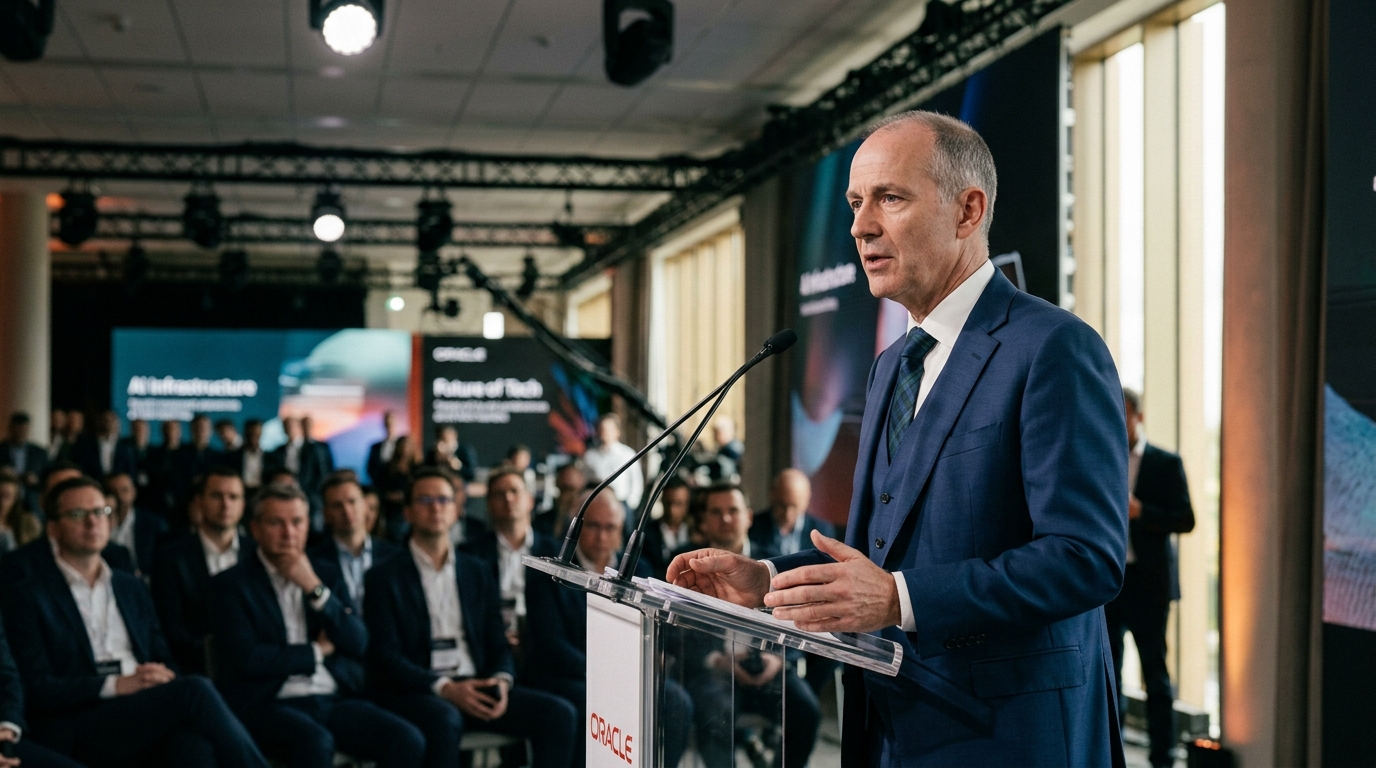
In the mid-summer of 2026, Oracle, a titan of the enterprise software world, issued a warning that reverberated through Silicon Valley. The company, which under Larry Ellison’s leadership transformed into one of the most aggressive players in AI cloud infrastructure, officially acknowledged that its massive spending on data centers might not yield the expected returns. This admission marks a significant shift in the "infinite growth" narrative that has dominated the sector for the past three years.
The Arms Race and the Specter of Overcapacity
Oracle’s strategy was built on the conviction that the demand for AI computing power would be insatiable. By pouring billions of dollars into Nvidia GPUs and vast data storage facilities, the company sought to leapfrog incumbents like Amazon (AWS) and Microsoft (Azure) by offering more specialized, high-performance solutions. However, the report released on July 1, 2026, highlights a risk that many analysts have long feared: the oversupply of infrastructure in a market where AI applications have yet to prove their full commercial viability for end-users.
The issue is not a lack of interest, but rather the speed at which enterprises can integrate AI into their workflows. While infrastructure is being built at record speeds, the enterprise-level adoption of Generative AI tools faces significant hurdles, ranging from talent shortages to data security concerns. If Oracle’s clients do not see an immediate boost in productivity, their cloud subscriptions may dwindle, leaving the company with massive fixed costs and empty data centers.
The Energy Deadlock and Geopolitical Pressures
Beyond financial risk, Oracle is grappling with an energy crisis. Operating these data centers requires amounts of electricity that often exceed the capacity of local grids. In its report, the company noted that the cost of securing sustainable energy sources has skyrocketed, eating into profit margins. Furthermore, stricter environmental regulations in the European Union and the U.S. add an additional layer of complexity and cost to their expansion plans.
- Oracle's Capital Expenditure (CapEx) for 2026 is projected to surpass all historical records.
- Reliance on the semiconductor supply chain remains a critical bottleneck.
- The market is beginning to question if the "AI premium" on tech stocks is still justified.
"We are building for a future we believe is inevitable, but the path toward it is fraught with financial pitfalls that we cannot ignore," stated an internal management memo.
Investor Reaction and the Path Forward
The market reacted with skepticism to the news, as Oracle’s stock price dipped, dragging other cloud providers down with it. Investors are now demanding tangible results rather than just promises of future dominance. Oracle finds itself in a precarious position: if it halts expansion, it risks falling behind competitors. If it continues at the current pace, it risks a financial crisis if the AI "bubble" bursts or even merely deflates.
In conclusion, Oracle’s warning serves as a reminder that technological progress does not always follow a straight line of profitability. The history of technology is littered with examples of companies that built infrastructure for a demand that arrived later than expected. The question for 2026 is whether AI will be the exception or if Oracle will become the most expensive lesson in the history of cloud computing.