The history of Meta, the company once known as Facebook, has always been a narrative of bold, if not reckless, transformations. From social media dominance to the costly pivot toward the Metaverse, Mark Zuckerberg has never shied away from betting the future of his empire on a new technological promise. Today, in the summer of 2026, Meta faces a new challenge: how to recoup the tens of billions of dollars invested in Artificial Intelligence (AI). The answer, according to recent reports, appears to lie in renting out its own computational power—a move that places it on a direct collision course with cloud computing titans like Amazon, Microsoft, and Google.
From Social Media to Infrastructure Giant
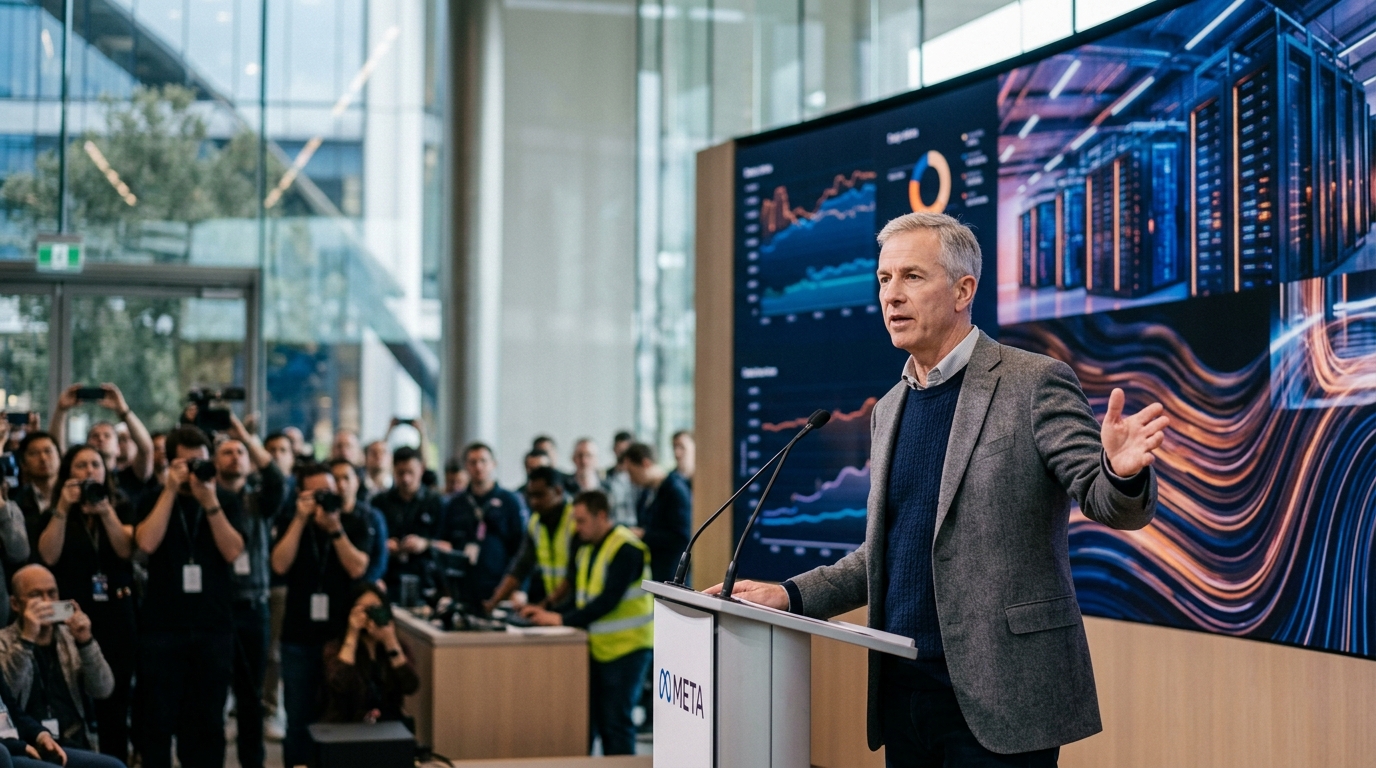
For years, Meta built one of the world’s most sophisticated data infrastructures exclusively for internal use. The algorithms powering Instagram and Facebook required immense power, but the advent of Generative AI shifted the landscape. The company embarked on an unprecedented buying spree of Nvidia’s H100 and B200 processors, amassing an arsenal of compute that few organizations on the planet can match. However, Wall Street investors have begun to show signs of anxiety. Meta's capital expenditures (CapEx) have skyrocketed to levels reminiscent of national budgets, and the traditional advertising pie, while resilient, is no longer sufficient to justify such massive investment scales in the long run.
The consideration of a cloud computing business is not just an opportunity; it is a strategic necessity. By renting out its excess GPU capacity to third-party developers and enterprises, Meta can transform a fixed cost into active revenue. This model, often termed "GPU-as-a-Service," allows smaller AI companies to train their models on Meta’s infrastructure while utilizing the open ecosystem of Llama, the company’s large language model.
The Llama Ecosystem Advantage
Unlike the closed-door approach of OpenAI or Google, Meta has strategically invested in open-source software. Llama has become the de facto standard for developers who want to build their own applications without being shackled to proprietary ecosystems. By offering a cloud platform, Meta isn’t just selling "iron" (hardware); it’s selling a complete development environment. Imagine a business using Llama 4 to create a digital assistant and, instead of searching for available GPUs on Microsoft Azure, being able to rent them directly from the source, optimized specifically for that model.
- Direct access to the latest Nvidia GPUs with optimized software stacks.
- Integration with the Llama ecosystem for faster application deployment.
- Competitive pricing driven by Meta's existing economies of scale.
- The ability for enterprises to keep their data within an environment they already trust for their advertising presence.
This approach creates a powerful network effect. The more developers use Meta’s cloud, the better the Llama ecosystem becomes, and the more Llama dominates, the higher the demand for Meta’s cloud. It is a virtuous cycle that could rearrange the balance of power in Silicon Valley.
Challenges, Energy, and Competition
Despite the prospects, the path is not without its hurdles. Entering the cloud market requires more than just GPUs. It demands a massive customer support operation, complex billing systems, and, above all, security and privacy guarantees that Meta has historically struggled to provide flawlessly. Furthermore, there is the issue of energy. The data centers required for AI consume astronomical amounts of electricity, and Meta is already under pressure regarding its environmental footprint. Managing energy supply in an era of climate crisis is perhaps the single largest obstacle to expanding its computational power.
"We aren’t just building a cloud service. We are building the backbone of the new AI economy," a senior executive reportedly stated during an internal meeting.
In conclusion, Meta’s move toward cloud computing represents the final admission that the company is no longer just a social media platform. It is an infrastructure technology giant. If the gamble pays off, Zuckerberg will have successfully turned a massive expenditure into a perpetual money-making machine, securing Meta’s place at the heart of the fourth industrial revolution. If it fails, the weight of AI investments could prove too heavy, even for one of the wealthiest organizations in the world.