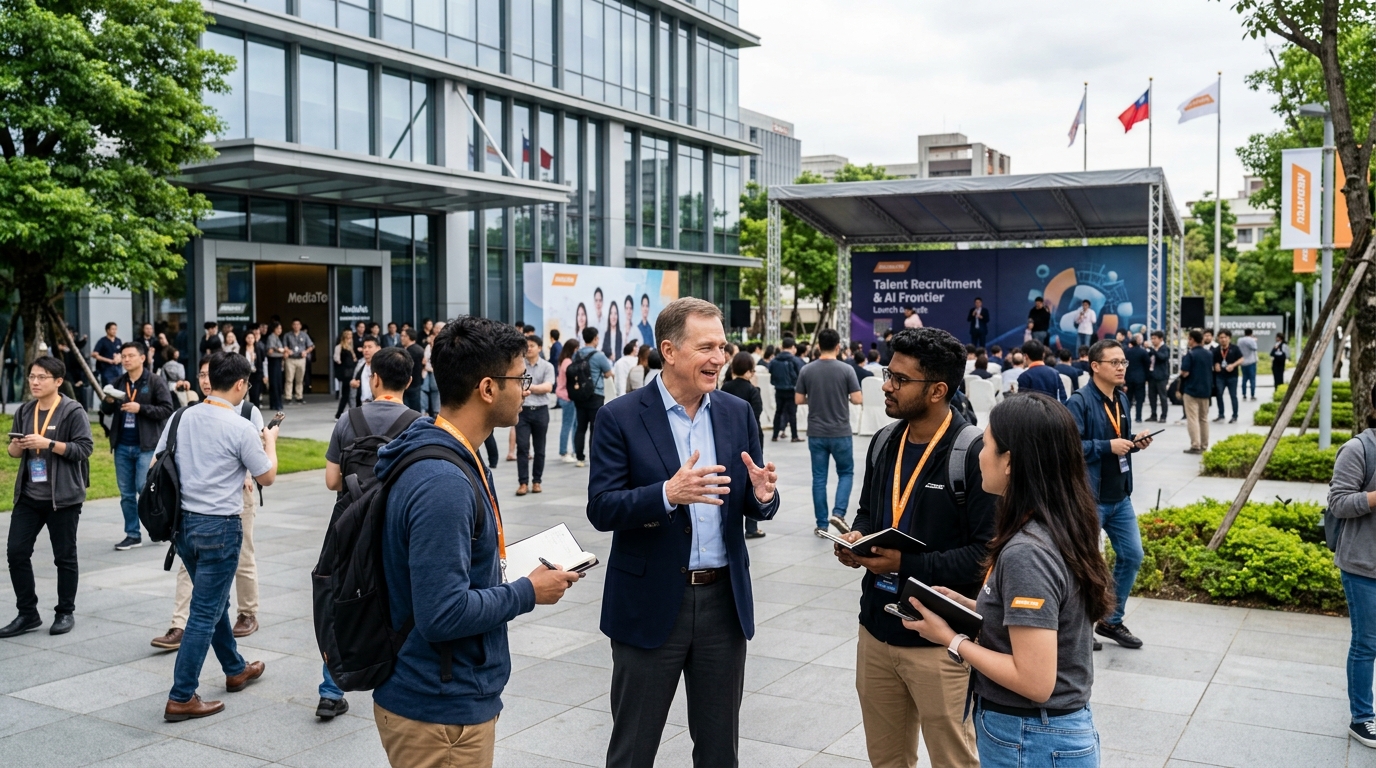
In an era where the global tech industry oscillates between the utopian promise of automation and the dystopian fear of mass unemployment, MediaTek Inc., the Taiwanese semiconductor titan, is charting a characteristically bold course. The company’s announcement of an extensive hiring campaign is not merely a corporate expansion; it is a strategic manifesto: artificial intelligence (AI) is not the executioner of jobs, but the catalyst for a new generation of creation.
MediaTek, traditionally dominant in the mid-to-low-end smartphone chip market, is rapidly evolving into a high-stakes global player. With this move, the company seeks to fortify its presence in emerging sectors such as AI PCs, next-generation automotive systems, and edge computing, proving that the battle for AI supremacy will be fought first and foremost on the battlefield of human talent.
The Pivot from Smartphones to Ubiquitous AI
For years, the MediaTek brand was synonymous with affordable mobile connectivity. However, the debut of the Dimensity series changed the narrative, allowing the company to challenge Qualcomm’s long-standing hegemony. Now, the strategy is ascending to a new level. MediaTek recognizes that the smartphone market has reached a point of maturity, and future growth lies in embedding AI into every facet of daily life.
The new recruitment drive will focus heavily on software engineers and semiconductor designers specializing in neural network architectures. The goal is to create chips that do not merely execute commands but "understand" their environment in real-time. This includes the development of so-called AI PCs, where MediaTek is collaborating closely with Microsoft and Nvidia to disrupt the traditional x86 dominance of Intel and AMD.
- Development of Windows on ARM processors featuring high-performance integrated Neural Processing Units (NPUs).
- Bolstering the Dimensity Auto division to provide AI capabilities for smart cockpits and advanced driver-assistance systems (ADAS).
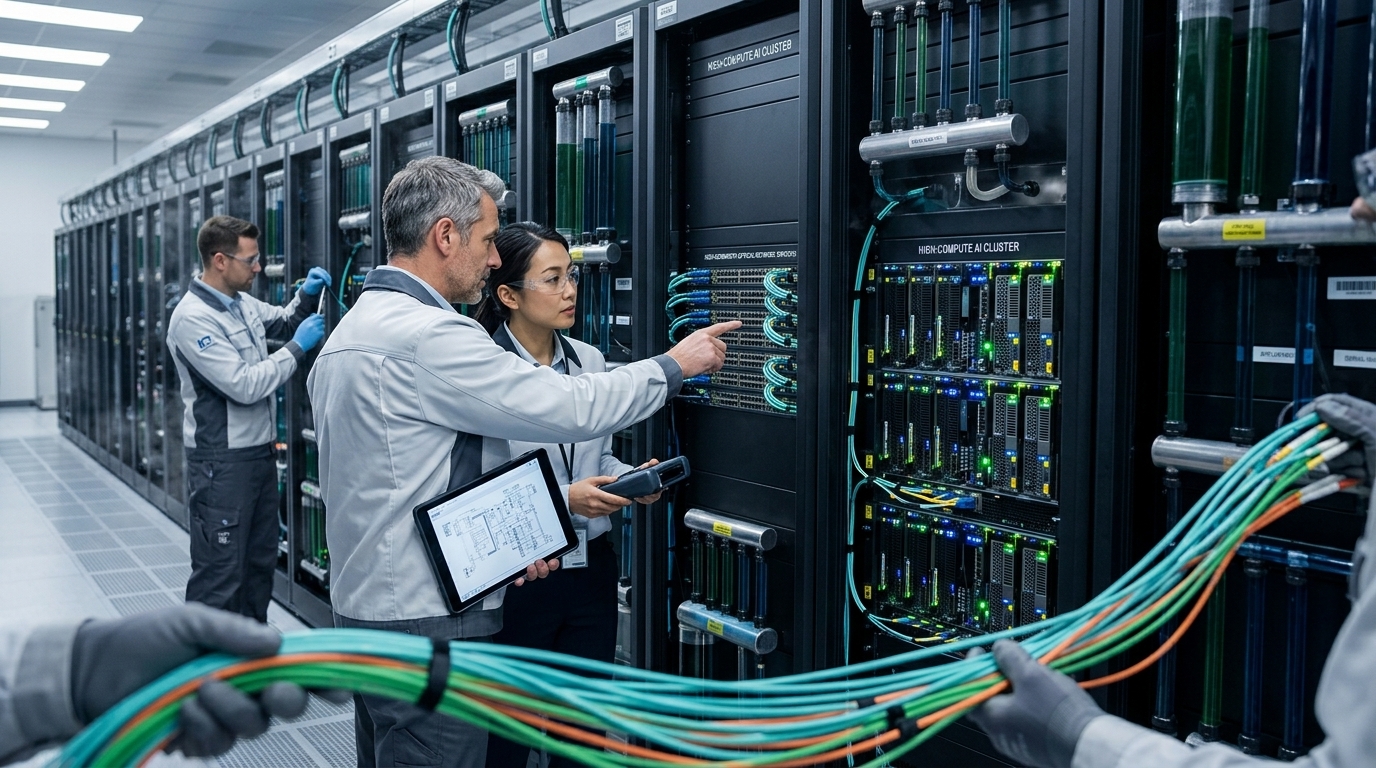
- Expanding into ASIC (Application-Specific Integrated Circuit) solutions for hyperscale data centers.
The Geopolitics of Silicon and Taiwanese Talent
MediaTek’s move unfolds against a highly charged geopolitical backdrop. Taiwan remains the epicenter of global semiconductor manufacturing, and the ability of local firms to attract and retain top-tier talent is a matter of national strategic importance. While American giants like Google and Meta have implemented job cuts to "rebalance" their spending toward AI infrastructure, MediaTek is doubling down on human capital.
This approach also serves as a stabilizing signal to the public. At a time when headlines warn of workers being replaced by algorithms, MediaTek is sending the message that the growth of AI requires more hands and minds than ever before. The need for specialized knowledge in materials science, thermal management, and cybersecurity is increasing exponentially as chips become more complex and power-hungry.
“Artificial Intelligence is not a product; it is an infrastructure. And to build an infrastructure that stands the test of time, you need the world’s best architects,” sources within the Hsinchu-based company suggest.
Competitive Hurdles and the Road Ahead
Despite the optimism, the path is fraught with challenges. Qualcomm remains a formidable adversary, having already secured significant partnerships in the burgeoning AI PC space. Meanwhile, Apple continues to set the gold standard with its vertical integration and proprietary silicon. MediaTek must prove that it can deliver not just raw processing power, but superior energy efficiency—a critical metric for the next generation of mobile AI devices.
Furthermore, sourcing thousands of new employees with the requisite skill sets is no small feat. A global "war for talent" is in full swing, and MediaTek must compete not only with other chipmakers but also with software behemoths that are increasingly designing their own hardware. The success of this hiring spree will determine whether MediaTek remains a component supplier or ascends to become the primary architect of our digital future.