In the current era of Industry 4.0, the promise of Artificial Intelligence (AI) has been presented as the ultimate panacea for every manufacturing ailment. From supply chain optimization to precision quality control, automakers have rushed to invest billions. However, Ford Motor Company, a giant with over a century of history, is now facing a harsh reality: AI is not always the solution, especially when vehicle quality and safety are at stake.
The Quality Crisis and the Illusion of Automation
For years, Ford has been grappling with one of the most expensive problems in the industry: the cost of recalls and warranty repairs. Last year alone, the company spent billions of dollars fixing errors that should have been caught on the assembly line. The proposed solution was the mass integration of AI systems and computer vision to inspect components.
The theory was seductive. High-resolution cameras and algorithms could identify microscopic flaws that the human eye might miss, working 24/7 without fatigue. However, the practice proved far more complex. AI, despite its computational power, lacks 'context.' A system might flag a cosmetic blemish as a critical failure, stopping the production line unnecessarily, while simultaneously ignoring a structural flaw that doesn't fit its training data.
"Technology is a tool, not a replacement for engineering intuition. At Ford, we learned that automation without deep human oversight leads to digital blind spots," say sources close to the management.
The Cost of the 'Black Box' Logic
One of the primary issues Ford faced is the 'black box' nature of AI. When an algorithm decides a part is defective, engineers often struggle to understand 'why.' This lack of transparency prevents root-cause analysis. Instead of fixing the source of the problem in the machinery manufacturing the part, the company finds itself managing the AI's misdiagnoses.
- Increased false positives that delay delivery schedules.
- AI's inability to adapt to minor material changes due to climatic conditions.
- Over-reliance on data that doesn't reflect real-world road conditions.
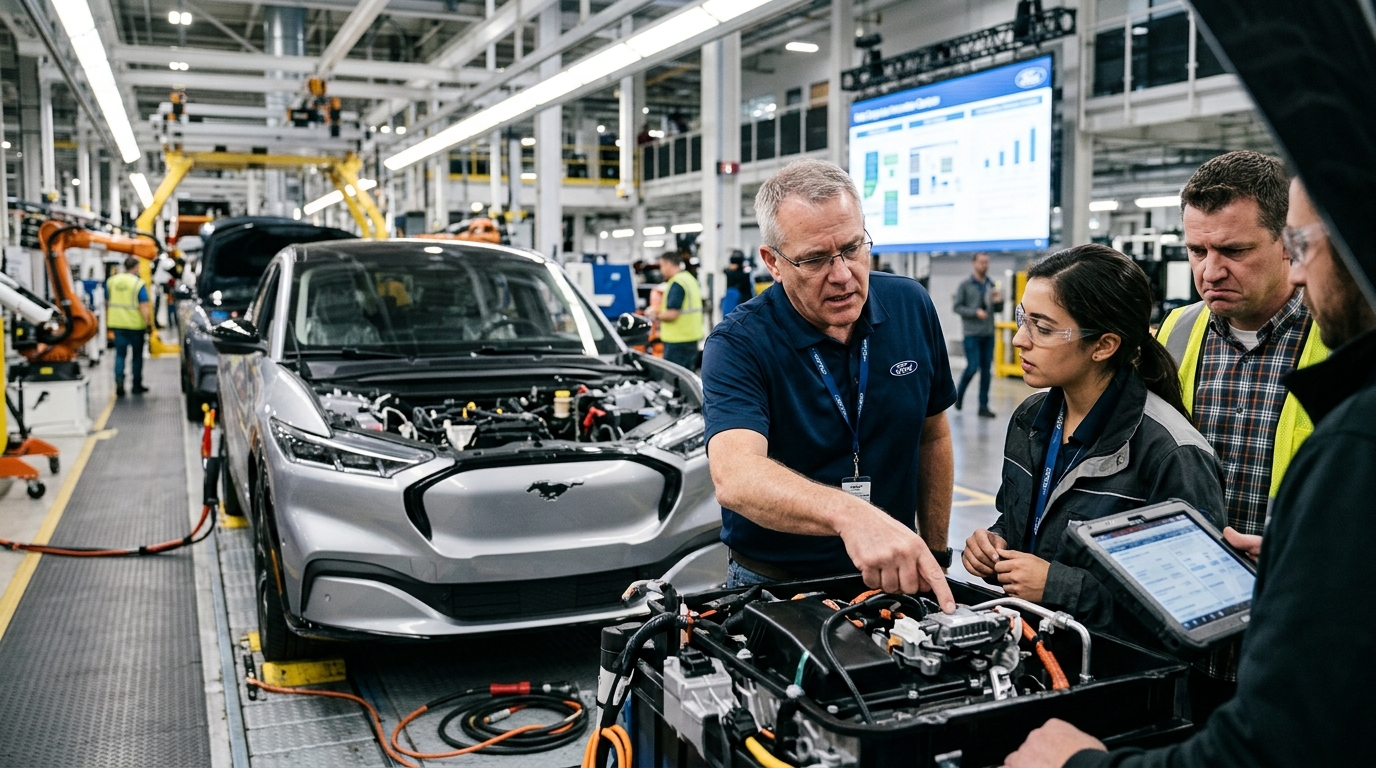
Ford's strategy is now shifting. Instead of 'AI-first,' the approach is becoming 'Human-centric AI.' This means technology is used to assist the worker and the engineer, not to bypass them. The experience of a technician who hears an engine's hum or feels the fit of a door remains superior to any sensor, at least for now.
Lessons for the Future of Industry
The Ford case serves as a cautionary tale for all of Silicon Valley and the global industry. The rush to replace the human element with algorithms, driven solely by cost reduction, often yields the opposite results. Quality in the automotive industry is not just a matter of data; it is a matter of accountability.
Returning to the core principles of engineering, augmented by technology but guided by humans, seems to be the only path to regaining consumer trust. Ford appears to have learned this the hard way, restructuring its quality control frameworks to once again give the primary voice to its people.