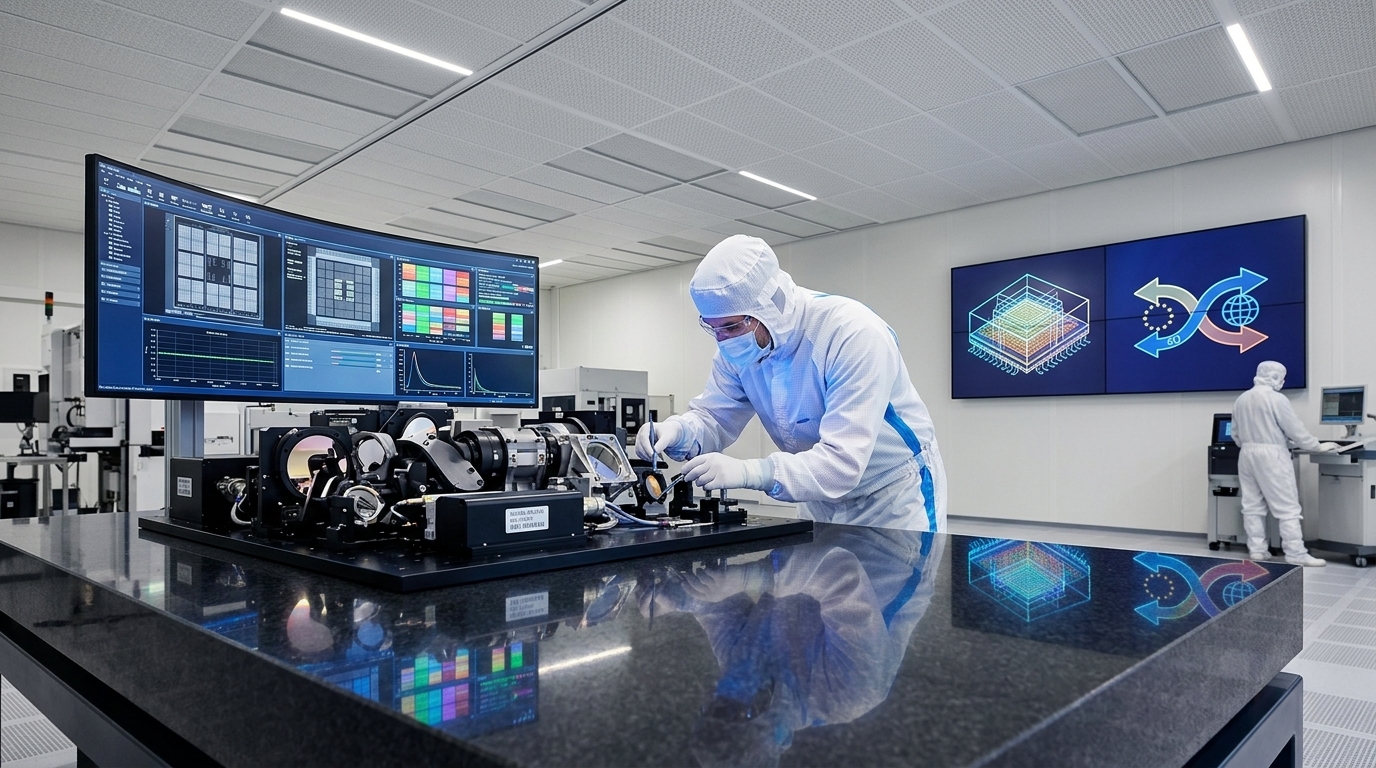
At a time when the European Union is scrambling to redefine its position on the global technological map, ASML, the Dutch giant that stands as the world's sole manufacturer of Extreme Ultraviolet (EUV) lithography machines, is sounding the alarm. The warning is clear: excessive intervention in supply chains and the pursuit of absolute "strategic autonomy" may yield the opposite of the intended results.
The Perils of Fragmentation
ASML’s leadership argues that the semiconductor industry relies on an incredibly complex and globalized ecosystem. The attempt by every geopolitical bloc—be it the US, China, or the EU—to create fully independent production chains is not only economically inefficient but also technically unfeasible in the foreseeable future. According to the company, market fragmentation will lead to increased costs, delays in the development of new technologies, and ultimately, a less efficient industry.
Europe, through the EU Chips Act, aims to double its share of global semiconductor production to 20% by 2030. However, ASML points out that the focus should not solely be on manufacturing, but on strengthening the continent's existing advantages in research and equipment design. Intervening in export flows, often under pressure from Washington to contain China, creates an uncertain environment for European businesses that depend on international sales to fund their astronomical research and development costs.
Geopolitical Pressure and the 'Dutch Dilemma'
ASML finds itself at the eye of a geopolitical hurricane. As the only company in the world possessing the technology to manufacture the most advanced chips (used in AI, weapons systems, and smartphones), it faces constant pressure to restrict its exports to China. The Dutch government, often aligning with American demands, has already imposed restrictions, triggering a pushback from the company.
"Innovation does not thrive in isolated laboratories, but through global collaboration and access to the world's largest markets," company executives state.
ASML’s critique of the EU focuses on the fact that Brussels often reacts to the moves of other powers instead of charting its own independent course that protects the interests of its own technological champions. The concern is that if Europe becomes overly protectionist, it will lose access to critical resources and the global talent pool required for the next generation of lithography.
A Call for Strong Companies, Not More Bureaucracy
ASML’s core message is that Europe needs "more entrepreneurship and less regulation." While the subsidies provided by the Chips Act are welcome, they are insufficient to offset the hurdles created by bureaucracy and restrictions on the movement of specialized personnel. The company has previously even hinted at moving operations outside the Netherlands if the environment does not remain conducive to its growth.
In conclusion, ASML is calling on the EU to focus on creating an environment that allows companies to compete on a global scale, rather than trying to micromanage every link in the supply chain. Strategic autonomy should mean "strength through interconnection" rather than "security through isolation."
- Maintaining open markets is vital for financing R&D.
- Export restrictions must be based on clear security data rather than political expediency.
- Europe must invest in talent and simplify processes to attract top-tier scientists.
The stakes for 2026 and beyond are whether Europe will manage to remain a leader in semiconductor equipment or if it will sacrifice its advantage on the altar of geopolitical rivalries it does not fully control.